
Originally posted on October 8, 2013
Moses lived between 1391 BC and 1271 BC. These were pre-literate times in the Hebrew culture, so the story of Moses was passed along orally, in the form of the Oral Torah (Torah means ‘instruction’ or ‘teaching’) until it was finally transcribed. It is postulated by scholars that the Oral Torah still continued to be told among families and tribes for a long time thereafter since literacy was not a reality for most ancient people. The Oral Torah began to be written down around 1000 BC and was finalized somewhere around 587 BC, when the Hebrews underwent the second exile of their people, to Babylon under King Nebuchadnezzar.
Scholars state that the Moses Story contained in the Torah is remarkably pure even though hundreds of years exist between their inception and their transcription. Somewhere around 1300 BC, Moses assumed leadership of the people and led them out of Egypt, and out of Pharaoh’s grasp, led them into the Wilderness, and delivered them, forty years later, to the door of the Promise Land. Since the writings were not finalized until somewhere around 600 BC, that means that the oral tradition held fast for approximately 700 years!
One piece of evidence attesting to the purity of this epic tale resides in the fact that every object that God called Moses to assemble for the Tabernacle as soon as they entered the Wilderness was naturally occurring, with the exception of bronze.
“Then the LORD spoke to Moses, saying:
‘Speak to the children of Israel, that they bring Me an offering. From everyone who gives it willingly with his heart you shall take My offering. And this is the offering which you shall take from them: gold, silver, and bronze; blue and purple and scarlet yarn, fine linen thread, and goats’ hair; rams’ skins dyed red, badger skins, and acacia wood; oil for the light, and spices for the anointing oil and for the sweet incense; onyx stones, and stones to be set in the ephod and in the breastplate.
And let them make Me a sanctuary, that I may dwell among them.’” ~Exodus 25:1-8
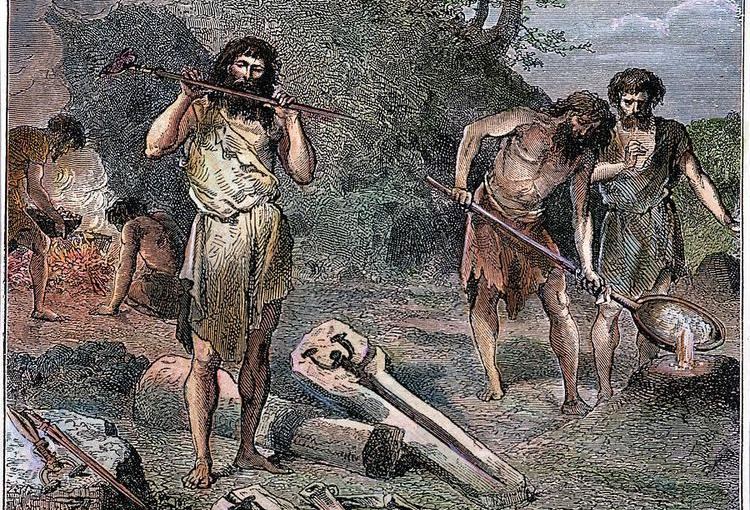
However, bronze was easily and simply made by primitive cultures by melting copper and tin together, and pouring it into molds to make a cast. The Bronze age collapsed in the Near East around 1100 BC, so that by the time the Torah was written down 500 years later, the Iron Age was widespread and had been flourishing likely since 1000 BC, with wrought iron having been used since at least 1200 BC in that region, meaning iron had been a commonly used metal among the Canaanites for at least 400 years, probably longer.
This lends much authenticity to the purity of the early Old Testament; and validation for Moses being the rightful author of the Torah. If the Torah had been tampered with later, when it was written down, it is very likely iron would have played a more prominent role in the story of ancient Hebrews.
 ~Song of Mary~