

[AI photo: Jesus heals Hippocrates]
Philosophy – noun the study of the fundamental nature of knowledge, reality, and existence, especially when considered as an academic discipline; a particular system of philosophical thought; a particular system of philosophical thought; or a theory or attitude held by a person or organization that acts as a guiding principle for behavior. Origin
Middle English: from Old French philosophie, via Latin from Greek philosophia ‘love of wisdom’.
But the study of knowledge, reality, and existence is already given to us in the annals of Torah. Why seek something else?
Medicine arose out of philosophical thought as men sought to understand disease and how to deal with it. In ancient times, all of the philosopher-physicians were Gentiles, polytheists, atheists, or agnostics. They were not bible-based Jews. After Jesus came, they were still unbelievers, polytheists, agnostics, or atheists. They distinguished themselves as ‘men of scientific thought’ and wanted to create a barrier between God and ‘mystical’ beliefs rooted in sin, which they called superstition.
Hippocrates is considered the Father of Western Medicine and is credited as the first person to believe that diseases were caused naturally, not because of superstition and gods. He was a Greek Hellenist and a polytheist as were most Gentiles in his day, which means he paid homage to the pantheon of Greek gods of the time. He lived from 460 to 370 BC. He was acknowledged by the disciples of Pythagoras for allying philosophy and medicine. He separated the discipline of medicine from religion, believing and arguing that disease was not a punishment inflicted by the gods but rather the product of environmental factors, diet, and living habits. This means he also did not believe in sin or that disease was caused by sin. There is not a single mention of a mystical illness in the entirety of the Hippocratic Corpus. However, Hippocrates did hold many convictions that were based on incorrect anatomy and physiology, such as Humorism.
Medicine in ancient Egypt
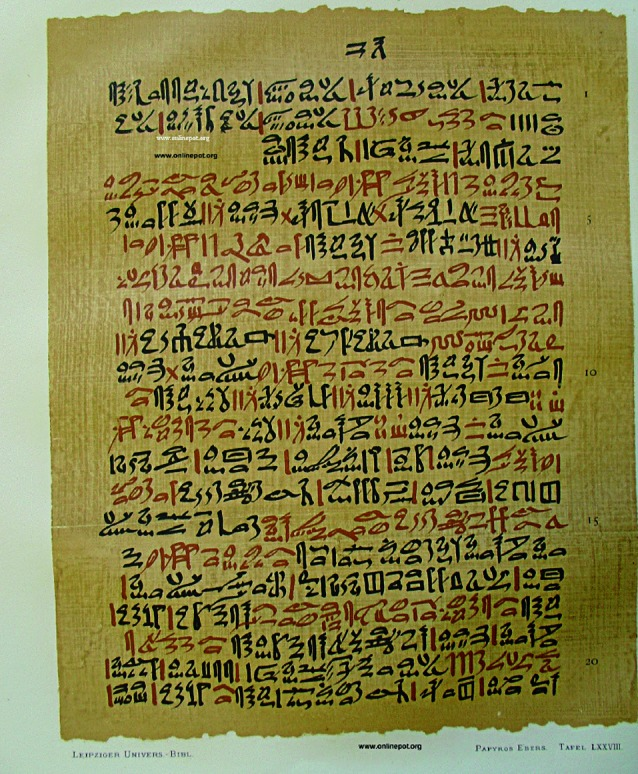
In ancient Egypt, Imhotep was the god of medicine. He lived during the third dynasty of ancient Egyptian history between 2650 and 2600 BC and was the vizier (prime minister) to the King and priest of the sun god Ra at Heliopolis. Imhotep was the architect who built the oldest still standing stone monument on earth: the stepped pyramid of King Djoser at Saqqara. But he was also a physician and was so clever in treating patients that the Egyptians made him their god of medicine. But medicine in ancient Egypt was tainted with religion. For example, the Ebers papyrus, the largest (110 pages and 20 meters long) and one the oldest preserved medical document dating from 1552 BC, describes many diseases. However, for most of these diseases, in addition to prescriptions, the papyrus describes some 700 magical formulas and remedies and contains many incantations meant to turn away disease-causing demons.
Aristotle (384 BC-322 BC) was a Greek philosopher and a student of Plato. He was born in the northern Greek area of Macedonia. His father Nicomachus was the personal physician to King Amyntas of Macedonia. Aristotle studied almost every subject possible at the time and made significant contributions to most of them. The school of Alexandria was built in 306 BC and was based on the ideas of Aristotle (the Hellenistic or new Hellenic school) and was therefore the first school of knowledge in history to be solely based on “logic” (i.e. philosophy). Every scientist in Alexandria was a philosopher, meaning that his conclusions were reached on the basis of logic and common sense (i.e. philosophy) rather than superstition or ideas that cannot be explained logically. This concept was later revived during the Middle Ages, where a student would become a “doctor in philosophy” if he reaches his conclusions on the basis of logic or a “doctor in theology” if he builds his theory on metaphysical givens which cannot be scientifically proven. Most people consider Aristotle a deist, which is the belief in a distant, non-interventionist creator.
Galen lived 129 to 216 AD and was a Roman and Greek physician, surgeon, and philosopher. Considered to be one of the most accomplished of all medical researchers of antiquity, Galen influenced the development of various scientific disciplines, including anatomy, physiology, pathology, pharmacology, and neurology, as well as philosophy and logic. He was a polytheist at worst, an agnostic at best.
During the Middle Ages and beyond, based on the ideas of common sense and logic (the Aristotelian principle), a great cultural wave swept the Arab/Islamic empire. In the field of medicine, physicians were always described as philosophers-physicians and medical knowledge thrived under these circumstances.
I find it very interesting that Aristotle, who lived hundreds of years before the Apostle Paul and who was born in modern-day Thessalonica, northern Macedonia, was never mentioned by Paul or the other New Testament writers. And Paul wrote a lot of letters, traveled extensively, and taught in many cities and towns. Aristotle was the most famous person in that region and had quite a legacy extending into Paul’s time period! Paul was in Philippi and Thessalonica for lengths of time, and if he had been a believer and advocate for physicians and medicine, it seems likely he would have referenced them, at least in some regard. Yet he did mention philosophy in the book of Colossians:
Beware lest anyone cheat you through philosophy and empty deceit, according to the tradition of men, according to the basic principles of the world, and not according to Christ. ~Colossians 2:8
Of more import, Jesus also never mentioned them either. Since the practice of medicine and its ministers–physicians–had been around hundreds of years by this time, you might think that Jesus would have included them into His plan for healing if He had thought that would be beneficial for people. But he didn’t. Not once. Let that sink in.
This people honors Me with their lips,
But their heart is far from Me.
And in vain they worship Me,
Teaching as doctrines the commandments of men.’For laying aside the commandment of God, you hold the tradition of men. ~Mark 7:7-8
Medicine as we know it was created thousands of years ago by philosophers who were seeking another way to view man and his problems. They carved out an entire theology based on humanistic, earthly, and materialist explanations of the flesh, rather than looking to the Spirit of God, Judeo-Christian ethos, and the one true God of the bible. Once this was established, man was then further dissected into a mind separate from his body. This concept was coined by Rene Descartes in the early 17th century, yet another philosopher plying his theory of “mind-body dualism”. This conceptual model provides a framework that makes medicine find purchase better than if we viewed the mind and body of man as a whole entity; a perfect example of ‘divide and conquer’.
Christians think that because Paul refers one time to Luke as a physician, that permits all of the modern-day application of medicine and medical practice. They think because the bible doesn’t mention it, its silence makes it okay, and they go on to make complex arguments to try and persuade people to their side. I think it is clear that if Jesus and the writers of the New Testament had believed in using physicians and medicine, they would have taught on it. Everything that is taught by Jesus, his disciples, Apostles, and the letters we have, including the apocrypha, speak only of healing through Jesus, by those with the gift of healing, and by the elders of the church.
Medicine by its very nature is rooted in polytheism, atheism, and humanism. Therefore, it cannot be of God.
 ~Song of Mary~