

The Lilac
5.14.16
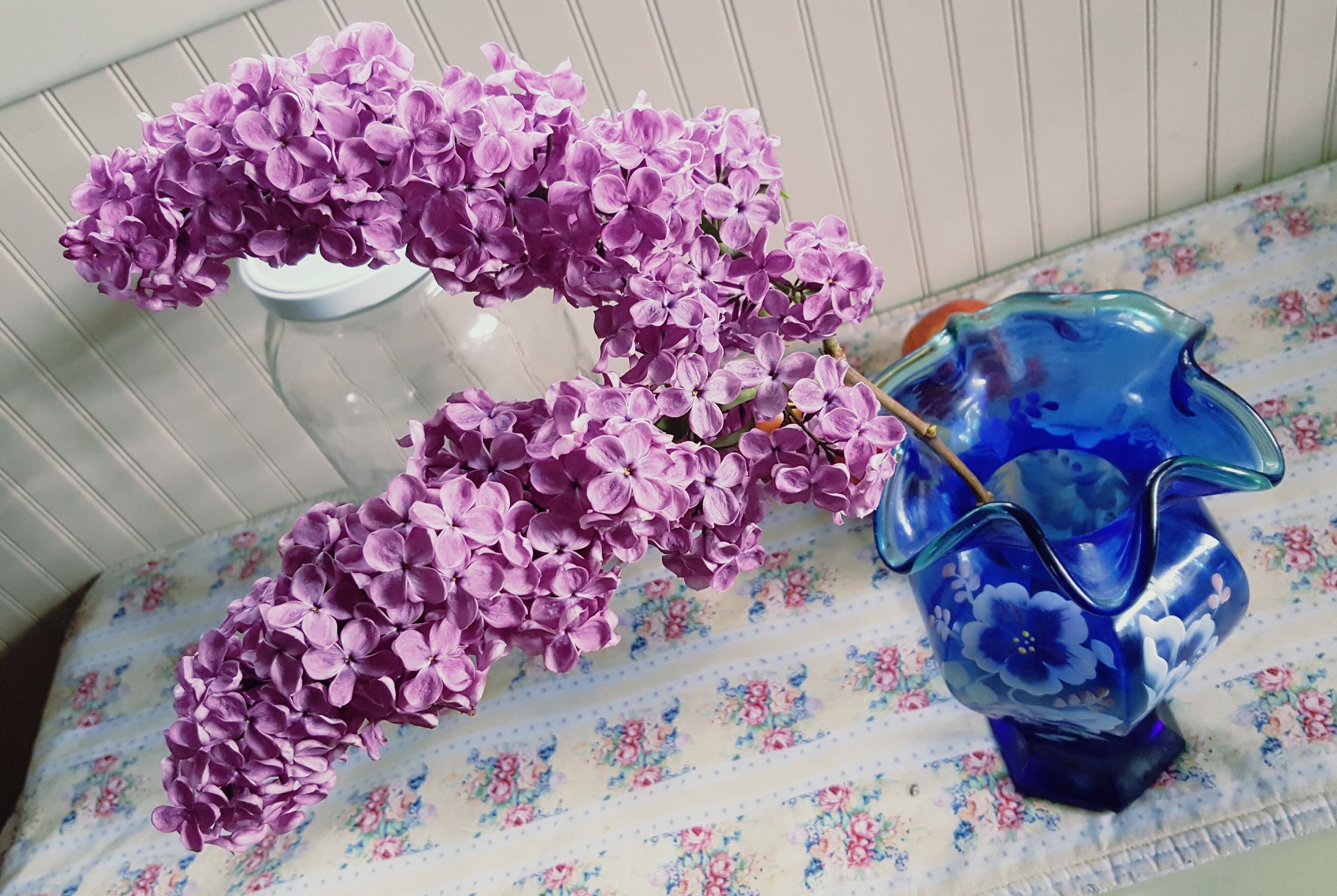
Syringa (Lilac) is a genus of 12 currently recognized species of flowering woody plants in the olive family (Oleaceae), native to woodland and scrub from southeastern Europe to eastern Asia, and widely and commonly cultivated in temperate areas elsewhere.
And they smell so lovely!
Thank You, LORD~
Essential Oils
5.1.16
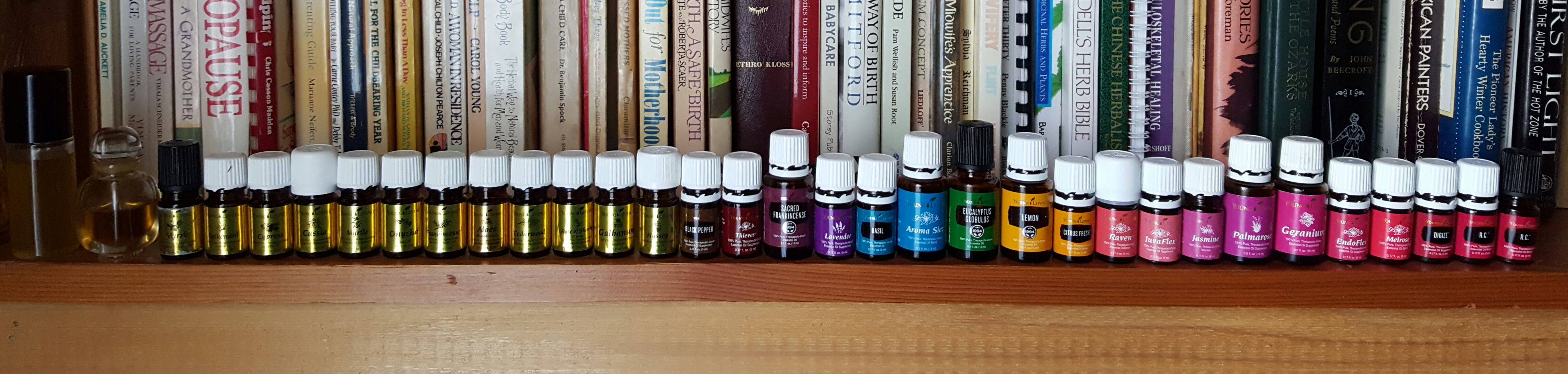
This is a picture of my current collection of essential oils. I have posted about them before but thought an update would be fun! I like Young Living essential oils because they are super pure. Gary Young, the founder of the company, was a lumberjack who sustained an injury many years ago, and in his quest for cure, he discovered the healing properties of essential oils, bought farms to ensure the highest quality herbs, and began distilling them, creating this company. Young Living is now a huge and thriving business serving the world with the purest essential oils you can buy.
I use them every day. I use them for spiritual reasons, for my perfume, for restorative properties, for curing illnesses, and as daily protection against pathogens and cancer. I use them straight on my skin, in carrier oils, and in capsules which I take by mouth. You can take all Young Living essential oils by mouth (but you must be careful because some oils are very hot, and can burn your skin).
Most people use a few drops of essential oils in their bath or a diffuser, which is wonderful because the tiny therapeutic particles are released into the air and when they enter your lungs and brain (via the olfactory area), they begin healing you immediately at the cellular level. Although it is referred to as ‘aromatherapy’, the use of essential oils is far from being about scent. It is plant medicine at its most intense and pure level.
Milk
3.8.16
And I am come down to deliver them out of the hand of the Egyptians, and to bring them up out of that land unto a good land and a large, unto a land flowing with milk and honey…~Exodus 3:8
Milk and honey were considered blessings in the ancient times so much so that it was embedded in the promise of God in delivering His people from our captivity. Milk and honey are excesses that are not needed, but that make life all that much more special. Think of all the products made from dairy and it becomes obvious. Man has not found the ability to make milk for consumption, and he never will. Man has found ways, through evil forces, to tamper with this pristine gift from God, give it a bad rap, and lie about its unique attributes.
I am a lover of milk and I am here to thank God for this blessed gift! As with many or most gifts from God, man has adulterated milk to the point of being downright unhealthy. I, like most Americans, have grown up drinking processed and pasteurized milk, which is unfortunate because I have drunk so much milk and eaten so many dairy products in my lifetime thus far, that I undoubtedly have missed out on much of the health benefits I would have otherwise derived from consuming fresh, raw, or unprocessed milk.
I recently have begun receiving more and more blessings from God. One of them has been, through a good friend, to be able to receive fresh cow’s milk from a Jersey cow. It is unsurprising that man has made drinking this primary blessing and gift from God a federal offense! Like so many other things given to us by God, in nature, it is a federal offense to sell unpasteurized milk for human consumption. I realize this likely stemmed from some real bad cases where people died from drinking raw milk, historically. After all, harmful bacteria and chemicals can be harbored in raw milk, just as with any other warm biological liquor. Abraham Lincoln’s own mother died from drinking raw milk because the cow had eaten something poisonous. But there should be a caveat in the law for those of us who understand the risks but want to purchase and consume it anyway.
Cows are ‘freshened’ by their handler every year or so when they birth a new calf. When a mammal undergoes parturition, the mammary glands are stimulated to produce milk. The udders of a cow are four, and they become engorged just like a human female’s do after she births. My friend’s Jersey cow just calfed and is now giving 7 gallons of milk per day! The calf is removed from her mother and given milk on the side so that the farmer milks the cow straight into stainless steel buckets, twice per day, morning and night. Farmers are very careful about using very clean, stainless steel utensils because any additional or foreign bacteria will cause milk to spoil much faster. In our days of ultrapasterurization (heating to high degrees to kill all bacteria), we are getting used to our milk products having a shelf life of a couple weeks. However, in this process of pasteurization, the same heat that kills the potentially harmful bacteria also kills the good stuff as well (see article highlighted above). Fresh milk handled carefully can last 5 to 7 days.
I got my first gallon of fresh milk yesterday when I drove out to her farm. It is very satisfying to get your food from a place and from people you knew grew it or made it. This is the reason farmer’s markets are so popular. There is accountability on the part of the farmer, and responsibility on my part because we are both participating in an endeavor whereby we give our stamp of approval, without needing the FDA to pass judgment.
We are made to grow our own food and work the land. My grandparents’ generation was pretty much the last to do this in America, so we and our parents are used to purchasing our consumables at a grocery store. It is obvious that the distances traveled and separation involved in obtaining our food in this way is inferior to knowing your farmer and your farm.
It dawned on me this morning that most people have no idea what fresh milk looks like, so I took a picture of how it looks. Once the milk is obtained from the beast, the farmer carries it inside and filters it with a stainless steel sieve. This removes particles of hair or dirt that might have gotten into the milk. After all, animals are hairy and live in field and barn. The farmer then pours the milk into gallon, half gallon, or other size jars and begins cooling it down (on ice or eventually in the refrigerator), because it is body temperature when milked. As the milk sits, the cream begins to rise to the top. The amount of cream depends upon many conditions and is extremely variable depending upon the breed of cow, days since parturition, food fed, milking frequency, and stress of the animal.
Commercial dairy farmers and milk production facilities control for the amount of fat in the milk by pouring off the milk fat and adding back in the amount desired, like 2%, 4%, etc. Or you can buy straight cream for whipping at 30%. The excess milk fat is then used to make dairy products, which is why dairy products can be expensive: they require a lot of cream which requires a lot of milk, versus just drinking the milk liquor, or watery part of milk. The cream is dense and opaque which is why skimmed milk is more clear throughout.
Sometimes the jar of a fat rich milk breed like a Jersey will have nearly half the container be cream! Right now, since this cow just freshened and she is producing large quantities of milk, she has a higher water to fat ratio, so her milk is not quite a rich, cream-wise. I had about 2 inches of cream on this gallon jar of milk yesterday. I poured off some of the cream to use for my coffee, but am leaving the rest to drink as whole milk. If I am fortunate to be able to keep buying her milk, as the cow’s supply diminishes, the fat to water ratio will increase, possibly giving me enough cream to pour off to make butter or ice cream. 🙂
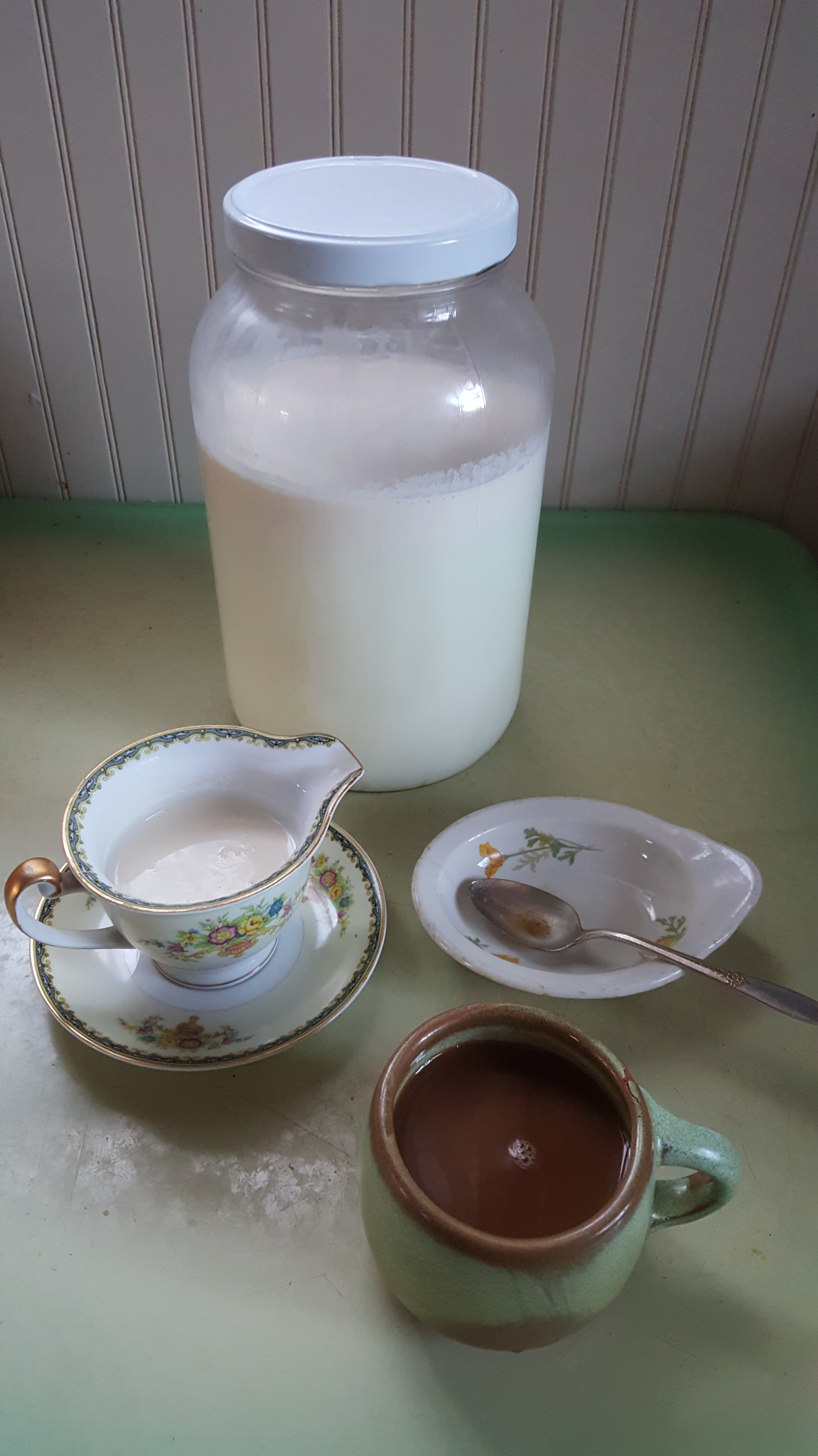
As you can see, I have already drunk a fair amount of my fresh milk. It has a bit of a chalky texture that takes some getting used to when you have been raised on store milk which is more silky. I attribute this to the nutrients that are active and floating throughout the milk. The taste is full and earthy versus flat and clear as with store milk. My 7 year old loves it as well, if that is any testament to its deliciousness~
~~~
11.15
His Blessings: Chocolate!

Though life can be hard for Christians and we suffer persecutions, tribulations, reproaches, infirmities, insults, and distresses, He doesn’t leave us without numerous blessings which He bestows on all men, gifted to us in this earth and the things within and upon it. I would like to honor Him for these natural substances that we usually take for granted, one of my favorites being
CHOCOLATE!
Chocolate grows in large pods on trees native to Central and South America. They are knocked off the tree and cut open to reveal cocoa beans inside, which are then fermented, dried, roasted, and ground into cocoa powder. Usually sugar is added and maybe cocoa butter to make a fine bar of chocolate. How finely chocolate is ground, and the quality of the ingredients is usually what separates the best chocolate from mediocre chocolate because the human tongue can detect even the minutest textural characteristics, in other words if your tongue feels tiny granules of chocolate from a coarser grind, it is not as delightful as if your tongue feels silky smoothness. 
Chocolate is also healthy for us, as this article reports. Finally, one of the best movies ever is entitled Chocolat. I highly recommend it!
Thank you Lord GOD for giving us the fruit of the cacao tree. It is not food forthe gods but food from GOD.
 ~Song of Mary~