The Sin of Modern Medicine

I have written about the sin of medical practice before on a much earlier post. When I came to know the Lord, one of the first things He told me in His word and by His Spirit is that medical procedures, interventions, and pharmaceutical drugs are not His will for man. As a nurse, this is very pertinent to my work and life. As a Christian, I watch my brethren fall to this sin daily, not really thinking about the employment of modern medicine in their lives or wondering if God is okay with it. They just assume it is okay, that Luke of the bible was a ‘physician’ and therefore physicians are alright by Him.

As in my other post, the bible never speaks of physicians otherwise in a good sense unless it is referring to Jesus, who was the Great Physician. If we heal in any man-made way using man-made tools or alchemy we are not healing in Jesus’ name or by His power. We are working according to man’s power and ways. To me this is obvious but that is not so for my brethren. Perhaps it is because doctors have been plying their trade corporately now for well over a century, such that several generations of folks have been taken in by them, that we have forgotten the truth about doctors and have forgotten to test all things and spirits as the bible commands. Overwhelmingly, our fathers and their fathers have taught us by their action that physicians are a good thing. We collectively have no memory of a time when people did not use doctors. Or if we do remember this, we think of the Dark Ages which is predominately associated with ignorance and death.

But I am here to say modern medicine is not of God, but of the devil. I think it’s probably the most prevalent way that Satan ensnares believers, especially older ones who fall under the auspices of medicine much more than younger ones. I mean, think about it from a biblical perspective. What could be better than for an older or sick believer to die? They are going to be separated from their body and immediately go to be with the LORD. Can you think of a reason why the devil wouldn’t want that? I can! As long as men remain on earth, satan has access to them, in order to spread his reign of terror to kill, steal, and destroy.

Why can’t we see that hospitals are really temples to baal? That medical providers in their white coats are satan’s high priests? That bloodletting and nakedness upon a steel table being cut into with metal instruments are not good, but bad, things? That hacking upon, removing, and replacing God-given body parts is an offense to us and God?

Once your eyes are open to the truth, you realize how barbaric it is.

I have spoken about the overuse of medical care in the last year of life in my other post so will not take that tack here. What I really wanted to expound on here is the verse from the 2nd book of the bible that ties up the whole matter on the subject:

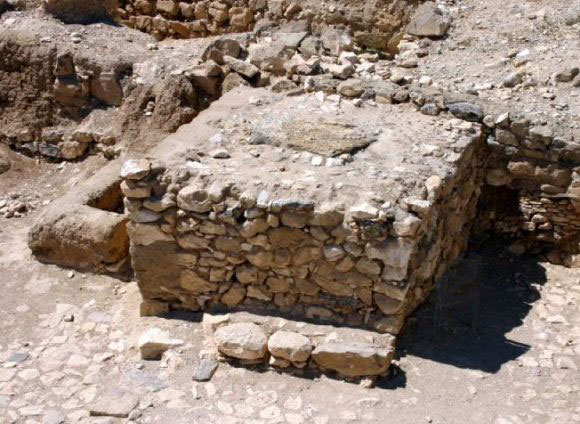
And if thou wilt make me an altar of stone, thou shalt not build it of hewn stone: for if thou lift up thy tool upon it, thou hast polluted it. ~Exodus 20:25

I have included a intelligent commentary on this verse below for your perusal. I love how God addresses the whole matter of medical care in one sentence via this bible verse. That is so like Him; to simplify that which man complicates. This was one of the first commandments God gave to His chosen people after fleeing their bondage in Egypt, so that they would know the proper way to worship Him.

A commentary from Bible Hub on this verse: Keil and Delitzsch Biblical Commentary on the Old Testament For the worship of Jehovah, the God of heaven, Israel needed only an altar, on which to cause its sacrifices to ascend to God. The altar, as an elevation built up of earth or rough stones, was a symbol of the elevation of man to God, who is enthroned on high in the heaven; and because man was to raise himself to God in his sacrifices, Israel also was to make an altar, though only of earth, or if of stones, not of hewn stones. “For if thou swingest thy tool (חרב lit., sharpness, then any edge tool) over it (over the stone), thou defilest it” (Exodus 20:25). “Of earth:” i.e., not “of comparatively simple materials, such as befitted a representation of the creature” (Schultz on Deuteronomy 12); for the altar was not to represent the creature, but to be the place to which God came to receive man into His fellowship there. For this reason the altar was to be made of the same material, which formed the earthly soil for the kingdom of God, either of earth or else of stones, just as they existed in their natural state; not, however, “because unpolished stones, which retain their true and native condition, appear to be endowed with a certain native purity, and therefore to be most in harmony with the sanctity of an altar” (Spencer de legg. Hebr. rit. lib. ii. c. 6), for the “native purity” of the earth does not agree with Genesis 3:17; but because the altar was to set forth the nature of the simple earthly soil, unaltered by the hand of man. The earth, which has been involved in the curse of sin, is to be renewed and glorified into the kingdom of God, not by sinful men, but by the gracious hand of God alone. Moreover, Israel was not to erect the altar for its sacrifices in any place that it might choose, but only in every place in which Jehovah should bring His name to remembrance. וגו שׁם הזכּיר does not mean “to make the name of the Lord remembered,” i.e., to cause men to remember it; but to establish a memorial of His name, i.e., to make a glorious revelation of His divine nature, and thereby to consecrate the place into a holy soil (cf. Exodus 3:5), upon which Jehovah would come to Israel and bless it. These directions with reference to the altar to be built do not refer merely to the altar, which was built for the conclusion of the covenant, nor are they at variance with the later instructions respecting the one altar at the tabernacle, upon which all the sacrifices were to be presented (Leviticus 17:8-9Deuteronomy 12:5.), nor are they merely “provisional” but they lay the foundation for the future laws with reference to the places of worship, though without restricting them to one particular locality on the one hand, or allowing an unlimited number of altars on the other. Hence “several places and altars are referred to here, because, whilst the people were wandering in the desert, there could be no fixed place for the tabernacle” (Riehm). But the erection of the altar is unquestionably limited to every place which Jehovah appointed for the purpose by a revelation. We are not to understand the words, however, as referring merely to those places in which the tabernacle and its altar were erected, and to the site of the future temple (Sinai, Shilloh, and Jerusalem), but to all those places also where altars were built and sacrifices offered on extraordinary occasions, on account of God, – appearing there such, for example, as Ebal (Joshua 8:30 compared with Deuteronomy 27:5), the rock in Ophrah (Judges 6:25-26), and many other places besides.

When I first read and studied this verse, I thought it was rather strange. Like why would God care at all if stone was hewn or not. I mean, hewn stone would stack much better and be more beautiful. It would last longer. It would take more time and attention to create. All of these seem like attributes in an altar to God. So why would God say the opposite? Why would a tool of man pollute the stone? Isn’t man, and by inference, man’s tools, more valuable than stone? It’s a very interesting verse. Evidently in ancient times, pagan cultures also erected stone altars and made them fairly elaborate, even engraving images in them. Obviously engraven images is a violation of the 2nd commandment. But if we draw this thought our further, we can see that the altar then can become an idol, and it would come to be seen and admired more than the sacrifice and the purpose behind the sacrifice which is to repent to God and draw closer to Him.

But even more intriguing is that maybe God was also speaking to us, thousands of years into the future. When I read some Jewish commentary from the ancient rabbis on the matter, they differed on their interpretation and meaning of this verse and were a bit perplexed by it as well. What if God was speaking through Moses all the way to us, knowing that we would become his altars after Jesus’ sacrifice on the cross, and that we would also be led to alter ourselves with tools in our selfish pursuit of life for our own sake. We submit to this treachery out of fear of dying and out of desire to be as perfect as possible. We think we can create a better body and do a better job than God has made provision for; that we can hew out a more beautiful self, and hopefully live longer than we would in our natural state. See the analogy?

Can we apply this to ourselves? This concept of altar, and defiling the altar with tools?

I think it’s pretty clear that we can! When we accept Christ, we become the living altar of God, or temple of the Holy Spirit, and this is confirmed to us in the New Testament in several verses:

Do you not know that you are God’s temple and that God’s Spirit dwells in you? If anyone destroys God’s temple, God will destroy him. For God’s temple is holy, and you are that temple. Let no one deceive himself. If anyone among you thinks that he is wise in this age, let him become a fool that he may become wise. For the wisdom of this world is folly with God. For it is written, “He catches the wise in their craftiness,” and again, “The Lord knows the thoughts of the wise, that they are futile.” So let no one boast in men. ~1 Corinthians 3:16-21

And here:

…do you not know that your body is the temple of the Holy Spirit who is in you, whom you have from God, and you are not your own? For you were bought at a price; therefore glorify God in your body and in your spirit, which are God’s. ~1 Corinthians 6:19-20

A proper temple always contains an altar. For Christians we know that the physical altar has become the body of each of us who believes in Christ as our Savior. We are not our own, we were bought by God through Jesus. We become justified and are sanctified, which is a lifelong process. The bible makes it clear that this is not just in a spiritual sense, but in a very real physical way as well. We do not just symbolically belong to God which is I think how most Christians reconcile themselves in the world, but we physically belong to God.

“But we must be cautious not to limit our understanding of “altar” to a mere physical structure. The New Testament emphasizes that our bodies are temples of the Holy Spirit, and that we are to offer our lives as living sacrifices. This suggests that every believer, in a sense, becomes a living altar – a place where heaven and earth meet, where offerings of praise and service are continually presented to God.” (https://christianpure.com/learn/bible-study-significance-altars/#google_vignette)

So if we have become the living altar, we are not to be defiled by tools made by man. This applies in not just a spiritual sense but in a physical sense. To allow a man-made tool to be hewn on our bodies is to permit sin against God, since He owns our bodies once we become believers. If we do allow sin to defile our body, if we try to make ourselves ‘better’ than God made us in His perfection and will, then we set ourselves up to become an idol against our Creator.

Neither shalt thou go up by steps unto mine altar, that thy nakedness be not discovered thereon. ~Exodus 20:26

God follows the ‘tool’ verse with the ‘naked’ verse above. God speaks about nakedness in many places in the bible and how nakedness is an abomination, especially for His holy places and people. So how does that equate with being stripped naked and lying on a steel table under bright lights surrounded by a group of harbingers of pain and destruction using instruments of death (i.e. any operating room)? I think this verse would apply as well. Anything that makes us naked probably isn’t a good thing, or a Godly thing.

Commentary from Bible Hub: “Lastly, the command not to go up to the altar by steps is followed by the words, “that thy nakedness be not discovered thereon.” It was in the feeling of shame that the consciousness of sin first manifested itself, and it was in the shame that the sin was chiefly apparent; hence the nakedness was a disclosure of sin, through which the altar of God would be desecrated, and for this reason it was forbidden to ascend to the altar by steps” (Keil and Delitzsch Biblical Commentary on the Old Testament).

I detest when theologians twist scripture or make meaning where there is none. Am I doing this with the OT verse about stone altars? It isn’t that far of a stretch if you think about it broadly:

stone altar became living altar

The rules that applied to the stone altar and way of worshiping God transfer to the living altar. If stones were literally not to be defiled and kept in their natural state, and if priests representing relationship to God were not to expose their nakedness, then I don’t think it’s a far stretch to say that we are to keep our living altar from defilement by the tools of man, and not to expose our nakedness in that altar, in order to remain Holy for God. This isn’t just a thought concept, but a concrete concept.

We don’t own ourselves, and we have no right to allow our bodies to become defiled, even by physicians. God owns believers, in every sense of the term. He should have control over our quality and quantity of life. ❤
Live by the Sword, Die by the Sword

You will be hearing of wars and rumors of wars. See that you are not frightened, for those things must take place, but that is not yet the end. ~Matthew 24.6

When October 7th happened, I was mortified and incensed at the evil atrocities which were perpetrated on the nation of Israel and its people. My flesh rose up and I concurred that they should retaliate quickly, bomb, and push the Muslims out of Gaza, and the rest of the land of Israel. But as the conflict waged on and turned into a viable war, I have realized that Israel’s retaliation is just making things far worse, not only for them, but for the whole world. It reminds me of gang fighting as you see in the media: One faction kills someone unfairly, then that ‘victim’ gang has to defend itself, so it retaliates, then the original perpetrator strikes back, and it goes on and on and more and more people die. At some point, it’s hard to remember who the bad guy was.

Drawing back and taking a wide-angle view of this battle as a Christian, I cannot help but realize that this is not the way Jesus would handle things. In the era before Christ (BC), the Old Testament is rife with battle and war detailing accounts of God’s people having to defend themselves against the pagan nations around them. When Hagar had Ishmael sinfully through Abram, they were cast out of the Holy Land, and this marked the beginning of a prophecy of war between God’s chosen people and those not from His chosen lineage. Ishmael’s people became the wild warring crowd later coming under the aegis of Muhammed, the founder of Islam. Islamists are known as Muslims, certain orthodox sects of which are the hateful terrorists that initially led this attack on October 7th through Hamas.

But that was in Old Testament times. Jesus, the unique Son of God was given to us by God, He died and was resurrected into heaven to rule and reign for eternity, on earth and in heaven. Jesus is our King. The veil was torn in the great temple, meaning that the old gave way to the new. There is no more need of war because Christians know that we wage war not against flesh and blood, but against spiritual enemies, led by their father, Satan.

But since Israel is still mostly made of of Jews who do not call Jesus their Lord and Savior, they are still living in Old Testament times theologically speaking. Until they accept Jesus as their Savior, they cannot know the right way to act or be.

“Among the mature, however, we speak a message of wisdom—but not the wisdom of this age or of the rulers of this age, who are coming to nothing. No, we speak of the mysterious and hidden wisdom of God, which He destined for our glory before time began. None of the rulers of this age understood it. For if they had, they would not have crucified the Lord of glory….But God has revealed it to us by the Spirit. The Spirit searches all things, even the deep things of God. For who among men knows the thoughts of man except his own spirit within him? So too, no one knows the thoughts of God except the Spirit of God. We have not received the spirit of the world, but the Spirit who is from God, that we may understand what God has freely given us. And this is what we speak, not in words taught us by human wisdom, but in words taught by the Spirit, expressing spiritual truths in spiritual words. The natural man does not accept the things that come from the Spirit of God. For they are foolishness to him, and he cannot understand them, because they are spiritually discerned. The spiritual man judges all things, but he himself is not subject to anyone’s judgment. “For who has known the mind of the Lord, so as to instruct Him?” But we have the mind of Christ. ~1 Corinthians 2:6-8, 10-16

A simple search of the bible shows that in the New Testament, war is not condoned but rather condemned. All the verses I found remind us that our battle is spiritual, not physical. I copied some verses below as evidence of this. This is not meant to be an exhaustive list, rather an overwhelming example of how man should handle conflict in our world, now that the Lord Jesus already fought this battle and won.

  • And I saw heaven opened, and behold, a white horse, and He who sat on it is called Faithful and True, and in righteousness He judges and wages war. ~Revelation 19:11
  • For our struggle is not against flesh and blood, but against the rulers, against the powers, against the world forces of this darkness, against the spiritual forces of wickedness in the heavenly places. ~Ephesians 6:12
  • For the flesh sets its desire against the Spirit, and the Spirit against the flesh; for these are in opposition to one another, so that you may not do the things that you please. ~Galatians 5:17
  • The dragon was enraged with the woman and went off to make war with the rest of her children, who keep the commandments of God and hold to the testimony of Jesus. ~Revelation 12:17 (The above verses about war in the New Testament: Source: https://bible.knowing-jesus.com/topics/War)

Also:

  • For though we walk in the flesh, we do not war according to the flesh. For the weapons of our warfare are not carnal but mighty in God for pulling down strongholds, casting down arguments and every high thing that exalts itself against the knowledge of God, bringing every thought into captivity to the obedience of Christ. ~2 Corinthians 10:3-5
  • Beloved, never avenge yourselves, but leave it to the wrath of God, for it is written, “Vengeance is mine, I will repay, says the Lord.” ~Romans 12:19

“Put away your sword,” Jesus told him. “Those who use the sword will die by the sword.” ~Matthew 26:52

  • I tell you who love Me, love your enemies, do good things for those who hate you. Bless those who curse you and pray for those who spitefully use you. To him who strikes you on the one cheek, offer the other also. And from him who takes away your cloak, do not withhold your tunic either. Give to everyone who asks of you. And from him who takes away your goods do not ask them back. Do unto others as you would have them do unto you. ~Luke 6:27-31

Indeed the armor of war for Christians is not physical at all, but conceptual:

The Full Armor of God

Finally, be strong in the Lord and in His mighty power. Put on the full armor of God, so that you can make your stand against the devil’s schemes. For our struggle is not against flesh and blood, but against the rulers, against the authorities, against the powers of this world’s darkness, and against the spiritual forces of evil in the heavenly realms.

Therefore, take up the full armor of God, so that when the day of evil comes, you will be able to stand your ground, and having done everything, to stand. Stand firm then, with the belt of truth buckled around your waist, with the breastplate of righteousness arrayed, and with your feet fitted with the readiness of the gospel of peace. In addition to all this, take up the shield of faith, with which you can extinguish all the flaming arrows of the evil one. And take the helmet of salvation and the sword of the Spirit, which is the word of God.

Pray in the Spirit at all times, with every kind of prayer and petition. To this end, stay alert with all perseverance in your prayers for all the saints. ~Ephesians 6:10-18

Men especially, have flesh made for warring. That is why wars are started and perpetuated by men. But men can crucify their flesh following in the example Jesus gave us on the cross. Every day we are to pick up our cross and die to our flesh in order to serve and please God.

It is counterintuitive that we can pray away the cold, hard hatred of angry Islamists manifesting as ISIS and Hamas and Hezbollah and Houthi, yada yada yada, yet when you look at the escalation of what is happening in the middle east, and even Europe, how can anyone think the methods employed are bringing about progress or good? Jesus epitomized the concept of counterintuition such as teaching us ‘love your enemies’. This is not just an interesting thought exercise; this is to be taken literally.

We can know these teaching of Jesus and we can memorize these bible verses, but they still can hit the impasse in our heart that wants to win justice. But we are not the justice-bringers or the vengeance-reapers. God is.

Dr. Jay Adams wrote on this idea of worldly struggle and how to deal with it in his treatise, The Spirituality of the Church. I will copy an excerpt from his writing here for our edification:

Jesus mounted no protests, never worked directly to change laws or customs, and kept Himself free from politics. That doesn’t mean that He had no impact upon men’s customs. Quite to the contrary. No greater force for societal change has even been known than that which He and His apostles released upon the world [and you will do greater things than these!]. But it was all done by the preaching of the Gospel that changed the hearts of men, who then changed the ways in which they lived. Abortion and infanticide were legal under Roman government, but neither Jesus nor His apostles did anything to alter this deplorable situation other than preach the Word.

The implication of the spiritual kingdom of God is simply this: the promotion and spread of righteousness must take place as the result of the Spirit, using His Word to change hearts. Anything other than spiritual means to carry out spiritual purposes is unbiblical. Are you aware of this fact? Or are you spending time, energy, and money on things that will not last.

And He said to them, “Go into all the world and preach the gospel to every creature.” ~Mark 16:15

They are blessed who work for peace, for they will be called God’s children. ~Matthew 5:9

So, yeah. If we believe in Jesus, it should not just be in word, but in deed. Otherwise, we are a like a double-minded man, saying one thing and doing another. We should fear not man, but God.

Were the Magi of the Daniel Essenes?

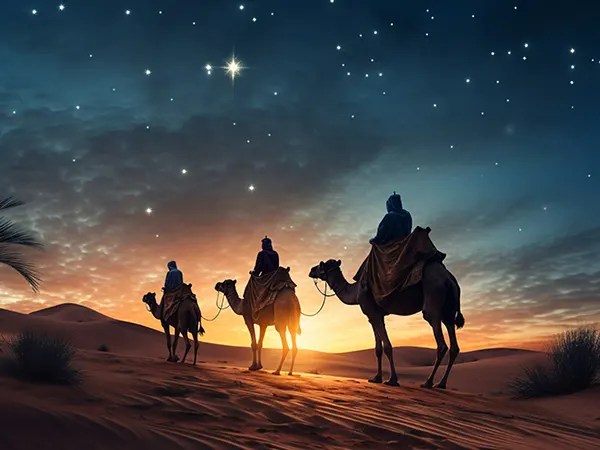
I opened my New Testament translation by Dr. Jay Adams to the beginning book of Matthew and read Chapter 1 this morning. I noticed that the magi from the east saw the star in the east harkening the birth of the Messiah and came to worship Him. But what I had never paid proper attention to was that they also returned ‘to their own country’. This implies they were not Israelites. The main entities bordering Israel in that time were Egypt to the west and the Chaldean/Medes/Persian empires to the east. In Strong’s concordance, magos means ‘oriental scientist’ which is such a cool term 🙂

μάγος mágos, mag’-os; of foreign origin (H7248); a Magian, i.e. Oriental scientist; by implication, a magician:—sorcerer, wise man.

‘Oriental scientist’ definitely doesn’t sound Hebraic.

Herodotus claimed that the magos were originally the aristocrats of the Median nation, who were also gifted with the interpretation of dreams. With the spread of Hellenism, magos became an adjective; magas techne, or ars magica in Latin, referred to the expertise of astrology and magical rituals. All these conceptual elements come together in Matthew’s story (https://www.worldhistory.org/Magi)

This reminded me of Daniel and Nebuchadnezzar and my theory on how Daniel took his sacred Essenic teachings and knowledge of God and taught them to the king, who then became a keeper of the faith. I propose that this esoteric knowledge had been passed down to Daniel from the Zadokite priests since the time of the Midianite priest Jethro, Moses’ father-in-law (who taught it to Moses) from the time of the Egyptian exile (1870 BC — 1450 BC) and possibly even before….

Daniel was exiled to Babylon at the age of 15 in or around 605 BC, and Babylon became usurped by the Persian empire later. My theory is that this sacred knowledge was passed down generation by generation by the Zadokite priests who were the real priests of God, and who probably were the priestly writers who perpetuated the ‘priestly code’ hidden in the Pentateuch. Which means that 600 years later, at the birth of Immanuel, the *keepers of the knowledge* were still paying attention and noticed the star that illuminated the birth of Jesus. This is a mind-boggling phenomenon. Why else would eastern ‘astrologers and scientists’ care so much about Israel’s messiah, enough to travel months taking the most valuable gifts of gold, incense, and myrrh to worship Him personally? These are noteworthy gifts because they are all the accoutrements of a Kingly court.

For those with eyes to see and ears to hear, there is definitely another story line going on beneath the surface. This implies that a sanctified sect, who became known as the Essenes, spread across that entire region of the globe from Egypt (initially) to Persia (later) via murmurings and writings. How else would they still be watching for their foretold Messiah, Yeshua, passing along this pristine knowledge orally, and burying it in the symbology of the bible.

~<3

God Also Seeks Us~

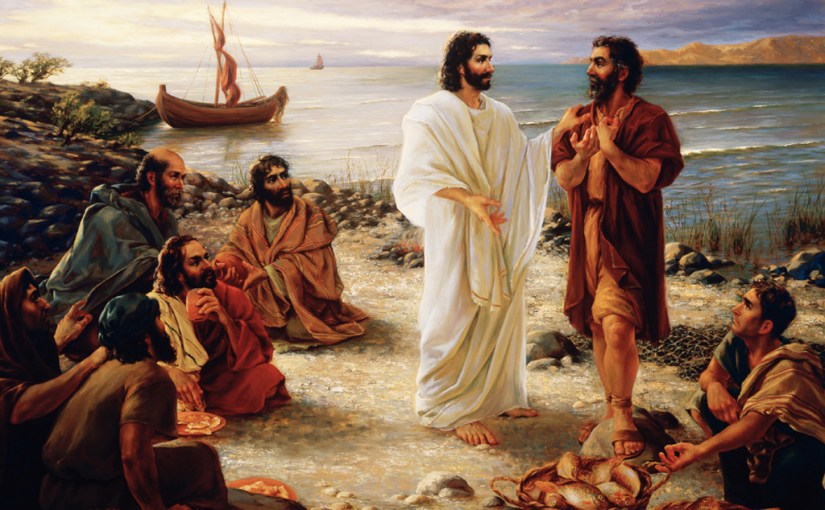
 So when they had eaten breakfast, Jesus said to Simon Peter, “Simon, son of Jonah, do you love Me more than these?”

He said to Him, “Yes, Lord; You know that I love You.”

He said to him, “Feed My lambs.”

16 He said to him again a second time, “Simon, son of Jonah, do you love Me?”

He said to Him, “Yes, Lord; You know that I love You.”

He said to him, “Tend My sheep.”

17 He said to him the third time, “Simon, son of Jonah, do you love Me?” Peter was grieved because He said to him the third time, “Do you love Me?”

And he said to Him, “Lord, You know all things; You know that I love You.”

Jesus said to him, “Feed My sheep.” ~ John 21:15-17

I had always wondered about this passage of scripture where the newly-risen Jesus admonished Peter repetitively to ‘Feed my sheep’. During bible meditation the other morning, I opened to Ezekiel Chapter 34. in the section of my bible entitled ‘God, The True Shepherd’, verses 13-15, the prophet states 3 times that the Lord GOD will feed His sheep. the risen-Jesus was stressing this feeding bit three times so that Jews who knew their bible would be able to draw the analogy from the Prophet Ezekiel to Jesus being the long-awaited Messiah: That Jesus is the Good Shepherd. This is very interesting because Jesus was always using the words of the law and the prophets to make his disciples understand His identity.

But what is even more interesting to me is that in this passage God clearly states:

I Myself will search for My sheep and seek them out….so will I seek out My sheep……I will seek what was lost ~Ezekiel 34: 11, 12, 16

Most of us know the short verse in the New Testament, Matthew 7:7: “Seek and ye shall find”, referring to God, but I don’t think most of us know that God is also seeking after us, harder than we are able to seek after Him, so

God seeks us as we seek Him

This isn’t a one-sided relationship, but if the relationship fails, it is always 100% because we dropped the ball. God isn’t just THERE for us, He is SEEKING AFTER us. Let that sink in. He isn’t passively waiting for us to find Him; He is always drawing us in and trying to make Himself known to us! I can look back on numerous times when I now know God was throwing me a lifeline but I refused to grab it.

I am frequently reminded by God that I try too hard, that I need to let Jesus do more of the heavy lifting. This is hard for an overachieving-type person like me. This passage is just another example that God is an active Presence in our lives, seeking us, calling us, drawing us to Him through His Son Jesus Christ.

Another afterthought I had about this NT passage in the book of John placed at the end of the gospel message is: I wonder why the risen-Jesus called Peter, Simon? Simon, son of Jonah was his identity before being appointed by Jesus as ‘Peter’, who would be the ‘rock’ (Peter means rock), or foundation, of his church. This, combined with the fact that none of the disciples at the sea recognized this risen-Jesus is confirmation to me that it really wasn’t Jesus, but a messenger sent by God to continue to spread the idea of the risen Christ. It was likely a fellow Essene who knew the mission of Jesus but did not know the intimate details of the inner group of disciples such that he did not realize Jesus had called Simon by a different name.

That the Jesus who walked on the earth after his death was not really Jesus has always been something I have known/believed, since I do not believe a dead body can literally rise up. At the tomb of Jesus, Mary originally called the apparition of Jesus the gardener….and in another instance, when the disciples were walking along the road, they did not recognize the Jesus figure behind them, walking with them. I believe that after Jesus’ crucifixion these figures were all Essenes who wanted to make sure to tie up any loose ends or questions regarding Jesus’ divinity, and to promulgate the purpose of Jesus’ life….and death. Men who would have been knowledgeable enough about The Way to spread its message, but not knowledgeable enough to be privy to the fact that Jesus had a new name for Simon.

God can do miracles, but He works those miracles within the natural realm He has already created. He is not a liar, there is no lie in Him. But He does work in mysterious ways. And we cannot understand Him, even if we think we do, as illustrated in the book of Job.

~Love & Light

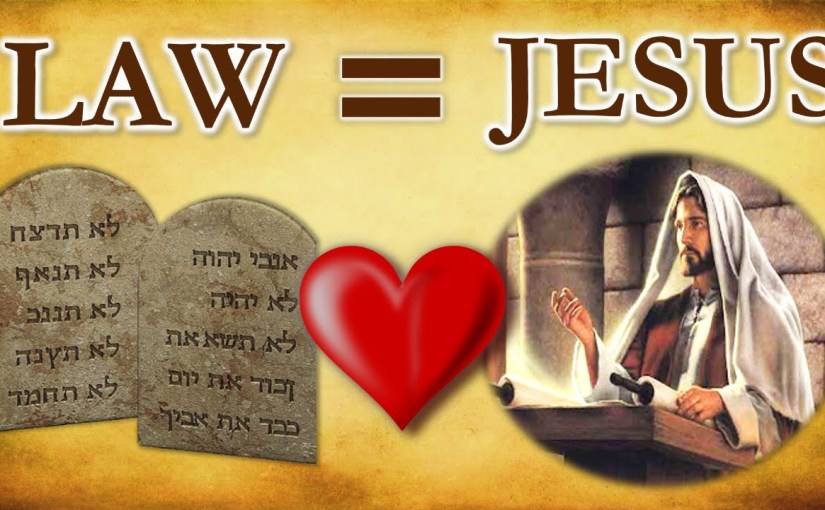
The Law, Jesus, and the New Covenant

Yeshu’a was given to the people of the world to be the perfect lamb of God, by God himself, as a flesh and blood sacrifice, and an everlasting atonement for the sins of all those who accept this in his name.

“And he himself is the propitiation for our sins, and not for ours only but also for the whole world.” ~ 1 John 2:2

Propitiation (also called expiation) is the act of appeasing or making well disposed (from Latin propitiāre, to appease; from propitius, gracious), especially a deity, thus incurring divine favor to avoid divine retribution.  Propitiation is translated from the Greek hilasterion, meaning “that which expiates or propitiates”.  There is frequent similar use of hilasterion in the Septuagint in regard to the mercy seat on top of the ark of the Covenant.  For example, the mercy seat was sprinkled with atoning blood on the Day of Atonement (Leviticus 16:14), representing that the righteous sentence of the Law had been executed, changing a judgment seat into a mercy seat.

The thought in the Old Testament sacrifices and in the New Testament fulfillment, is that Christ as Messiah completely satisfied the just demands of our Holy Father for judgment on sin, by his death on the Cross of Cavalry, for ever and ever.

He also came to preach a message of love and grace regarding Yahweh against a backdrop of legalism and burgeoning self-righteousness; to remind people that God was not just to be feared as judge and warrior, but revered as nurturer and lover of all.

However, Yeshu’a was not sent to replace the ancient words of God via Moses or the Old Testament authors:  “Do not think that I have come to abolish the Law or the Prophets; I have not come to abolish them but to fulfill them.” ~ Yeshu’a via Matthew 5;17

God’s Covenants (the rainbow, the promise to Abraham, The Ten Commandments, that David and his descendants would be royal heirs) are inviolable and everlasting, and should be adhered to by any wise person who not only fears the LORD but who respects and loves Him as Almighty Sovereign King.

When Yeshu’a instituted the Lord’s Supper the night before he was crucified for our sins,

“He took the cup, and gave thanks, and gave it to them, saying, ‘Drink from it, all of you.  For this is my blood of the new covenant, which is shed for many for the remission of sins.” ~Yeshu’a via Matthew 26:27-28

Yeshu’a was not just making a NEW covenant, he was also fulfilling an old law whereby one had to make daily blood sacrifices and frequent offerings to the LORD, to be almost in a perpetual state of the act of atonement.  However, Yeshu’a’s entrance on the religious scene marks a point in history as sacred (or more so) than the Exodus story, the story of Creation, or the Abrahamaic migration from Ur; and in so doing–in so marking history profoundly–Yeshu’a in this way did make a new covenant, placing himself on the altar a the ultimate flesh (grain) and blood sacrifice for our sins, forever.  We need only accept this fact on a daily basis to be redeemed.  But we also are held accountable for the rest of God’s Law.

Circumcision was a sign of God’s chosen people that marked them outwardly for life.  We needed the message Yeshu’a brought about God’s love and grace and mercy, and we should be thankful throughout every day for the sacrifice he made for us as the perfect lamb of God.  But we also need to show God that we are proud to be His, that we are willing to be marked as His, and that we are eager to sacrifice our fleshly bodies for a deep spiritual relationship with Him, including circumcision.

Abrogating all God’s former Law and Word with new testament conceptualism where Christians misinterpret Yeahu’a’s Divine mission, annihilating everything that has been held as a holy sacrament before, is a grave mistake.

To sum it up, I love this concept:

I am the Alpha and the Omega, the Beginning and the End, the First and the Last. ~Revelation 22:13

My Mantle

Today God has placed His mantle upon me; a mantle of healing. 😊

I had to research the meaning of this as I only had a rudimentary knowledge of what mantle means from reading the bible verses about Elijah, Elisha, Joseph, and John the Baptist. I am sure there are others, and I think it would be an interesting study to do–just how many saints in the bible wore mantles.

Today is 4/14/2024. This date conflates to the number ‘8’ which in numerology means 1 more than perfect. As in the number of people God chose to inhabit the ark. In my internet search, the number 8 is described thus:

Numerology 8

The number eight (8) is the sign of organization, perseverance and control of energy to produce material and spiritual achievements. It represents the power of realization, abundance in the spiritual and material world. Sometimes it denotes a tendency to sacrifice but also to be unscrupulous.

The number eight (8) must develop or balance the aspects of ambition, organization, authority and sense of power. It is very susceptible and sensitive with great capacities to live in society. He/she is also emotional, empathetic and of great social intelligence. # Number 8 people relate very well in society and in dealing with people they are usually very careful, cordial and friendly. It is not easy to know the number 8 very deeply, because it is very changeable, as well as arbitrary and capricious. As soon as good as bad, loving as indifferent, magnanimous as selfish.

While 8 isn’t my life path number, it is significant to me today in that God placed His mantle upon me. I think it’s like when you work hard and finally graduate or pass a certification exam. It’s His way of saying, “you have now arrived at the place I have brought you”. I consider this way more important than any man-made achievement or accolade, although those are important to be able to carry out His work in this world.

I feel the 8 fits perfectly because to get here I have had to sacrifice many things, mostly of the flesh. I no longer drink, I don’t do drugs, I don’t engage in sexual immorality, I live by the law and the love of God, and I believe in every word of the bible, even if I don’t fully understand all of it yet. I believe my body is a temple of the living God. I have shown Him that I can wait on Him, and trust in His timing. I have given Him control of my vehicle. If I heal people, in my heart I want God to receive the glory and I want His light to shine through me, so that people see Him and His love through me, not that they see me. It’s a culmination and reward for hard work and sacrifice. And He sees and knows this in all of us. He wants us to achieve great things for His Kingdom. We are all soldiers in His army, it’s just that some of us love Him more than others. Some of us hate Him and blaspheme Him.

Maybe He has a special mantle for you.

Israel Biblical Studies.com states: “Jacob expressed his love to Joseph by giving him a special gift – ketonet passim כְּתֹנֶת פַּסִּים. The word passim here can be translated as “colorful”, “embroidered”, or “striped” – but it can also denote a long garment, coming down to the “palms” of the hands and the feet, or the material out of which the coat was made (fine wool or silk). (I think of Jesus’ stripes, His very flesh was His divine mantle)

Kethoneth [Strong 3801, ‘kethoneth or kuttoneth‘]

Kethoneth, garment, is mentioned seven times – a perfect number – in Genesis: once in relation to the coats of skins which God provided for Adam and Eve, then six times regarding Joseph’s garment. Joseph’s garment appears after his death, with blood upon it – a significant matter ~ *JESUS*

Joseph’s garment is that which sets him apart from his brethren – also a significant matter.

Then kethoneth appears seven times in Exodus relating to Aaron and his sons. It is a matter of priestly attire and priestly service. Only the God-appointed High Priest and his sons may don this attire.

Kethoneth appears twenty seven times in scripture (the quoted number, in one concordance, of “twenty nine” is incorrect). Twenty seven is a highly significant number and draws very great attention to this matter. Three times three times three is extremely significant.

I personally discovered in my bible studies that 27 is a reference to 22/7 which is the primitive representation of pi. Pi denotes circle and circle denotes sun and sun symbolizes God Almighty, ALHYM.

The mantle is a symbol of a man’s gift, the call of GOD, and the purpose for which GOD has called him. It is a reminder that we are wrapped in GOD’s authority and that we have a purpose and a gift to share with the world.

What is the difference between mantle and anointing

The mantle is a symbol of authority and position. With the mantle comes a greater degree of power, position, and authority. You have an anointing to do something but someone else is wearing the mantle. The mantle of responsibility is a heavy burden to bear. It requires a great deal of strength and fortitude to carry out the duties of an important position. When someone takes on the mantle of responsibility, they are taking on a great deal of weight and pressure. It is not an easy task, but it is one that is essential to the success of any organization.

What is a woman’s mantle?

A cape is a type of clothing that has been worn by both men and women throughout history. Technically, the term cape refers to a long, loose cloak that was worn during the 12th to 16th centuries. However, by the 19th century, the term was used to describe any type of loose-fitting, shaped outer garment that resembled a cape. Capes continue to be worn today and are often seen as a stylish and elegant piece of clothing. The mantle is a special endowment of the Holy Spirit that gives kingdom leaders an advantage over other leaders. Kingdom leadership involves a radical change in thinking and a close relationship with the Holy Spirit. Those leaders who carry the mantle are continually renewing their minds to spiritual truths. This helps them to make wiser decisions, better understand the spiritual realm, and more effectively lead God’s people.

~The Internet

I asked God what my mantle was for and He told me HEALING. I then asked Him what it looked like and He said I could choose what it looks like, and that made me smile. I was concerned that Jesus abrogated the mantle in Matthew 10:10 when He is quoted as saying ‘…do not take 2 tunics…’ However, I am convinced Jesus meant ‘do not take extra clothes, only those on your back’. Of course, his disciples need to wear a cloak to be protected from the elements. A mantle to my mind is like a divine cloak.

I think this happened today because I am beginning a very long fast from food. I am calling it a ‘coffee fast’ because I am drinking only coffee (with cream and sugar), and hydrating water. I feel like I need to factory-reset my body. The effects of trauma from infancy and childhood, bad eating habits, and menopause have not factored well into my physical constitution as it regards my habitus. In other words, the fat has taken root and doesn’t want to let go. I appreciate that God gives us fat as calorie storage for survival, but for me it has turned into a detriment. And there seems to be no other way to fix it than long-term fasting. Some of my dear friends in the Lord actually fasted 40 days, so we shall see how long God leads me to fast. Jesus also fasted 40 days, so it does seem significant that this is the time and place I have begun my fast.

I also have been praying about being granted greater spiritual authority by God, and Dr. Rob Reimer–an expert in deliverance ministry–says that fasting and prayer are necessary for that to be achieved; to be able to cast out the most tenacious and vicious of demons, those imbedded from sexual abuse.

Which brings us full circle to being given a mantle. I now have the ability to heal and cast out demons. Praise God!

Qumran

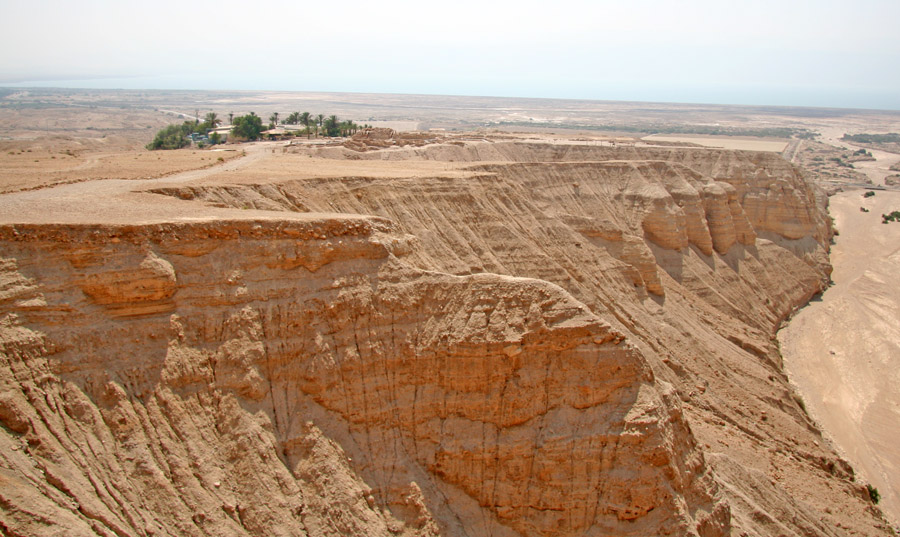
This place fascinates me.  I definitely hope to visit it some day.  While I believe Jesus Christ stood on His own in this world and did not identify with any sect, I do believe the Essenes might have played a role in His life.  Perhaps by being the mages who recognized His identity to begin with, and who may have taken Him under their wing for training and instruction, with Him setting out to continue His special ministry to the world, to us.

Qumran (Hebrew: קומראן‎; Arabic: خربة قمرانKhirbet Qumran) is an archaeological site in the West Bank managed by Israel’s Qumran National Park.[1] It is located on a dry plateau about a mile from the northwestern shore of the Dead Sea, near theIsraeli settlement and kibbutz of Kalya. The Hellenistic period settlement was constructed during the reign of John Hyrcanus, 134-104 BCE or somewhat later, and was occupied most of the time until it was destroyed by the Romans in 68 CE or shortly after. It is best known as the settlement nearest to the Qumran Caves where the Dead Sea Scrolls were hidden), caves in the sheer desert cliffs and beneath, in the marl terrace. The principal excavations at Qumran were conducted by Roland de Vaux in the 1950s, though several later campaigns at the site have been carried out.  ~Wikipedia

Looking east from the Qumran gorge, the small structure on the upper left amid the trees contains the modern Qumran visitor’s center. The ruins of Qumran can be seen immediately to the right. The settlement was built close to the seaward side of a plateau. The Dead Sea forms a hazy backdrop. To the extreme right is the Wadi Qumran, a torrent that is dry most of the year. On the few occasions when it rains, though, it becomes a ravaging torrent that has eroded the side of the plateau where Qumran is. From the mid-left the remains of an aqueduct run down to the settlement. This channel helped furnish Qumran with a valuable supply of water. At the end of the outcrop in the center of the picture is Cave 4, which supplied the vast bulk of the Dead Sea Scrolls.  ~Wikipedia

This picture is just so beautiful~

“Qumran Caves” by Grauesel , as seen from the other side from the previous photo

It is interesting how much room we think we need to have to live now.  My apartment is a palace compared to this size-wise.