Open Source Healthcare

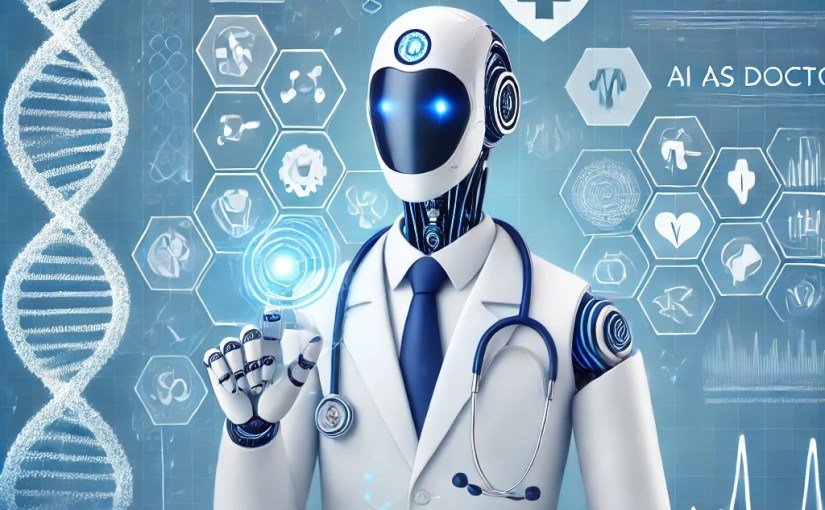
AI Doctor App?

Good afternoon, everyone! I am super excited about the possibilities that AI is opening up in HMIS and healthcare. As a new FNP, I feel the gravity of my assessments, diagnoses, and treatments for all patients, even those with straightforward problems. I still consult my texts and guides for every case, and double and triple-check my pharmaceutical prescriptions. I remember learning that 76% of diagnoses could be obtained from a patient’s subjective data alone, so I spend time carefully collecting as much information as I can during the health history. This is easy for me to do because my FNP practice is a side-line gig, something I do as a ministry for friends and family as I rely on my full-time, low-stress job as a home health nurse to pay my mortgage. But in most clinical practices, primary care providers see one patient every 20 minutes and write more than 20 prescriptions per day, with an average visit count falling between 15 to 25 patients per day (Wolters Kluwer, 2020). With that lofty number it is just not possible to research much on each patient, and errors are not unlikely to happen in this heavy workload environment.

But what if artificial intelligence (AI) did the heavy hitting for us? As office staff, nurse aids, nurses, and phlebotomists go about their business performing ancillary healthcare services gathering patients’ demographic data, subjective information, vital signs, and lab work, instead of merely typing it into a typical software database, this information could interface with an AI platform which specializes in robust medical diagnostic systems. These AI systems are also called large language models (LLMs). They are machine learning systems that produce humanlike responses from language, and can solve complex cases, show clinical reasoning abilities, take patient histories, and even display empathetic communication (Savage et al., 2024). The AI platform could then function as the brains of the provider and ‘crunch’ the data into a viable diagnosis. From here, the treatment plan would logically flow, along with the usual prescriptions, further tests, and referrals. It is mind-boggling. But could an AI function as well as a real human medical provider?

According to this provocative study in JAMA by Goh et al. in 2024, AI could–and did–outperform medical providers. This study was a randomized clinical trial, and it was conducted over one month in 2023. It investigated whether physicians with three years average experience with training in family medicine, internal medicine, or emergency medicine were more successful diagnosticians when they utilized AI tools (the intervention) versus traditional tools. Surprisingly, they were not. The physicians that used ‘conventional’ research aids such as UpToDate, Google, and textbooks, were 74% accurate in their diagnoses, and the physicians that used AI-enhanced search tools of ChatGPT Plus [GPT-4] and OpenAI were only 76% accurate, which was not a statistically significant improvement. However, the LLM alone was 92% successful in finding the correct diagnosis (Goh et al., 2024). Because the researchers’ original hypothesis was whether AI intervention helped in providers’ diagnostic awareness, and were not looking at AI versus providers, they did not heavily interpret or extrapolate these incidental findings, even though they did state that more research is necessary in marrying these two entities: Physicians and AI tools.

No one wants to put himself out of a job, even if AI is showing promise of being a better care provider than a physician. In light of this admittedly small study, I envision that AI will be the future answer to our broken healthcare system and that it will bring an open-source mindset into the highly political and powerful arena of medical information, which is modern medicine.

References

Goh, E., Gallo, R., Horn, J., Strong, E., Weng, Y., Kerman, H., Cool, J. A., Kanjee, Z., Parsons, A. S., Ahuja, N., Horvitz, E., Yang, D., Milstein, A., Olson, A. P. J., Rodman, A., & Chen, J. H. (2024). Large language model influence on diagnostic reasoning: A randomized clinical trial. JAMA Network Open, 7(10), 1-12. https://doi.org10.1001/jamanetworkopen.2024.40969

Savage, T., Nayak, A., Gallo, R., Rangan, E., & Chen, J. H. (2024). Diagnostic reasoning prompts reveal the potential for large language model interpretability in medicine. NPJ digital medicine7(1), 20. https://doi.org/10.1038/s41746-024-01010-1

Wolters Kluwer. (2020, July 16). NPs and PAs by the numbers: The data behind America’s frontline healthcare providers. NPs and PAs by the numbers: the data behind America’s frontline healthcare providers | Wolters Kluwer

My Ministry Has Begun!

I have now successfully conducted three home health nurse practitioner visits and I am very pleased with the outcome and the satisfaction I feel doing this ministry for my Lord. I am still working out some kinks such as in getting to know my electronic charting system, but that is to be expected. As directed by God I do not charge for my services, but have received a cash offering thus far, which is much appreciated! My visits last about 45 to 60 minutes which is just right.

It has been confirmed to me that health care in America has been unnecessarily complicated by several factors which I would like to contemplate here. Possibly the weightiest variable is that people have become patients. A patient implies passivity, as in patiently waiting to be practiced upon. What I mean by this is that there is a psychology inherent in our society that we must be well, without pain, and without illness; and if we are not well, we merely need to present ourselves to a local doctor, submit ourselves to him passively, and become fixed. If we do not get cured, then that means there is a breakdown in access to medical care, whether that is physical, mental, or financial. That illness, pain, and suffering could be part of our human reality is rejected by us, and if we cannot be made well, we blame the ‘medical system’. Since society is made up of persons, each person comes in with the premise that

I deserve to be well and if I am not well, that is society’s [doctor, hospital, insurance, government] problem to solve ~

We feel that being healthy is a right. And we blame doctors and hospitals when we access care and we are not fixed, and not fixed immediately! We blame doctors and hospitals when we are charged too much or when the cure fails, as it inevitably will. Why? Because doctors are not God, and sickness and suffering are part of the human condition.

Is being healed biblical? Yes, it is. In the bible, doctors as such are rarely mentioned and when they are mentioned it is usually in derision, or in the context of a waste of time and provisions. Who is the Healer in the bible?

Jesus

Time and again I see good people, Christians even, purchase sophisticated tests and spare no expense or effort to be made well. There is no cure they will not travel to the clinic to receive, even if they do not have the means or transportation. They are affronted at the price of healthcare and offended at the thought of actually having to pay for it. People work so hard to obtain what they perceive as medical care for any and every symptom. They are willing to take any testing even if it involves huge amounts of radiation as with CT scans, and more and more medications each year to modulate their body’s response to life, circumstance, heredity, or lifestyle choices. Then after combing through their body with high-powered scopes and unnatural means, when they receive the fateful diagnosis of cancer or other disease, they become fraught with fear over how they are going to deal with this news. It becomes their focus, and by default becomes their families’ and friends’ focus as well. In biblical terms, it becomes their new idol. God did not intend for us to scrutinize our bodies to that degree! Our eyes are not made to penetrate the depths of cells or inner flesh, nor minds. So, it should be no surprise that we cannot handle the information we receive when we do. It is just another tactic of the devil to give us more power than we should have access to.

Christians have been duped–right along with everyone else–to demand healthcare in the form of western medicine. An example is how many flocked to get Covid vaccines and wear masks due to fear of dying from Covid-19, a novel Coronavirus. The average elderly patient in home health care takes about 5 to 10 different prescription medications. If you know me, you know that it is a pet peeve of mine that Christians give lip service to Jesus until they get sick, then they go to their false god in a white coat for their ‘real cure’. I realize they know not what they do, and are honest victims of the anomaly known as ‘medical care’, but come on, Christians should know better!

To try and deal with this petulant demand of American citizens, systems have been formulated and manipulated to address every possibility for a patient encounter, complaint, lifestyle choice, symptom, risk factor, and even gender ideology! This has occurred to such a degree that Medicare decrees how a literal office visit must go, how many minutes it should last, what tests must be ordered, what vaccines encouraged, and what medications prescribed. If you deviate from their algorithm at all, you can not only not receive payment, you will likely be audited, but you could also be investigated by the state medical board! Again, we all saw this happen (unlawfully) during Covid when some physicians who refused to treat according to the mandated narrative at the time, lost their licenses, or were even jailed! The type of care this medical model fosters is one of defensive medicine. A care provider is deemed good if they are simply following the algorithm, and bad if they are practicing outside the majority-approved doctrine. That is why many doctors are leaving ‘the system’ and going off on their own and not taking Medicare payments.

But unfortunately, it isn’t that easy to escape the clutches of the model of western medicine, because its pervasive reach is rooted in the fundamental ideology that people believe they deserve to be well, and to be made well.

I envision my ministry as healing those God sends to me in the way He decrees to me. This might be as simple as listening to their story and validating their experiences. It could be listening to their physical ailments and helping them troubleshoot healing modalities they might not have tried. It might involve prescribing medication that can treat an ailment with the goal of fixing the underlying problem, if possible. It might involve laying on of hands, anointing with oil, and praying for a cure. It might even involve casting out demons. It might involve doing nothing instead of doing something than can make things worse.

Regarding their health, people can be like children when they demand a smorgasbord of treatments and have a temper tantrum if they do not receive the perfect anecdote to what ails them. I witness this every day in my job. But that is God’s plan for us here on earth. God has allowed satan to run this world and there is no guarantee we will live a healthy or happy life. Saint Paul of biblical fame had a thorn in his side that God would not cure even though he begged numerous times for relief. The Apostle Paul came to see his ailment as a gift, as a sign to him and others that his strength came from not himself, but from our Savior, Jesus Christ, lest be become too proud in his flesh.

People are proud and demand to be made well. Pride is one of the seven deadly sins. Where pride is, humility cannot exist. And we are called to be humble servants of our Lord God. Sometimes God allows us to suffer, to be in pain, and to have an ailment. But the bible says after a while, He will deliver us from that same suffering, but we must have faith and believe in Him for this.

So, to tie up my thoughts here, God’s people are like children, we want everything to be perfect in our lives, including our health. To obtain this end, we demand that society provide this to us in a way that doesn’t cost us too much. We don’t look to God for His plan and His cure in His way and His timing. We make care providers our false gods and our hospitals temples for false gods. When these things inevitably fail, we become infuriated and blame them. Then at some point when we reach the end of ourselves, we feel abandoned by God. The irony is that we abandoned God to begin with, by not trusting Him fully. God isn’t just a deity we sing to and pray to in name (or in vain) on Sunday. He is our biggest Fan, our greatest Lover, and our only Healer. We must look to Him first and foremost for our healing and well-being, for everything.

And that is who I serve in my practice: God. I am so thankful I have been granted standing orders from God to treat His people in His way ~ ❤