
I have written about the sin of medical practice before on a much earlier post. When I came to know the Lord, one of the first things He told me in His word and by His Spirit is that medical procedures, interventions, and pharmaceutical drugs are not His will for man. As a nurse, this is very pertinent to my work and life. As a Christian, I watch my brethren fall to this sin daily, not really thinking about the employment of modern medicine in their lives or wondering if God is okay with it. They just assume it is okay, that Luke of the bible was a ‘physician’ and therefore physicians are alright by Him.
As in my other post, the bible never speaks of physicians otherwise in a good sense unless it is referring to Jesus, who was the Great Physician. If we heal in any man-made way using man-made tools or alchemy we are not healing in Jesus’ name or by His power. We are working according to man’s power and ways. To me this is obvious but that is not so for my brethren. Perhaps it is because doctors have been plying their trade corporately now for well over a century, such that several generations of folks have been taken in by them, that we have forgotten the truth about doctors and have forgotten to test all things and spirits as the bible commands. Overwhelmingly, our fathers and their fathers have taught us by their action that physicians are a good thing. We collectively have no memory of a time when people did not use doctors. Or if we do remember this, we think of the Dark Ages which is predominately associated with ignorance and death.
But I am here to say modern medicine is not of God, but of the devil. I think it’s probably the most prevalent way that Satan ensnares believers, especially older ones who fall under the auspices of medicine much more than younger ones. I mean, think about it from a biblical perspective. What could be better than for an older or sick believer to die? They are going to be separated from their body and immediately go to be with the LORD. Can you think of a reason why the devil wouldn’t want that? I can! As long as men remain on earth, satan has access to them, in order to spread his reign of terror to kill, steal, and destroy.
Why can’t we see that hospitals are really temples to baal? That medical providers in their white coats are satan’s high priests? That bloodletting and nakedness upon a steel table being cut into with metal instruments are not good, but bad, things? That hacking upon, removing, and replacing God-given body parts is an offense to us and God?
Once your eyes are open to the truth, you realize how barbaric it is.
I have spoken about the overuse of medical care in the last year of life in my other post so will not take that tack here. What I really wanted to expound on here is the verse from the 2nd book of the bible that ties up the whole matter on the subject:
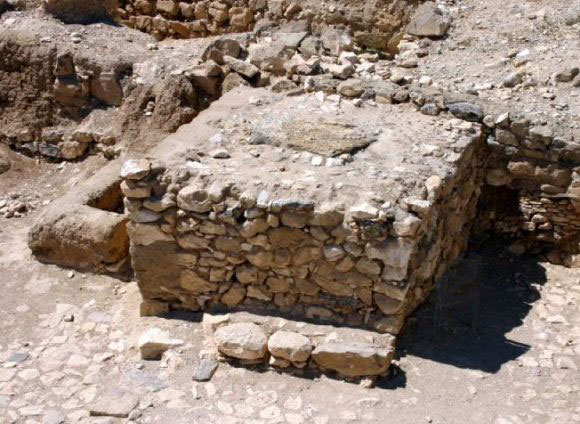
And if thou wilt make me an altar of stone, thou shalt not build it of hewn stone: for if thou lift up thy tool upon it, thou hast polluted it. ~Exodus 20:25
I have included a intelligent commentary on this verse below for your perusal. I love how God addresses the whole matter of medical care in one sentence via this bible verse. That is so like Him; to simplify that which man complicates. This was one of the first commandments God gave to His chosen people after fleeing their bondage in Egypt, so that they would know the proper way to worship Him.
A commentary from Bible Hub on this verse: Keil and Delitzsch Biblical Commentary on the Old Testament For the worship of Jehovah, the God of heaven, Israel needed only an altar, on which to cause its sacrifices to ascend to God. The altar, as an elevation built up of earth or rough stones, was a symbol of the elevation of man to God, who is enthroned on high in the heaven; and because man was to raise himself to God in his sacrifices, Israel also was to make an altar, though only of earth, or if of stones, not of hewn stones. “For if thou swingest thy tool (חרב lit., sharpness, then any edge tool) over it (over the stone), thou defilest it” (Exodus 20:25). “Of earth:” i.e., not “of comparatively simple materials, such as befitted a representation of the creature” (Schultz on Deuteronomy 12); for the altar was not to represent the creature, but to be the place to which God came to receive man into His fellowship there. For this reason the altar was to be made of the same material, which formed the earthly soil for the kingdom of God, either of earth or else of stones, just as they existed in their natural state; not, however, “because unpolished stones, which retain their true and native condition, appear to be endowed with a certain native purity, and therefore to be most in harmony with the sanctity of an altar” (Spencer de legg. Hebr. rit. lib. ii. c. 6), for the “native purity” of the earth does not agree with Genesis 3:17; but because the altar was to set forth the nature of the simple earthly soil, unaltered by the hand of man. The earth, which has been involved in the curse of sin, is to be renewed and glorified into the kingdom of God, not by sinful men, but by the gracious hand of God alone. Moreover, Israel was not to erect the altar for its sacrifices in any place that it might choose, but only in every place in which Jehovah should bring His name to remembrance. וגו שׁם הזכּיר does not mean “to make the name of the Lord remembered,” i.e., to cause men to remember it; but to establish a memorial of His name, i.e., to make a glorious revelation of His divine nature, and thereby to consecrate the place into a holy soil (cf. Exodus 3:5), upon which Jehovah would come to Israel and bless it. These directions with reference to the altar to be built do not refer merely to the altar, which was built for the conclusion of the covenant, nor are they at variance with the later instructions respecting the one altar at the tabernacle, upon which all the sacrifices were to be presented (Leviticus 17:8-9; Deuteronomy 12:5.), nor are they merely “provisional” but they lay the foundation for the future laws with reference to the places of worship, though without restricting them to one particular locality on the one hand, or allowing an unlimited number of altars on the other. Hence “several places and altars are referred to here, because, whilst the people were wandering in the desert, there could be no fixed place for the tabernacle” (Riehm). But the erection of the altar is unquestionably limited to every place which Jehovah appointed for the purpose by a revelation. We are not to understand the words, however, as referring merely to those places in which the tabernacle and its altar were erected, and to the site of the future temple (Sinai, Shilloh, and Jerusalem), but to all those places also where altars were built and sacrifices offered on extraordinary occasions, on account of God, – appearing there such, for example, as Ebal (Joshua 8:30 compared with Deuteronomy 27:5), the rock in Ophrah (Judges 6:25-26), and many other places besides.
When I first read and studied this verse, I thought it was rather strange. Like why would God care at all if stone was hewn or not. I mean, hewn stone would stack much better and be more beautiful. It would last longer. It would take more time and attention to create. All of these seem like attributes in an altar to God. So why would God say the opposite? Why would a tool of man pollute the stone? Isn’t man, and by inference, man’s tools, more valuable than stone? It’s a very interesting verse. Evidently in ancient times, pagan cultures also erected stone altars and made them fairly elaborate, even engraving images in them. Obviously engraven images is a violation of the 2nd commandment. But if we draw this thought our further, we can see that the altar then can become an idol, and it would come to be seen and admired more than the sacrifice and the purpose behind the sacrifice which is to repent to God and draw closer to Him.
But even more intriguing is that maybe God was also speaking to us, thousands of years into the future. When I read some Jewish commentary from the ancient rabbis on the matter, they differed on their interpretation and meaning of this verse and were a bit perplexed by it as well. What if God was speaking through Moses all the way to us, knowing that we would become his altars after Jesus’ sacrifice on the cross, and that we would also be led to alter ourselves with tools in our selfish pursuit of life for our own sake. We submit to this treachery out of fear of dying and out of desire to be as perfect as possible. We think we can create a better body and do a better job than God has made provision for; that we can hew out a more beautiful self, and hopefully live longer than we would in our natural state. See the analogy?
Can we apply this to ourselves? This concept of altar, and defiling the altar with tools?
I think it’s pretty clear that we can! When we accept Christ, we become the living altar of God, or temple of the Holy Spirit, and this is confirmed to us in the New Testament in several verses:
Do you not know that you are God’s temple and that God’s Spirit dwells in you? If anyone destroys God’s temple, God will destroy him. For God’s temple is holy, and you are that temple. Let no one deceive himself. If anyone among you thinks that he is wise in this age, let him become a fool that he may become wise. For the wisdom of this world is folly with God. For it is written, “He catches the wise in their craftiness,” and again, “The Lord knows the thoughts of the wise, that they are futile.” So let no one boast in men. ~1 Corinthians 3:16-21
And here:
…do you not know that your body is the temple of the Holy Spirit who is in you, whom you have from God, and you are not your own? For you were bought at a price; therefore glorify God in your body and in your spirit, which are God’s. ~1 Corinthians 6:19-20
A proper temple always contains an altar. For Christians we know that the physical altar has become the body of each of us who believes in Christ as our Savior. We are not our own, we were bought by God through Jesus. We become justified and are sanctified, which is a lifelong process. The bible makes it clear that this is not just in a spiritual sense, but in a very real physical way as well. We do not just symbolically belong to God which is I think how most Christians reconcile themselves in the world, but we physically belong to God.
“But we must be cautious not to limit our understanding of “altar” to a mere physical structure. The New Testament emphasizes that our bodies are temples of the Holy Spirit, and that we are to offer our lives as living sacrifices. This suggests that every believer, in a sense, becomes a living altar – a place where heaven and earth meet, where offerings of praise and service are continually presented to God.” (https://christianpure.com/learn/bible-study-significance-altars/#google_vignette)
So if we have become the living altar, we are not to be defiled by tools made by man. This applies in not just a spiritual sense but in a physical sense. To allow a man-made tool to be hewn on our bodies is to permit sin against God, since He owns our bodies once we become believers. If we do allow sin to defile our body, if we try to make ourselves ‘better’ than God made us in His perfection and will, then we set ourselves up to become an idol against our Creator.
Neither shalt thou go up by steps unto mine altar, that thy nakedness be not discovered thereon. ~Exodus 20:26
God follows the ‘tool’ verse with the ‘naked’ verse above. God speaks about nakedness in many places in the bible and how nakedness is an abomination, especially for His holy places and people. So how does that equate with being stripped naked and lying on a steel table under bright lights surrounded by a group of harbingers of pain and destruction using instruments of death (i.e. any operating room)? I think this verse would apply as well. Anything that makes us naked probably isn’t a good thing, or a Godly thing.
Commentary from Bible Hub: “Lastly, the command not to go up to the altar by steps is followed by the words, “that thy nakedness be not discovered thereon.” It was in the feeling of shame that the consciousness of sin first manifested itself, and it was in the shame that the sin was chiefly apparent; hence the nakedness was a disclosure of sin, through which the altar of God would be desecrated, and for this reason it was forbidden to ascend to the altar by steps” (Keil and Delitzsch Biblical Commentary on the Old Testament).
I detest when theologians twist scripture or make meaning where there is none. Am I doing this with the OT verse about stone altars? It isn’t that far of a stretch if you think about it broadly:
stone altar became living altar
The rules that applied to the stone altar and way of worshiping God transfer to the living altar. If stones were literally not to be defiled and kept in their natural state, and if priests representing relationship to God were not to expose their nakedness, then I don’t think it’s a far stretch to say that we are to keep our living altar from defilement by the tools of man, and not to expose our nakedness in that altar, in order to remain Holy for God. This isn’t just a thought concept, but a concrete concept.
We don’t own ourselves, and we have no right to allow our bodies to become defiled, even by physicians. God owns believers, in every sense of the term. He should have control over our quality and quantity of life. ❤
 ~Song of Mary~