
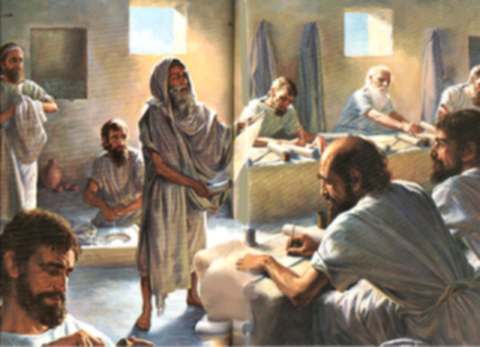
The Yahad is an inner circle of Essenes, the bifurcation that eschews marriage and prefers to sequester themselves in their ultimate devotion to God. Yahad means ‘unity’ or ‘togetherness’ in Hebrew. They believe this not only gives them greater knowledge of God, but that God reveals secrets to them. They also believe they can exist as angels.
I believe this to be true. Essenes were known for their ability to foresee the future, to prophecy accurately, to know the plants and rocks of healing and how to use them, and the names of the angels (which they guarded with utmost secrecy).
Jesus may not have died an Essene, or maybe he did. But he most certainly lived among them at various times, learned healing and the signs of the times from them, and some of his unique interpretations of scripture (and likely much more). He became the final Teacher of Righteousness. I believe some within the Yahad knew Jesus was the long-awaited Messiah and supported Him as such, as evidenced by Jesus and his disciples having numerous unnamed helpers toward the end of his ministry and time on earth, if you pay careful attention to the New Testament scriptures. Then there were the angels who helped them as well, such as in Peter’s escape from prison.
Critics state Jesus could not have been Essene because historically they differed from Jesus in a few things. They hated their enemies, much like King David; they did not believe in healing on the Sabbath; and they seemed to disavow women of any holy or righteous role beyond that of wife and mother. For example, the Book of Esther is the only holy book not found in the hundreds of texts in the caves at Qumran. Although we do not know the reason why, we can surmise it is because a Jewess is the heroine of the story. Whereas Jesus advocated loving your enemies; that the Sabbath was made for man, not man for the Sabbath, and that you could heal man or save beast on the Sabbath; and he seemed to hold women in high esteem, such as Mary Magdalene and his mother, Mary.
However, these beliefs were found in their writings hundreds of years before Jesus walked the earth! We know also that the Essenes believed in evolving prophecy–that God could and would reveal new Truth to those who sought Him wholeheartedly and in purity. It is not impossible to think that after hearing Yehoshua HaMashiac teach, they too were made to see the divinity of him through His unique way of illuminating God’s will, even if it contrasted with some of their earlier beliefs. In short, unlike the more stubborn and corrupt sects of Jews called the Pharisees and Sadducees, they were able to change their minds if the elders among them felt called to a higher notion or belief.
Some of the Yahad undoubtedly exist even into present day, just as all the 12 tribes of Israel are still represented. But all that really matters in the end is to love God and obey His commandments. And trust that when the Endtimes come, He will be faithful to lift us up with Him.
~Selah




 ~Song of Mary~