Solitary Hike

20160408_135246-1.jpg

It’s my first official day of being a Solitary.  I had a beautiful afternoon in Glacier National Park in a nice, secluded spot.

I had some memories of my family all riding bikes and hiking around Glacier when I was there, but instead of letting those memories consume me and take me down, I realized that even though I feel sad in this context of not having my family, the memories themselves were GOOD MEMORIES, and that means my kids will have all those good memories to take with them into their own lives.  They just seem bad to me because I am the one left alone.  Of course, they might have sad and bad feelings too, about the divorce, but hopefully the good times will outweigh the bad, God willing.

20160408_145923.jpg


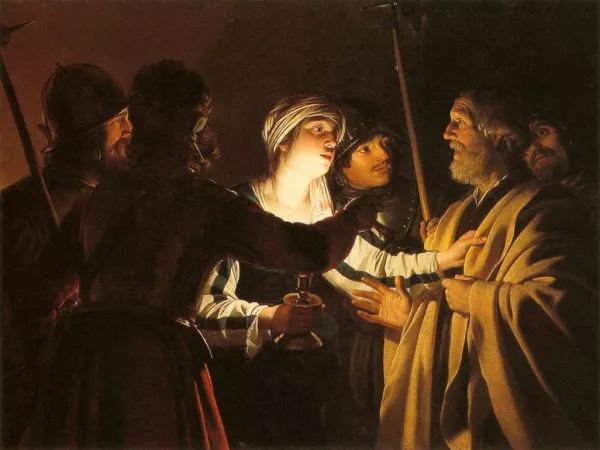
Chiaroscuro


Gerrit van Honthorst, The Denial of Saint Peter, c. 1620, oil on canvas, Minneapolis Institute of Arts.

Giovanni Baglione. Sacred and Profane Love. 1602–1603, showing dramatic compositional chiaroscuro


The Stag Hunt mosaic (c. 300 BCE) by gnosis epoesen, or ‘knowledge did it’. is a mosaic from a wealthy home of the late 4th century BC, the so-called “House of the Abduction of Helen” (or “House of the Rape of Helen”)

The Stag Hunt (just above) is one of the first examples of chiaroscuro in the ancient world that is still preserved. The contrast between light and dark was an invention of the western Greeks called ‘skiagraphia’ or “shadow-painting” and used in paintings (which are lost), and mosaics. It was later refined in the middle ages into the Italian paintings as seen further above, becoming more popularly known as ‘chiaroscuro’ or “light-dark”.

I first became aware of chiaroscuro while browsing the Minneapolis Art Institute. I still remember the Italian Renaissance room, and what really drew me in was the pearly white paint on the canvas, contrasted against the nearly black background. I am not sure what they used in their white paint, but viewing it in person is very moving and effective. The only other thing that really affected me at that art museum were the alabaster and white marble sculptures. Something about opalescent white objects draws me in and mesmerizes me. I prefer the stone to be almost translucent near the edges, as it beckons you to try to peer deeper inside it.

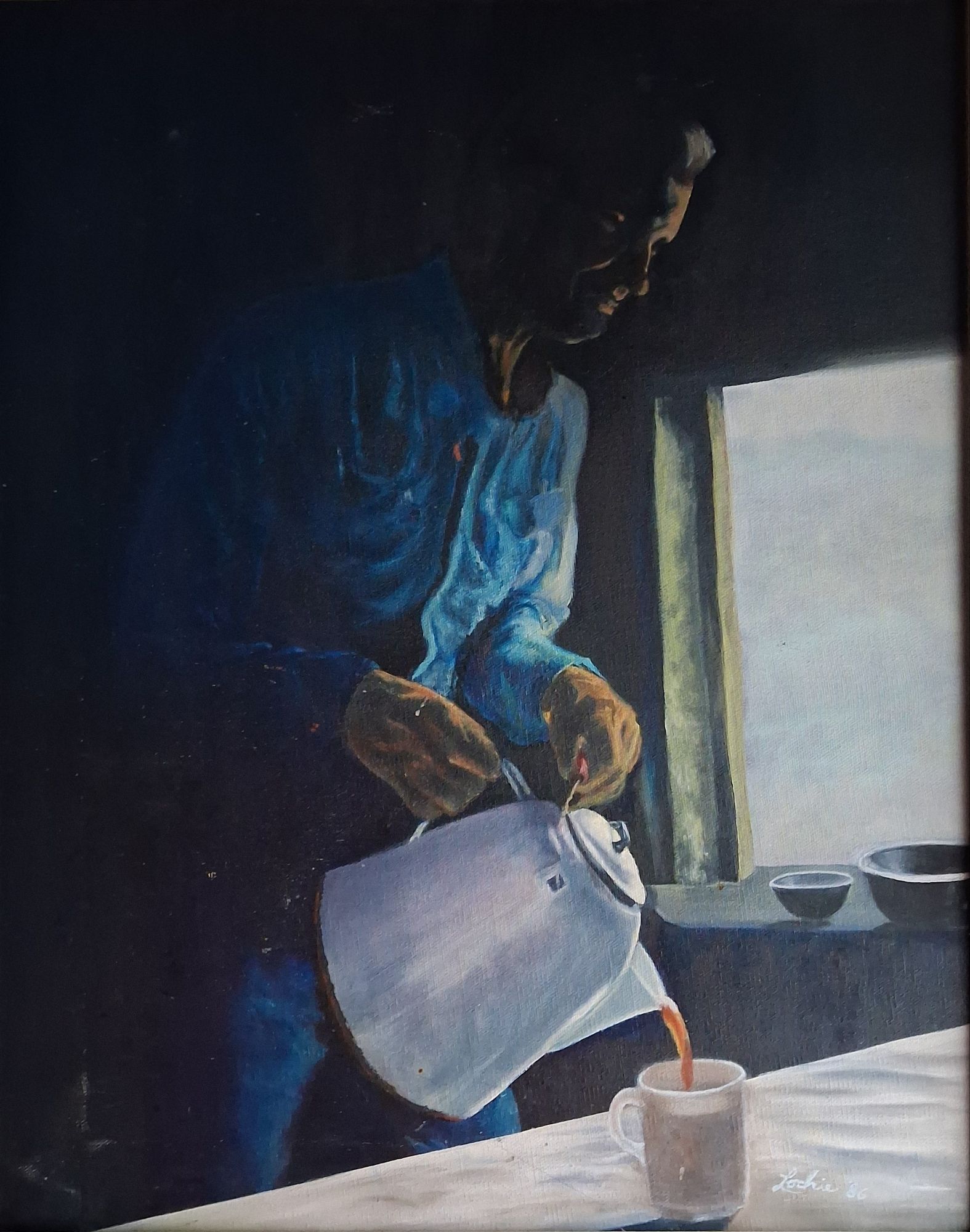
I still did not know that what I was enjoying in these paintings had a characteristic name, so when I discovered that a few years ago, another piece of my puzzle fell into place. I realized then that this is why my favorite painting of my mother’s has always been this one: it has chiaroscuro elements and a large area of pearlescent white in the coffee pot:

Old Man Pouring Coffee

I suppose if we wanted to analyze it further, we could say this art form appeals because it forces our perspective into black and white thinking, something the world doesn’t really lend itself to very often due to its shades of grey. Is it a juvenile mind that wants to think of the world and people in extremes of all good and all bad, all light and all dark? Or is it an actual truth of God that things are really either good, or they are bad. Jesus refers to this chiaroscuric thinking several times in His teachings, “If you are lukewarm I will spit you out,” and “whoever is not against you is for you.”

All I know is it appeals to my sense of all or nothing~

Solitary Life

I’m not there yet, but I feel myself heading there rather quickly now.  I’m not sure how much seclusion I will undergo, but I definitely feel called to seclude myself more and more.  I believe that I should not seek out interactions now, and that I am called to be chaste with my speech, live minimally with the goal being only what I can carry, and to be obedient to God every moment of every day.  Although I will focus on isolation, I should lovingly welcome interactions that God sends me, as an anchoress would if someone sought out her advice or listening ear.

They usually live by the three evangelical counsels or counsels of perfection in Christianity are chastity, poverty (or perfect charity), andobedience.[1] As Jesus of Nazareth stated in the Canonical gospels,[2] they are counsels for those who desire to become “perfect” (τελειος, cf. Matthew 19:21, see also Strong’s G5046 and Imitatio dei). The Catholic Church interprets this to mean that they are not binding upon all and hence not necessary conditions to attain eternal life (heaven). Rather they are “acts of supererogation” that exceed the minimum stipulated in the Commandments in the Bible.[3] Christians that have made a public profession to order their life by the evangelical counsels, and confirmed this by a public religious vow before their competent church authority (the act of religious commitment called “profession”), are recognised as members of the consecrated life.

The Eremitic Life
Without always professing the three evangelical counsels publicly, hermits “devote their life to the praise of God and salvation of the world through a stricter separation from the world, the silence of solitude and assiduous prayer and penance”. (Footnote: CIC, can. 603 §1)
They manifest to everyone the interior aspect of the mystery of the Church, that is, personal intimacy with Christ. Hidden from the eyes of men, the life of the hermit is a silent preaching of the Lord, to whom he has surrendered his life simply because he is everything to him. Here is a particular call to find in the desert, in the thick of spiritual battle, the glory of the Crucified One.

Here is a description of solitary life serving God:

What is a Solitary?

Solitaries are those who are called to or have chosen solitude as a way of life.  The Solitaries of Saint Benedicts are hermits, semi-hermits, and hermits-in-the-world.  The following is an explanation of these three terms as understood by the Solitaries.

A hermit is a person who lives alone, withdrawn from society.  A hermit is not a recluse, and so a hermit can entertain visitors, go on journeys, and otherwise interact with others.  A hermit usually lives at some physical separation from other people to make a life of solitude easier.  A hermit’s dwelling is known as a hermitage, although a group of hermits living together are often referred to as a skete.

A semi-hermit is a person who lives with others but cultivates an interior silence and solitude with some physical barriers.  The most famous semi-hermits are the Carthusians, nuns and monks who live in a Charterhouse, a cluster of hermitages where each monastic lives and works alone, leaving only a three times a day for communal worship in the monastery church.  Most of the Solitaries of Saint Benedict are semi-hermits, as many of them live as members of families or other forms of residential community.

A hermit-in-the-world is a kind of urban hermit who lives alone but with minimal physical separation from society.  These hermits were common in the Medieval period, when they were known as anchorites or anchoresses and lived in “anchorholds.”

What is the difference between a hermit and a recluse?

As stated above, a hermit has contact with the outside world.  A recluse is a person who has completely retreated from the world with only very rare and occasional contact with others.  The Solitaries of Saint Benedict do not envision reclusion as part of the life of a Solitary, but a Solitary may decide upon reclusion in consultation with the Prior.

~taken from:  https://solitariesofsaintbenedict.wordpress.com/what-is-a-solitary/


The solitary life is seen as being lived within the fellowship of the Body of Christ, in which the solitary has an honoured place going back to St Antony of Egypt and the other Fathers and Mothers of the Egyptian desert.  In these islands this kind of life is represented by Celtic monks like Columba, Aidan and Chad.  In the Middle Ages there were countless anchorites and hermits scattered throughout Britain, of whom Julian of Norwich and Richard Rolle of Hampole are perhaps the best known. It was a commonplace then that many people, feeling a call to solitude, would go and live on the edge of their village in much the same way as Antony of Egypt did when he began. Such people supported themselves by their work, as the earliest monks did. Often such work involved public service such as repairing roads and bridges. They were accepted as those who were called to a life of prayer. Work and prayer have always gone hand in hand.

The degree of solitude and of involvement in the life of the local Christian community is something which each has to decide in the light of circumstances and at the prompting of the Holy Spirit.  The solitary’s prayer needs to be nourished by regular spiritual reading, in which Holy Scripture, the Psalms, and the writings and lives of the Desert Fathers and Mothers and others in the monastic tradition should find their place.  There are also many modern books on prayer and the spiritual life which can be read with profit.

The solitary life is essentially hidden; there is no badge or habit, no special title, nothing to suggest a corporate identity.  The Fellowship has none – it is not a community or a society, just a fellowship of people each pursuing his or her own path but banded together for support and encouragement.  Our witness is the way we live, and is thus a prophetic sign in its solitude, simple unobtrusiveness and silence.  The medieval anchoress had one window into the church, but another looking out on to the world, which she could close with a curtain when “not at home”, but at which people could consult her.  We find this too – God sends  people to us and we must welcome them in God’s name.

Because the life is solitary, it is personal to each; no two follow the same path.  For that reason the Fellowship has no rule of life; it is most unlikely that it ever will.  How we can pray best is for each to discover for her- or himself.  All that is asked of members is that they pray for each other, and for all others living the solitary life, and that they pay the modest subscription that enables the Newsletter, issued three times a year, to be produced and distributed.  Members are encouraged to contribute items to the Newsletter so that we may profit by sharing each other’s experience of the solitary life.

PATHS IN SOLITUDE

Eve Baker

Solitude and silence are hard to find in the modern world, which regards both as aberrations which must be avoided. Yet solitude has never been more sought after, as the growth of the retreat movement shows. Increasingly, people are experiencing an interior call to solitude which, although it was a commonplace in the Middle Ages, is strange to today’s religious concerns, with their emphasis on community. The solitary, standing outside these concerns, witnesses to a God who is divinely other and not a commodity to be possessed by the world for its own ends.

The mystery of God is encountered in silence and solitude. The creative artists make raids into this unknown world of mystery, and return bearing artefacts. Others make solitude their home; these are the contemplatives. This book examines firstly various aspects of solitude: solitude and society, the artist as solitary, and physical solitude. Part II looks at the historical roots of the solitary life, the monastic path, travellers and wanderers, hermits and institutions. The final part is a guide to the Christian solitary life, the practicalities and the prayer of the solitary.

Published by:  St Pauls   Price £5.95   ISBN 085439 513 x

Can be ordered in UK from all good booksellers, including St Pauls Bookshop, near Westminster Cathedral.

Available online from amazon.co.uk

~all previous quote taken from:  http://www.solitaries.org.uk/index.html


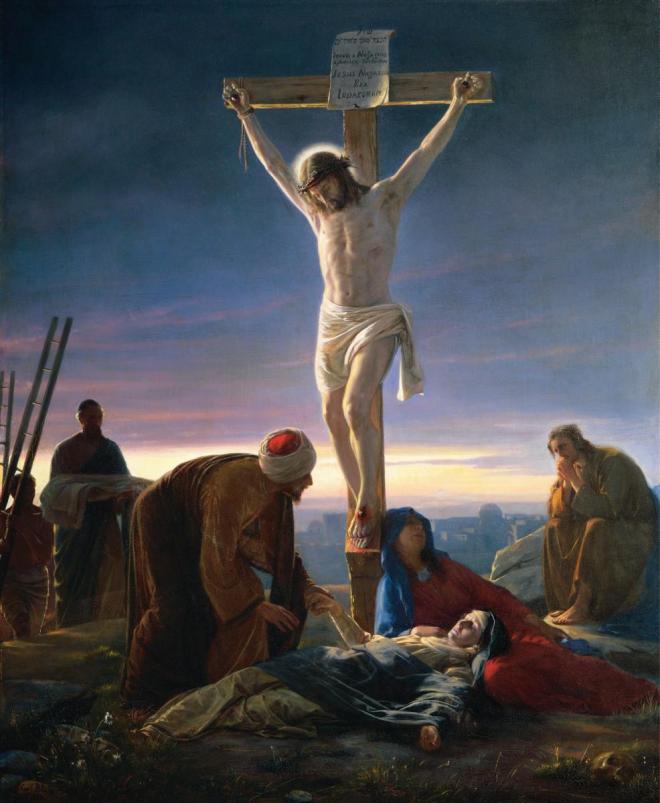
Good Friday

It is Good Friday because the Good News was set in motion.  He would rise on the 3rd day and enter the Kingdom of Heaven where He sits today at God’s right hand.

Even unto to death He died perfectly, and with grace.

Praise be to God:  Father, Son, and Holy Spirit!

Christ_at_the_Cross_-_Cristo_en_la_Cruz

Medusa as Mortal Woman

A fair and virginal maiden raped by Poseidon, Medusa becomes a monster with snakes for hair, and when she fixes her gaze upon anyone, they turn to marble stone.  Perseus cuts off her head retaining the power of life over death and womanhood bound up in it while her body dies a mortal death.

Snakes signify strength, cunning, and cruelty and provide venom (poison) and antidote (cure) in their own heads.  By combining the attributes of female goddess with serpent in Medusa, and overcoming it, perseus (man) effectively feels the power he has over life as he wields this power where he wills.  (In real life we have transwomen–men who understand the power of woman and want it for their own)

The maiden and serpent united for a brief moment in God’s Paradise, the Garden of Eden.  It led to the downfall and cursing by God of serpent, man, and woman; and it led ultimately to death.  The serpent was consigned to a life of crawling in the dust, the man work, and the woman labor in love.  Woman’s seed and snake would forever crush each other’s heel and head, respectively.

The Medusa Myth however is not the separation of woman and snake, but the embodiment of the everlasting union between serpent and woman.  It is the tale of woman that has become so terrifying (through a violent sexual act upon her) as to be able to turn another, at her whim, to stone, rendering him incapacitated and paralyzed.

Calling someone Medusa is the ultimate feminine cut-down in many ways.  It is a reference to curly hair being akin to having snake hair.  It is a reference not to divine life but mortal life.  And it eliminates a tie to God while testifying to a union with the serpent, who is the most powerful and knowledgeable (cunning) creature made; marrying woman with serpent in worldly wisdom and animistic bestiality instead of divine creation with God.

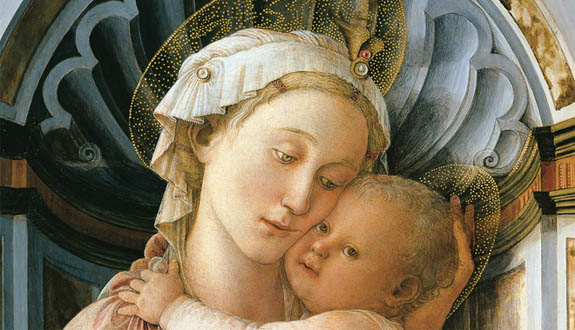
the virgin Mary.jpg

Mary is the antithesis of Medusa.  She is loving and forgiving.  She is married to God, not the serpent lord.  She is divine, not earthly.  She is everlasting, not mortal.  She is good, not evil.  She is mother to the Sons of God, not winged horses.

Floating in a New Plane

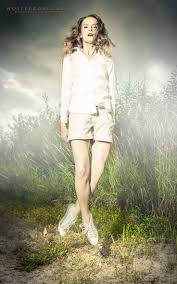
I had a dream early this am that I defied gravity somehow and floated through the air about 7 yards before landing in my seat in the corner.  Several of the women in my group (strangers to me) had seen me pass and were still trying to figure out what they had seen.  I myself marveled at what had happened.  It was a light and awesome feeling and an awakening.  The mind opening to a new reality merged with the elated feeling of the body lifting until I am not sure which feeling was more meaningful–probably the mind one.

I had a sense when I was a little girl that I could defy gravity in an out-of-body experience while sitting on the toilet in my father’s bathroom.  I know it sounds very strange.  While my body was physically on the toilet, my spiritual self did a flip in the air and came back down.  It felt so real, but what was most amazing was the knowledge that it was possible.  Some will say that a valsalva maneuver caused me to black-out for a minute and have some sort of delusion or hallucination and I would not be able to disagree with them with much zeal.  After all, I was around 7 to 9 years old.

I have had the unbirthed idea in the back of my brain for a long time now that we can defy gravity (and I think I have had another dream or two about this), but I gave it little thought because there is no force more constantly and consistently upon us than gravity our entire lives.  It forms our deepest beliefs, if you will.  Even more than our parents’ love or any beliefs learned from humans because humans are not consistent.  Or if they are, it is in a consistently inconsistent way.  To think contrary to our deepest learning from the time we are conceived (though salinic amnionic fluid affords us a bit less gravity than we feel outside the womb) is just nigh on impossible, as are the other ‘truths’ of our natural world, like time.

However, we learned with quantum mechanics that time can bend, depending on its company, space.  Star Trek movies are brain benders in this way.  If time itself can change, then understanding that gravity is not always the same shouldn’t be as hard because we already know that just a few miles outside our atmosphere astronauts are able to float in space.

But can we do it here?

My dream was set in some sort of weird group apocolypse for women, in the future.  Women congregated to these different open air shelters for different activities, all strangers to me.  Make-up application and style seemed to be common themes, with pink prevalent in my dream, and sugar.  The women were detached and simple, not aware of any deeper reality than their superficial world.  I entered this room with sort of a kick up and an intent to get to my seat in the corner.  It had nothing to do with being in shape or my physical prowess in any way.  I floated about 3 feet off the ground and began descending when I reached my destination.  I did nothing to do this, I simply wanted to get to my seat.  In other words, I did not control my levitation, except that I had intent.

While we sat there quietly taking in what I had just done, a woman near me said something like this (i cannot remember her exact words), “Well, if medusa woman here is done astounding us with her QVR abilities, let us get back to our discussion.”  Then I awoke, marveling at my awesome dream.

QVR?  I have no idea what QVR means.  So I googled it and found that it is a common acronym.  So I googled ‘QVR energy’.  And this is what I immediately found:  A recently published book (2016) called Unified Field Mechanics:  Natural Science Beyond the Veil of Spacetime by Richard Amoroso (here is his biography), Louis Kauffman (Ameican mathematician), and Peter Rowlands (British physicist):

Richard L. Amoroso born in Medford, Massachusetts of goodly parents, is the author of what will soon be 40 volumes and 200 scientific papers and book chapters in 5 languages on topics ranging from Astrophysics & Cosmology to Consciousness Studies & Philosophy of Mind to Quantum Computing and Medicine. In June 2010 Amoroso received the prestigious Telesio-Galilei Gold Medal at Pecs’ University near Budapest, Hungary. Amoroso is Director of the Noetic Advanced Studies Institute: http://www.noeticadvancedstudies.us and founding editor of the Noetic Journal, a peer reviewed academic journal which specializes in the cosmology of mind and related fields. He is best known for the 1st comprehensive dualist-interactions model of awareness that for the 1st time in history has allowed a physically real and empirically testable model of qualia. He holds several patents. Of significance is the patent for quantum computing for which Amoroso intends to construct a special class of conscious quantum computer; not that the QC is conscious but that it is modeled by the theory that the mind-body interaction is a form of conscious quantum computer. This will lead to a new class of ‘spirit -based’ medical technologies. Amoroso’s Noetic Theory postulates that the ~ 400 autoimune etiologies have a spiritual component. It is the ultimate goal of Amoroso’s life work to treat these medical conditions with new technologies.

This books elucidates the fact that Einstein’s famous equstion, E = m c2, teaches us that energy (E) and mass (m) are usually nearly equal in our reality of light energy (c2) which stays the same in a certain vacuum (our world).  Wiki states that this equation implies that “any small amount of matter contains a very large amount of energy”.  Because of the truth of our vacuum being our world, we learn experientially and cognitively that energy and mass are usually equaivalent.  However, mass is the combination of two very different quantities:  inertia and matter.  While matter does not change, inertia is dependent upon force acting upon it (inertia is that natural law that says a body in motion wants to stay in motion).

All our prior assumptions of the relationship between matter and inertia, or mass, is assuming the same field or environment.  But these authors have hypothesized that in some cases fields (environments) can be subjected to influence or change, and that change in field can greatly affect mass (inertia), and therefore the energy of a substrate.

The application of an electromagnetic field is able to modify the energy density, and, consequently, the value of G (gravity) in the region of space containing a particle or body.

They call this energy density pQV (quantum vacuum in Planck time).  Not only inertia (related to masses), but also gravity strength itself (G) would depend on QV energy density.  And by “acting on this energy density, it is (in principle) possible to modify both gravitational inertia and gravity strength so offering the possibility to manipulate gravitational force….by means of electromagnetic interaction” (Unified Field Mechanics: Natural Science Beyond the Veil of Spacetime.  The authors prove in their paper how by imposing a certain electromagnetic field in a vacuum, they could induce a change in the local QV energy density, which suggest a change in the gravitational constant as well.

In other words, change the field or environment and you can defy gravity, our most ingrained belief.

The story of Jesus walking on water, and inviting Peter to walk on the water is often used by pastors to relate how belief is necessary in faith.

Jesus Walks on the Sea

22 Immediately Jesus made His disciples get into the boat and go before Him to the other side, while He sent the multitudes away. 23 And when He had sent the multitudes away, He went up on the mountain by Himself to pray. Now when evening came, He was alone there. 24 But the boat was now in the middle of the sea,[a] tossed by the waves, for the wind was contrary.

25 Now in the fourth watch of the night Jesus went to them, walking on the sea. 26 And when the disciples saw Him walking on the sea, they were troubled, saying, “It is a ghost!” And they cried out for fear.

27 But immediately Jesus spoke to them, saying, “Be of good cheer! It is I; do not be afraid.”

28 And Peter answered Him and said, “Lord, if it is You, command me to come to You on the water.”

29 So He said, “Come.” And when Peter had come down out of the boat, he walked on the water to go to Jesus. 30 But when he saw that the wind was boisterous,[b] he was afraid; and beginning to sink he cried out, saying, “Lord, save me!”

31 And immediately Jesus stretched out His hand and caught him, and said to him, O you of little faith, why did you doubt? 32 And when they got into the boat, the wind ceased.

33 Then those who were in the boat came and[c] worshiped Him, saying, “Truly You are the Son of God.”

While I am not sure what the ‘R’ in QVR stands for in my dream (pQV?), I am sure that God wanted me to know (and consequently you to know) that defying gravity is possible for those who are Heavenly-minded, whose spirits soar into God’s realm and reside with Him there.  As we grow in belief and faith in Him, we become new creations whose very essence defies natural truths.  The very environment around us changes and envelopes us in a new Truth, allowing us powers of God Himself, as Jesus said was possible, even defying the first truths we learn as infants.

Truth is relative.  To obtain God’s Truth is a gift given by Him through faith and belief in Jesus Christ, God the Father, and the reality of Heaven and Hell.


A Vow of Silence

I feel God calling me into my inner sanctum now as I progress in my life with Him and missionary calling.  The time for diatribe is past, and what has needed to be said has been said time and time again.

I am actively going to work on leashing my tongue now, with Jesus’ help and strength.  I notice that the tongue is indeed tied to the temper, and ire is something I have been ‘blessed’ with in large measure, giving me much to work on as I attempt to tame my nature in this way.

I love the book of James.  He speaks eloquently about the tongue in Chapter 3 of the book named after him:

James 3New King James Version (NKJV)

The Untamable Tongue

My brethren, let not many of you become teachers, knowing that we shall receive a stricter judgment. For we all stumble in many things. If anyone does not stumble in word, he is a perfect man, able also to bridle the whole body. Indeed,[a] we put bits in horses’ mouths that they may obey us, and we turn their whole body. Look also at ships: although they are so large and are driven by fierce winds, they are turned by a very small rudder wherever the pilot desires. Even so the tongue is a little member and boasts great things.

See how great a forest a little fire kindles! And the tongue is a fire, a world of iniquity. The tongue is so set among our members that it defiles the whole body, and sets on fire the course of nature; and it is set on fire by hell. For every kind of beast and bird, of reptile and creature of the sea, is tamed and has been tamed by mankind. But no man can tame the tongue. It is an unruly evil, full of deadly poison. With it we bless our God and Father, and with it we curse men, who have been made in the similitude of God. 10 Out of the same mouth proceed blessing and cursing. My brethren, these things ought not to be so.11 Does a spring send forth fresh water and bitter from the same opening? 12 Can a fig tree, my brethren, bear olives, or a grapevine bear figs? Thus no spring yields both salt water and fresh.[b]

Heavenly Versus Demonic Wisdom

13 Who is wise and understanding among you? Let him show by good conduct that his works are done in the meekness of wisdom. 14 But if you have bitter envy and self-seeking in your hearts, do not boast and lie against the truth. 15 This wisdom does not descend from above, but isearthly, sensual, demonic. 16 For where envy and self-seeking exist,confusion and every evil thing are there. 17 But the wisdom that is from above is first pure, then peaceable, gentle, willing to yield, full of mercy and good fruits, without partiality and without hypocrisy. 18 Now the fruit of righteousness is sown in peace by those who make peace.

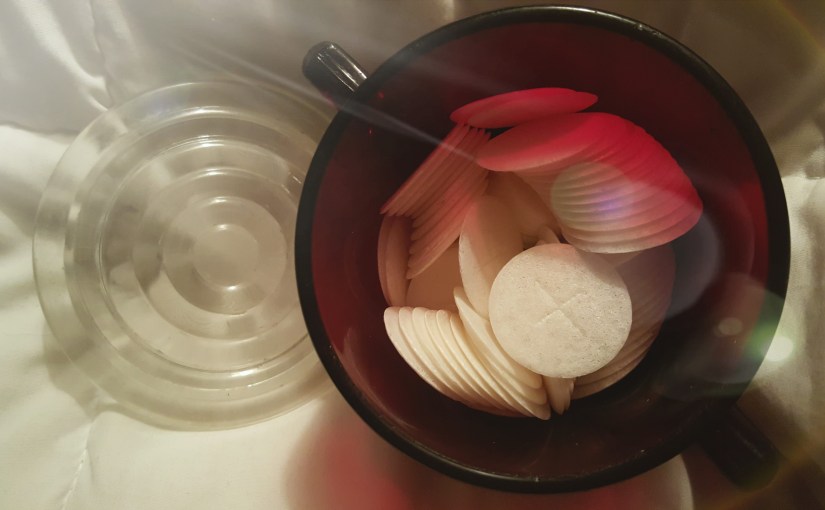
Nuns are called to be silent after evening prayers through nighttime until after communion with Jesus in the morning, so that they will be ever more ready to accept his body into them.  Since I often talk aloud at night and in the morning, I feel called to put this into practice.  I also take morning communion with my unleavened wafer as I recite the Lord’s Prayer, adjuring Jesus to make me more like Him.

But silence also means speaking with chastity; saying only necessary and important things, eliminating small talk and chatter, which is fine by me.  Anything that detracts us from God is idolatry, after all.

The Queen of Heaven

She does not sit to Jesus’ right, as the Popes conjecture.

She stands behind God the Father’s right side, while He is on His throne, with Jesus well to His right.  God Almighty protects her best that way.  He is very protective of His queen.

~s

My Stars, My God

When I look up at the stars

And think about how You made them for me

And hung them there so prettily;

When I think about how You talk to me

And how much You love me,

The Artist of the stars,

It makes me feel so small

But so very special~