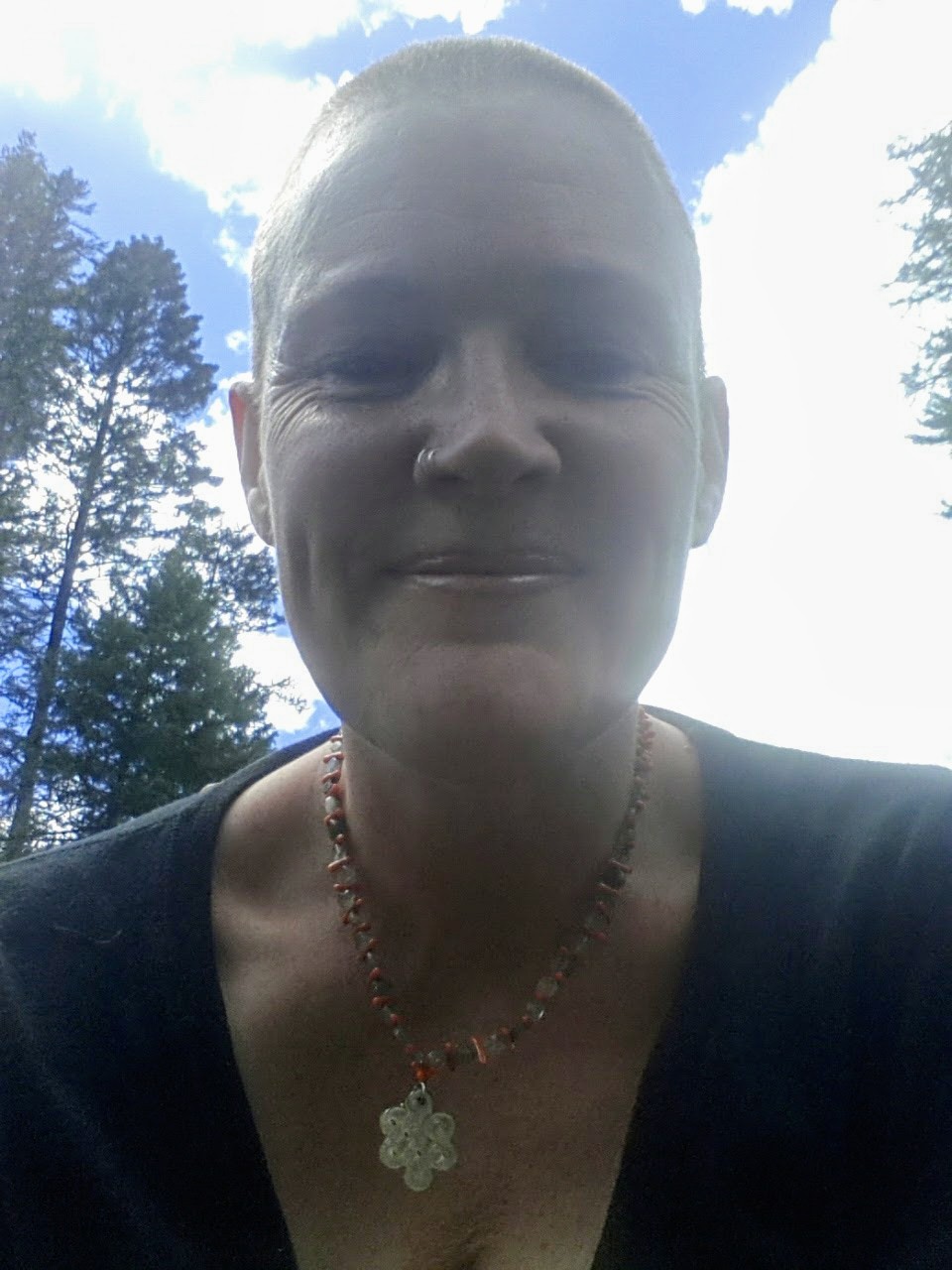
Submission and Strength

Originally posted on August 25, 2013

It occurred to me just now that men and women have a different struggle when it comes to opening up to God and living in His Divine Will.

Men struggle with the submission aspect.  Of submitting to the LORD.  Men are made to be strong and to protect and control things, but this can also be their weakness when coming before the LORD.  Because pride MUST be laid down so that the door to God can be fully opened.  This tends to be difficult for men to do.

Women, on the other hand, usually don’t have as much of a problem with submission.  It is in our nature, for the most part.  We can submit to the LORD just as we understand we need to submit to our partner.

Women’s weakness is, however, having strength.  Having strength to withstand dry periods of not.  Not having emotional support, not having reciprocity, not having the love or relationships we desire, or the life we want.  Women tend to cave in before God’s will can be done, which makes us more prone to staying in captivity, or seeking out things hastily that are not right for us.

Men, however, have strength to withstand much drought.  It makes sense that dominance and strength go together, and submission and weakness go together.  Perhaps that is one of the many reasons man and woman fit well together.

OF COURSE>  Sometimes you get it reversed:  The men are submissive and the women are strong, but I’m speaking in general!

~m

God has called me to Serve Him

Originally posted on August 23, 2013

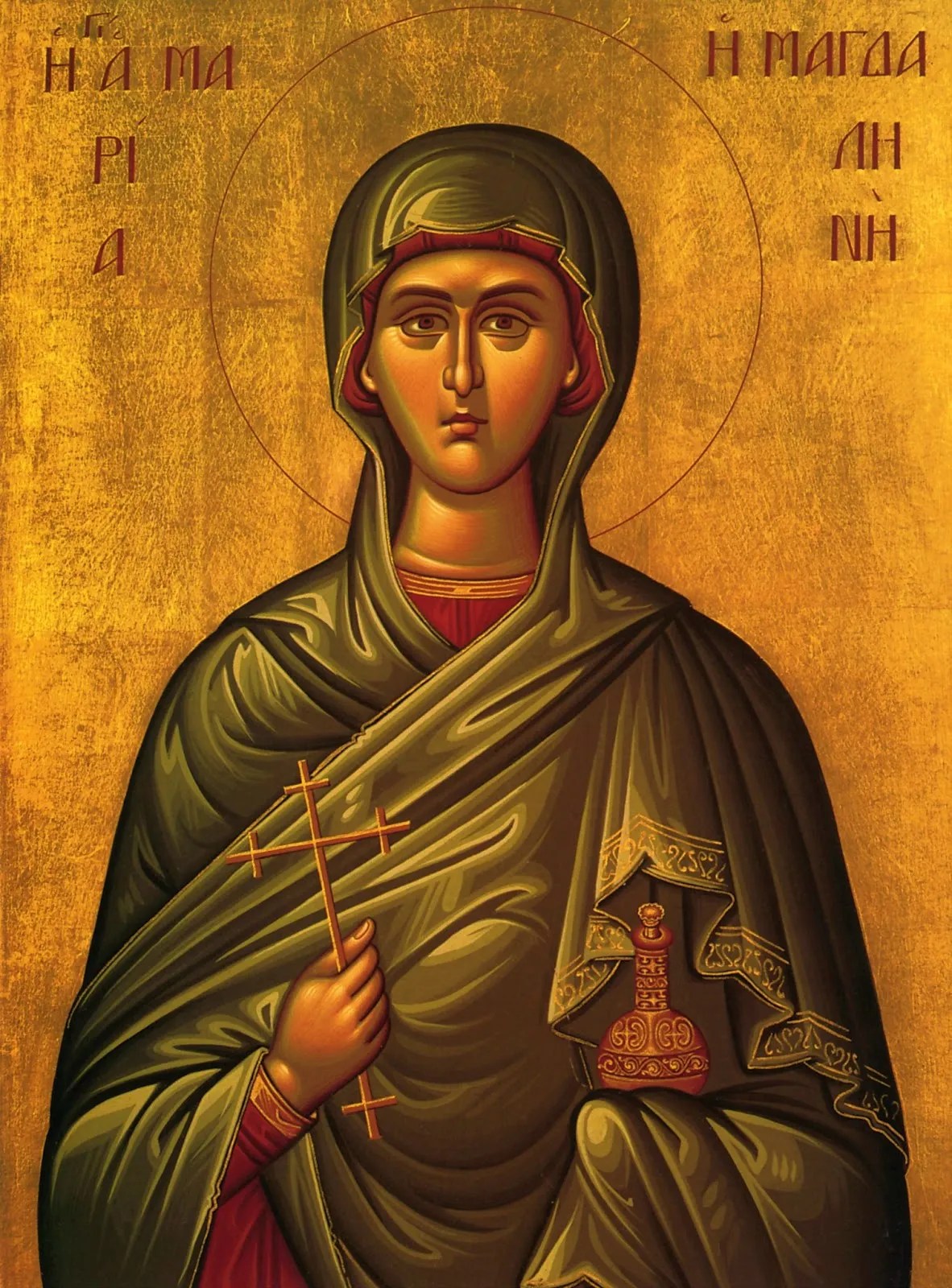
mary-magdalene-2

I had the urge many, many months ago to shave my hair off.  I didn’t, though I wanted to.  The same urge returned with more fervor a few months ago.  I had the clippers in hand and a friend told me not to.  Then one day my entire family went on a two week road trip and I awoke one morning after spending much peaceful time meditating on God and His Word, and I just knew it was time, and that He was asking me to do it.  For Him.

Cutting hair during hard times, or change is not unusual for me, or other people.  I have cut my hair short, for example, after the birth of a child, or some other life event that seemed noteworthy.  It wasn’t a external idea so much as an internal one; I felt changed and needed to represent that in my body somehow.  Some express this same sentimentality regarding tattoos, how you can want to mark your skin to express on the outside some deep change on the inside.  So clipping my hair entirely off was an extreme manifestation of that same feeling.

But it was more too.  I had been going deeper and deeper into my study of God’s Word, and I had been opening myself up to His Holy Spirit, and I had been offering to him more and more of myself in this process.  Until I finally decided to offer everything of me to Him.  Shearing off my long, pretty hair was a symbol that I would give Him anything of myself, even my looks; my prospects for finding an earthly mate; my vanity; my pride; and essentially, my ego.  I realized I wanted to only be a vessel for Him to fill with Him, not me.  There is a purification inherent in it too because my hair had been through a lot over the years, increasing bouts of dyeing, stress, greying, and it wasn’t feeling healthy anymore, though I was feeling completely reborn and new.

Being a priest to me means that I serve the LORD.  It means I think about Him all the time, and I come before Him ceremonially every day and worship Him.  It means I delve into His Word constantly and I try to ascertain His Truth.  It means I serve Him first.  It means I listen to His will for me, and I try to implement it at all times.

In doing this, it necessarily means that I testify because I love Him so much I cannot keep quiet about Him.  It means that I offer myself to others selflessly as I offer myself to Him.  It means that I do whatever it takes to reunite people to Him because He misses them and wants them to come back to Him.  It means I share insights into His Word and Spirit when I receive them, because He gives them to me.  It means that I strive to unconditionally love everyone because He unconditionally loves me.

I do not believe everyone is a priest who accepts Jesus Christ as the Lord Messiah.  I believe the priesthood is a higher level than mere believer.  It is a place for those who are willing to sacrifice the majority of worldliness in exchange for Godliness.  It is for those willing to sacrifice fleshly desires for spiritual fruits.  It is for those willing to lay themselves on God’s great altar and give themselves entirely up for Him, and His will.

Love,

~Mary

The Priestly Writer

Originally posted on August 22, 2013

“A source, marked by the style and cultic interests of the priestly circle, which comes from the period after the fall of the nation in 587 B.C.–that is, the time of the Babylonian Exile.”~Bernhard Anderson, Understanding the Old Testament

It is understood by historians and scholars of all the main religions that the Torah, the first five books of the Old Testament, also called the Pentateuch, was composed of various sources blended together.  The books of Genesis, Exodus, Leviticus, Numbers, and Deuteronomy give attribution to Moses, but since Moses was preliterary, by the time the Oral Torah gave way to the Written Torah, Moses had long been gone.  Four main sources have been identified:  A Judean source (who calls God Yahweh), an Ephraimitic source (who calls God Elohim), a Deuteronomy source (who is responsible for the whole book of Deuteronomy), and a Priestly source, as described above.

The oral tradition began, as far as we can tell, around 1800 B.C.  Moses arrived on the scene in 1391 B.C.  The Israelite story was shaped orally during all this time, and only began to be written down in King David’s time, 1000 B.C.  The Judean source is credited to 950 B.C., The Ephraimitic source to 850 B.C., the Deuteronomic source to 650 B.C. and later, and finally the Priestly source to 550 B.C. and later.  The Priestly source was the last to shape the story because by 400 B.C., the Pentateuch was in its present and final form.

How much of the Torah was shaped by the most original Mosaic story?  About half?  The book of Genesis, chapters 19 through 24, and 32 through 34 of Exodus, and the book of Numbers 10:10 through chapter 36.  Because the last half of the book of Exodus, all the book of Leviticus, and the book of Numbers up to 10:10 are attributed to the late Priestly Writer.

As I am compiling God’s Law from His Word, I began to detect a definite cultish feel in the Priestly Writer material.  I don’t think he functioned alone, but represented the whole circle of priests who had probably, over time and persecution, shaped the backstory of Moses’ experiences on Mount Sinai into something esoteric, which only they could understand.  For example, whereas the old epic traditions of the Judean source and the Ephraimitic source are more concerned with who, beyond the years of longevity (which I suspect was also later influenced by the Priestly Writer), it becomes obvious to any astute reader that the Priestly source is more concerned with how many.  Reading how many cubits the tabernacle had to be, and how many bowls the Gold Lampstand had, seems somewhat overkill and nonsensical for our time, so it is natural to want to skim over that part, leaving it to a bygone era.  But when one delves deeper in the numbers, we find that The Priestly Writer is definitely into numerology, as was related in my post in this blog on The Gold Lampstand a month or so ago…And especially the concept of pi and the circle represented by the numbers 1/22/7/3, and 12/400 and 40.

Without a doubt, one must necessarily abandon literalism as the primary methodology for interpreting the Old Testament, for to understand the full meaning of the Priestly Writer, one must view much of the Old Testament content as symbolism.  Yet, no doubt some things were to be taken literally, such as the concept of offering and sacrifice as it relates to forgiveness.  But those who choose to just view it literally are at the least missing great teachings (see post on Out of Captivity and Into the Wilderness, for example), and at the most missing the heart of the statutes, as Jesus so aptly expressed and demonstrated.

For myself, I will have to work out whether these hidden meanings are of more of a Godly influence, or a worldly one.  Are they meant to inspire a higher echelon of worshipers, those who desire to study and delve deeply into God and His Word; or are they the ego-fixations of a Pharisaical group who wanted to sequester special knowledge?  Jesus spoke in parables for a reason.  To avoid rapid persecution, yes.  But he states there is a deeper reason:

And the disciples came and said to Him, “Why do You speak to them in parables?”

He answered and said to them, “Because it has been given to you to know the mysteries of the kingdom of heaven, but to them it has not been given. For whoever has, to him more will be given, and he will have abundance; but whoever does not have, even what he has will be taken away from him.  Therefore I speak to them in parables, because seeing they do not see, and hearing they do not hear, nor do they understand.  And in them the prophecy of Isaiah is fulfilled, which says:

‘Hearing you will hear and shall not understand,
And seeing you will see and not perceive;
For the hearts of this people have grown dull.
Their ears are hard of hearing,
And their eyes they have closed,
Lest they should see with their eyes and hear with their ears,
Lest they should understand with their hearts and turn,
So that I should heal them.’  ~Matthew 13:10-15

There is an implication woven into the bible, conspicuously stated in the New Testament as above, and more inconspicuously in the Old Testament, that there are levels to understanding and knowing God.  And a further implication, based on Jesus’ example, that the people should not be told outright, but that they have to work for the knowledge from out of a heart that wants to know God.  We are supposed to let our light shine to be a beacon for God to others, but that does not mean we should cast our pearls before swine, but allow people to come to God’s Word via our Lighthouse as they will.

You are the light of the world. A town built on a hill cannot be hidden.  Neither do people light a lamp and put it under a bowl. Instead they put it on its stand, and it gives light to everyone in the house. In the same way, let your light shine before others, that they may see your good deeds and glorify your Father in heaven.”  ~Matthew 5:14-16


Even Luke admits to secret knowledge:

For all that is secret will eventually be brought into the open, and everything that is concealed will be brought to light and made known to all.”  ~Luke 8:17  

It was when I began to discern this knowledge myself, from reading the Bible, that I also realized God was really calling me to be a priest, because I was uncovering priestly knowledge of those highest priests represented in the Bible.

In conclusion, the Priestly source is responsible for MUCH of the Law that God emphatically states for us to follow in His Word.  So the question becomes, if the Priestly Writer embellished the Mosaic story with numbers, to relate a hidden code or message (which doesn’t seem very Godly), what else has he embellished?  Does his writing represent well the actual Word of God, or another agenda, one of the fraternity of priests, who held themselves aloft and sequestered, holding a sacred and special knowledge?  A sort of mouthpiece of God, but instead of a golden beacon of light shining for all to see, some reverberation shaped by the horn of a Baalish goat or ram which the pagans might have worshiped in their polytheism?

It is my quest to compile a list of Laws which God really does want us to know and follow.  Like an archaeologist slowly sweeps the dust away from an artifact with a toothbrush so as not to lose any valuable material, I want to discern as much as I possibly can about the context and agendas of the times of the Old Testament so as to know what God is really telling us through true Prophets, like Moses and Isaiah and Jesus, from what non-Prophets might have written into His Word as His Word but not His Word at a later, more influential time.

Love,

~Mary

Out of Captivity and into the Wilderness

Originally posted on August 20, 2013

God gives us a paradigm for dealing with addiction and enslavement to unhealthy habits and relationships in the form of the primary story of His chosen people, those who choose to believe He exists and to live for Him, following His commandments and His Word through All His Prophets.

The Exodus story, followed by the Sinai Covenant relates the great tale of how the first Hebrews were enslaved 400 years by the Egyptians.  It wasn’t just any enslavement, it was a difficult and harsh reality with which they had to contend.  Baking the bricks, and building all the great structures for Pharaoh in the hot desert sun nearly every day of the week took its toll.  Yet they were helpless to see a way out for themselves.

Then Moses came along.  An orphaned Hebrew boy who was raised in Pharaoh’s court, Moses came to be acquainted with His people’s plight, and God spoke to him, giving him a special mission to deliver his own people out of captivity, and into an unlikely and miraculous freedom.  They followed the Word of God by following Moses’ leadership, even though there was no rational reason for ever thinking they would be able to come out of the yoke of their centuries-long bondage.

After many amazing signs and wonders, they believed God really was their sovereign LORD and Master, and out of Egypt they went.  As they left, Warrior God smited final attempts made by their captors to seize them again, and afterwards the Chosen Ones fell down on their knees and made music and danced and praised His Holy Name!  The Songs of Moses and Miriam are recorded forever in history for all to regard:

Song of Moses

“I will sing to the LORD,

For He has triumphed

gloriously!

The horse and its rider

He has thrown into the sea!

The LORD is my strength and 

song,

And He has become my salvation;

He is my God, and I will

praise Him;

My father’s God, and I will

exalt Him.

The LORD is a man of war;

The LORD is His name.

Pharaoh’s chariots and his 

army He has cast into the sea;

His chosen captains also 

are drowned in the Red Sea.

The depths have covered them;

They sank to the bottom like a 

stone….”~Exodus 15 1-5

God then made a covenant with them on Mount Sinai, promising them, if they obeyed his commandments, He would lead them on into the Promise Land “flowing with milk and honey,” as He had also promised their forebears, since Abraham.  However, the Promise Land was currently being inhabited by The Canaanites, who worshiped idols and practiced pagan rituals, like child sacrifice; and it was necessary for the Hebrews to camp in the wilderness until such time as they could enter it.

It turns out they had to wander in the wilderness 40 years.  That is a long time.  This time in the wilderness meant they were free, but they were fraught with other perils, like starvation and lack of water and shelter, and battles with rogue enemies.  They were basically nomads, traveling around on foot, a motley caravan that moved in the formation of a cross with the central group consisting of the priests, the Levites, who carried the most holy of their treasures, The Ark of the Covenant of God, which housed the Ten Commandments which had been given to Moses by God on the mountain.

God’s Chosen People grumbled much on this journey, as it is told in the bible.  Historians have marveled at the honesty of this recount because usually a people do not like to put to paper any of the negative aspects of their development, but prefer to focus on the positive aspects, flowing from a natural bias.  They often complained to Moses that they wanted to go back to Egypt, that life in Egypt was hard, yes, but at least they had seasoned food!  Undoubtedly they had some amnesia about how hard life had been there and how merciless Pharaoh had treated them.  But in the wilderness, as the years went by, they sometimes only remembered how difficult today was, as yesterday became numbed by time and growing older.  At one point, they even lapsed into idol worship, God’s worst crime for man, because Moses had disappeared for longer than they expected him to, and, without their holy leader, they became lost again.

Finally, even though it is debatable how well they kept loyal to the commandments and statutes overall, God delivered on His promise and they came into their long sought after Promise Land.  Did that end all their problems?  No, they then had foreign battles to contend with along with civil feuds.  However, they were finally their own people with their own place to call home.

It occurred to me that God is giving us a message in this epic story.  He is telling us that He understands we are in captivity.  Captivity is a human phenomenon, one that most of us understand, whether we have been enslaved by taskmasters at some point in history, or whether we have made our own shackles out of addiction or unhealthy habits.  Most of us have our own private Egypt with which to contend.  God wants us to know that He understands:

And the LORD said:  ”I have surely seen the oppression of My people who are in Egypt, and have heard their cry because of their taskmasters, for I know their sorrows…”~Exodus 3:7

And if we will only listen to His Word and Holy Spirit–called ‘angels’ in the old testament–(His insight may occur at church, or through a friend, or come as a sign to us personally), He will, with many signs and wonders which we could never conceive nor accomplish on our own, show us the way out.  It may be likely in such a way that no one else can see or hear or understand, but what is important is that each of us understands.

But once we come out of captivity, we still are not delivered yet.  This is the part I think that we as humans do not fully understand.  We expect it to get easier once we do the hard work of breaking that yoke of bondage.  And it seems like it should get easier!  But it just really gets harder in a different way.  Usually humans do not do very well with change, so it can feel even harder because at least we knew what to expect in our captivity!  Like the ancient Hebrews, we can easily slip back into our Egypt, our familiar patterns and vices that have come to not only be a part of us, but have likely been a part of our families for many generations.

The good news is that God is telling us it will only last a fraction of what our captivity lasted.  If we choose to break our bond of slavery sooner, we will heal sooner.  The longer we let our captivity take us over, the longer we will be wandering in the wilderness before we can finally be delivered into our homeland, where we can fully be ourselves.

God is telling us it will get harder, in a different way.  We will want to return to our captivity.  We will not feel at home.  We will fight battles and go hungry and thirsty and our desires will not be met very well.  But He guarantees to us repetitively in His Word, and He will show us with His Spirit, that we will someday finally be free, and we will enter the Promise Land, if we but honor Him and trust Him and obey Him and all his commandments.

I know this to be true.

God’s Peace and Love,

~Mary

Our Soul Purpose

Originally posted on August 13, 2013

In life is to glorify God and do His will.  He made each of us for a certain purpose.  To discern that purpose takes time and walking with God in obedience.  As we grow closer to Him, He reveals more and more of His Divinity to us, including our ultimate reason for being.  It is enough for us to start by obeying his Law and Loving Him.  As we do this, we begin to reflect His glory in us.  As we reflect His glory in us, we become translucent, and His light can shine to be a beacon to others, always glorifying Him, never ourselves.

Before we were able to contemplate the Divine Creator, we were similar to animals.  It is our ability to worship our Creator, God, that sets us apart from the animals.  Our sole purpose is to give thanks to Him for creating us.  Do you realize each of us, by being born, has won a 1 in 1 trillion chance lottery?  (I’m a midwife, I’ve worked out the numbers yo).  You are more likely to win the super lotto than to be created!  So everyone you know is already a huge winner.  Why wouldn’t we bow down and worship our maker, give Him praise, and live for Him?

For that is our sole purpose in life.  God wants us to know Him and love Him and live for Him.

~Mary

My Vow to be God’s~

Originally posted on July 23, 2013

One morning recently, when my entire family was on vacation, I awoke with a strong feeling that God was leading me to shave my head. I had been wanting to for many months, probably as part of a renewal rebirthing that I have been undergoing this past year, especially. The other two times I tried, I couldn’t go through with it, I just wasn’t ready-I haven’t had short hair since I was a child, and even then it wasn’t that short.  But with God leading me, I knew it was time.

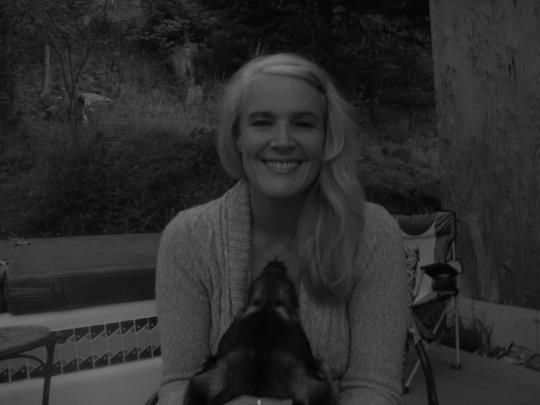
This is what I used to look like:

Image

Then I saw in the bible that the Nazarites did this, and likely Jesus as well, so I feel warmed I have been led by His Holy Greatness to partake of an ancient ritual to honor Him and please Him, and to show Him there is nothing I won’t sacrifice to Him. As per the bible,

“When either a man or woman consecrates an offering to take the vow of a Nazarite, to separate himself to the LORD, he shall separate himself from wine and similar drink; he shall drink neither vinegar made from wine nor vinegar made from similar drink; neither shall he drink any grape juice, nor eat fresh grapes or raisins.  All the days of his separation as a Nazarite he shall eat nothing that is produced by the grapevine, from seed to skin.  All the days of the vow of his separation no razor shall come upon his head; until the days are fulfilled for which he separated himself to the LORD, he shall be holy.  Then he shall let the locks of the hair of his head grow…All the days of his separation he shall be holy to the LORD.” ~Numbers 6:2-8.

Conversations with God

Originally posted on January 15, 2013

~Polytheism is monotheism. God’s purpose is to inject soul into every thing in the universe.* Man gleans this and calls this gods. In part man is right, because God is, in some degree, in every thing. But it all comes from the same place which is God. In man’s imperfection and humanness he worships these things as gods in and of themselves, not realizing that what he is doing is picking up on God-life. So men who do this are wise in some way because they can see the Godliness of and in things, but unwise because they do not understand it is from Abba>all from Abba, The Sovereign Father, and so they end up creating idols to worship.

*Our technology becoming part of us is one way inanimate objects will become alive. When they become alive, they will have the potential to either do evil or good. The choice is ours. We could have utopia [Heaven on earth]>where all objects were capable of expressing LOVE or we could have destruction.

~God does not desire us to judge at all! Gently rebuking your brother is a Christian notion. If we feel the need to talk down about or condemn our fellow man it is because we are not in tune enough with God and the Holy Spirit, and we are looking to ourselves and the world too much for answers. There should only be One Line between us and God. Everything else extending out from us should be simply loving energy. If this were to be the case, there would be no time nor inclination to judge or condemn. God wants this for us. He will judge, He will condemn in His own way and His own wisdom. God is great! He is the only Rebuker!

~Lust, addiction, and greed are all results of trying to (re)find Heaven. Somehow, some way, which God has not revealed to me yet [maybe through the ego this happens>our ego is the gatekeeper between our conscious and unconscious, and is charged with protecting our psyche, but can also become a barrier to growth, and if it becomes a barrier, our more superficial thoughts and feelings, driven by our blocked emotions, try to find joy and fulfillment in reality. But true fulfillment lies in unreality, or God], we become blocked from His love when we are hurt by others and we are turned to trying to find God in our flesh and our minds and even our hearts. But God is in our soul. We will not find Heaven outside of us. The way to Heaven lies within us, through the wisdom of our soul, and out unto God; which is the pulsing light force of the universe. Only through opening our soul and entering it will we find Heaven on earth.

~God simply revealed these things to me this morning because I was open and I asked. 0500.

God’s Love

Originally posted on June 17, 2011

I knew that going camping on my own was something that I needed to do; some rite of passage that I had to enter into and experience. I knew that I would probably feel empowered by doing something physical with my hands and body that I had never done alone before. And I thought I’d probably go on a killer hike that would take my mind to new realms of enlightenment that I couldn’t obtain at home. Instead I’m here, by my tent, awakened by birdsong, and nestled amongst the cedars next to my warm fire with the best cup of coffee I’ve had in months, writing about the epiphany that has been dawning in my consciousness for a while now, and which, just this morning fully materialized in my mind. I found myself in this serendipitous and totally unexpected meditative place. So, I’m going to forego my killer hike and write about my newfound realization instead.

I have been living on my own for about 10 months now. It has been a difficult time for me because I have had someone else to lean on for my emotional well-being since I was about 19 years old. Before that, my life was difficult too, but I endured it, and at that time I was driven subconsciously to find a man who would make me feel complete; would fill that void that I had always known, that all-pervasive loneliness that came with feeling unknown. I’m now sure this feeling isn’t unique to me; I suspect it is part of the human condition.

Now that I find myself electively alone, in this completely isolated place, to help myself cope I’ve read a lot about how to move on after a breakup. Most things state you should NOT date or jump into relationships with others, so that you can process your feelings about your relationship ending. But I see that people rarely do this. Why? Because most people, especially women, believe being alone sucks; as humans we are made to love and be near each other, work together, and live together. We also have become distant from faith-based beliefs and religion, and while some have replaced it with a robust spirituality, most have not. Not to mention our modern world promotes instant gratification and demotes patience and fortitude. I have talked with my girlfriends about the concept of waiting a year to date, and most agree that there is no real good reason to wait, while simultaneously acknowledging that it sounds like a good idea.

Therapists also counsel that you can, and should, love yourself through this trying and lonely time; that you have to learn to replace the love and acceptance you infused from others, into loving and accepting yourself. And that you should be just as happy alone as with someone else. This last part just never, ever, sank in for me. As humans who are made to be with each other, how can we be just as happy alone as we would be with another? Yes, I get that I have to love myself fully, and heal sad and needy places in myself before I can offer someone a healthy me. But where does one find the ability to love oneself in such a deep and fulfilling way? That was the part I grappled with, and I couldn’t seem to bridge that gap, and besides, I already loved myself and felt like I was pretty healthy.

Then I realized the missing piece that I didn’t read about on all those help sites, or hear in the lay public. I already have the perfect love of God, and I have never been unknown or unloved, He has always been there loving me in the most perfect way– more perfect than any man or woman could ever love me. With this knowledge that God is beside me, understanding me perfectly and loving me, I can now bridge that unfathomable gap that I could not before; that I can be truly happy alone. Because I am not alone. He is here beside me, and always has been, leading me in the most perfect way for me. I only have to understand this and listen to Him to know true happiness.

Love doesn’t just magically come from inside me, and I can’t just reach down deep and drag it up from my depths, and it doesn’t just materialize by living alone or camping alone or forcing myself to live a year without dating. It comes from God in limitless amounts. And it’s my duty, if I choose to accept and embrace it, to wrap myself up in that perfect love, and then send it back out to others.

If I had begun dating or seeing someone soon after my separation, I would not have fully and intimately understood what has been here waiting for me all along. But I also know that no amount of solitary existence is the answer either. The true key to happiness is simply God’s love, “a love which surpasses all knowledge.” ❤