

Poppy Fest

Miss Mary

Barton Springs

Miss Emma and me in Galveston

Barton Creek

Georgetown

Austin Skyline

Sunset in Austin

Stevie Ray Vaughan

Me and The Girlz

Austin Capitol
If you’ve had a narcissist for a parent, you are probably not afraid of dying and going to hell — you have lived hell on Earth. Narcissists cannot be satisfied and do a tremendous amount of damage to their children and partners in their relentless demand for a perfect outer appearance to reflect the perfect inner image that obsesses them. Kyrie eleison.
I realize this trip home that I am truly an orphan. Adopted by a narcissist at birth I have never known the love of a mother. Even though I met my biological mother at 18, and knew her for a time, she ended up estranging herself from me again. Even though I gained a step mother at 19, she never liked me, being admittedly jealous of my relationship with my father. And even though I had the closest thing to a mother in the form of a mother-in-law for 22 years, she never really accepted me into the family, always implying that I would never really be a part of them, in large part because I was an ‘illegitimate’ child. After my divorce, that just became more obvious.
I knew from my teenage years that my mother had control issues, and I was able to resist her control of me much of the time which resulted in her further alienating me and being angry with me. It was/is a no-win situation with my mother: either allow her to rule you and do her bidding, or be abandoned by her.
Now that I see it is much more serious than her merely having a controlling nature, I have consciously embraced the reality that her leaving when I was a child was actually a blessing by God; raising myself with God’s protection was far better than enduring an entire childhood living under a narcissistic parent every day.
I am happy to be an orphan. Praise you Lord.
 Galveston Island
As soon as I can rouse my lethargic sister awake, I will leave here, say goodbye to my ‘mother’ forever, and I hope to never return to this evil place: the Texas Gulf Coast. This is going to be for me physical closure on my young life. I still have much emotional work in front of me before I can have final closure, I know this intuitively. But this is a first necessary step: drawing a line in the sand between old and new me.
I believe in the 5th Commandment: to honor your father and mother. But I know God understands that I can honor my mother, and her positive contributions to my life, from afar, without being involved with her; to treasure those good times we shared, and the helpful things she taught me, and the love she did give to me.
The kingdom of God does not come with observation…for indeed, the kingdom of God is within you. ~Luke 17:20-21
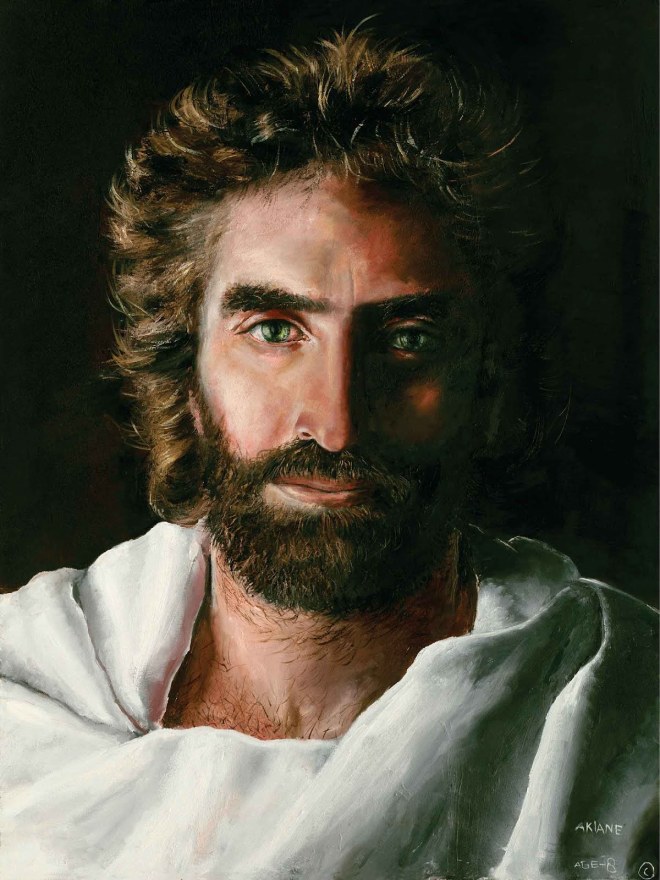
The Prince of Peace by Akiane Kramarik, child prodigy
I have been practicing chastity of speech for a couple of weeks now. It is definitely a denial of self. Especially for me, because I have realized just how much I talked out loud with myself, which is called ‘private speech’. It is something children do as they are learning how to assimilate language and thought together. The final step in this internalization of speech is theorized by Vygotsky to be ‘inner speech’, when a person quits speaking aloud around the age of 7 and begins having thought-speech internally, but not audibly, in a healthy environment.
I think perhaps I got stuck in the private speech stage, and speaking aloud is something I do when I don’t have an intimate to talk to, and like a child, when I am working out something rather complex, like a problem of some sort.
I felt God calling me to be chaste in my speech mainly because I don’t want to bless demons with my thoughts anymore, as I feel like the devil often listens to me. Not necessarily to harm me, but to be nosy and assume more rights than he should.
The Bible speaks often of being chaste in speech, and it is one of the evangelical vows nuns and monks take, in order to be more holy.
Do not be rash with your mouth, and let not your heart utter anything hastily before God. For God is in heaven, and you on earth; therefore let your words be few. For a dream comes through much activity, and a fool’s voice is known by his many words. ~Ecclesiastes 5:2-3

God gave me this word in my dream last night. I never knew it before.


It’s my first official day of being a Solitary. I had a beautiful afternoon in Glacier National Park in a nice, secluded spot.
I had some memories of my family all riding bikes and hiking around Glacier when I was there, but instead of letting those memories consume me and take me down, I realized that even though I feel sad in this context of not having my family, the memories themselves were GOOD MEMORIES, and that means my kids will have all those good memories to take with them into their own lives. They just seem bad to me because I am the one left alone. Of course, they might have sad and bad feelings too, about the divorce, but hopefully the good times will outweigh the bad, God willing.

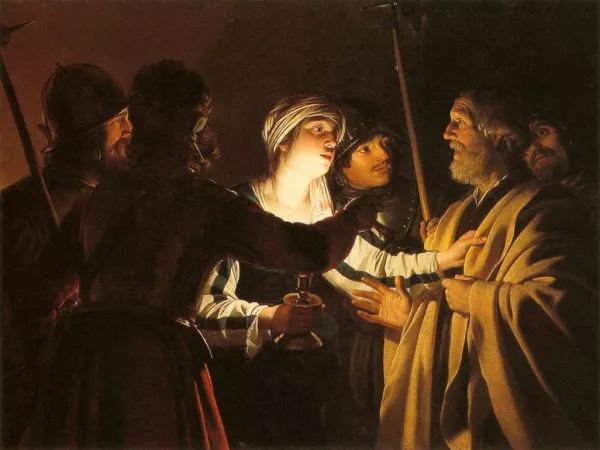

Giovanni Baglione. Sacred and Profane Love. 1602–1603, showing dramatic compositional chiaroscuro

The Stag Hunt mosaic (c. 300 BCE) by gnosis epoesen, or ‘knowledge did it’. is a mosaic from a wealthy home of the late 4th century BC, the so-called “House of the Abduction of Helen” (or “House of the Rape of Helen”)
The Stag Hunt (just above) is one of the first examples of chiaroscuro in the ancient world that is still preserved. The contrast between light and dark was an invention of the western Greeks called ‘skiagraphia’ or “shadow-painting” and used in paintings (which are lost), and mosaics. It was later refined in the middle ages into the Italian paintings as seen further above, becoming more popularly known as ‘chiaroscuro’ or “light-dark”.
I first became aware of chiaroscuro while browsing the Minneapolis Art Institute. I still remember the Italian Renaissance room, and what really drew me in was the pearly white paint on the canvas, contrasted against the nearly black background. I am not sure what they used in their white paint, but viewing it in person is very moving and effective. The only other thing that really affected me at that art museum were the alabaster and white marble sculptures. Something about opalescent white objects draws me in and mesmerizes me. I prefer the stone to be almost translucent near the edges, as it beckons you to try to peer deeper inside it.
I still did not know that what I was enjoying in these paintings had a characteristic name, so when I discovered that a few years ago, another piece of my puzzle fell into place. I realized then that this is why my favorite painting of my mother’s has always been this one: it has chiaroscuro elements and a large area of pearlescent white in the coffee pot:
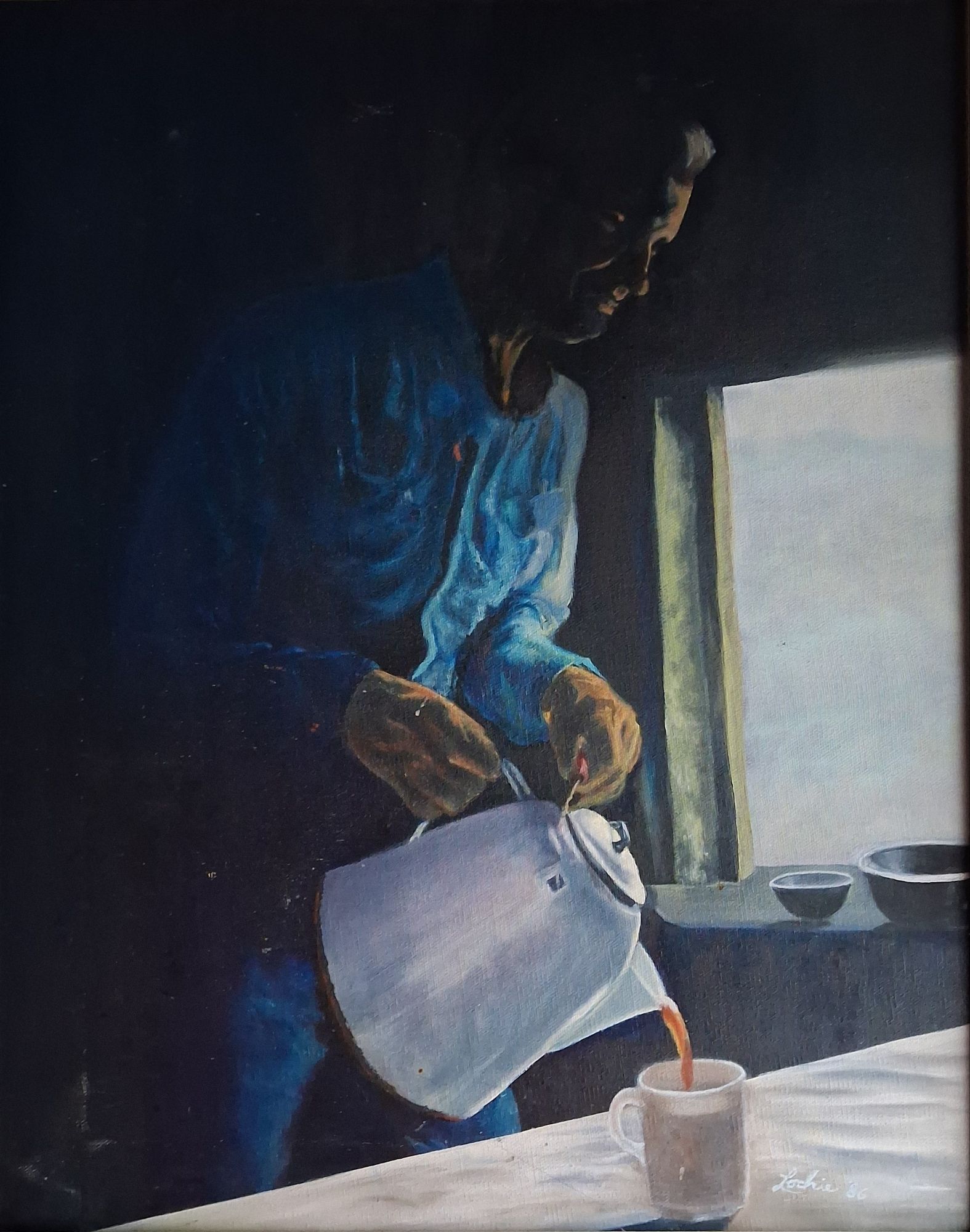
I suppose if we wanted to analyze it further, we could say this art form appeals because it forces our perspective into black and white thinking, something the world doesn’t really lend itself to very often due to its shades of grey. Is it a juvenile mind that wants to think of the world and people in extremes of all good and all bad, all light and all dark? Or is it an actual truth of God that things are really either good, or they are bad. Jesus refers to this chiaroscuric thinking several times in His teachings, “If you are lukewarm I will spit you out,” and “whoever is not against you is for you.”
All I know is it appeals to my sense of all or nothing~
I’m not there yet, but I feel myself heading there rather quickly now. I’m not sure how much seclusion I will undergo, but I definitely feel called to seclude myself more and more. I believe that I should not seek out interactions now, and that I am called to be chaste with my speech, live minimally with the goal being only what I can carry, and to be obedient to God every moment of every day. Although I will focus on isolation, I should lovingly welcome interactions that God sends me, as an anchoress would if someone sought out her advice or listening ear.
They usually live by the three evangelical counsels or counsels of perfection in Christianity are chastity, poverty (or perfect charity), andobedience.[1] As Jesus of Nazareth stated in the Canonical gospels,[2] they are counsels for those who desire to become “perfect” (τελειος, cf. Matthew 19:21, see also Strong’s G5046 and Imitatio dei). The Catholic Church interprets this to mean that they are not binding upon all and hence not necessary conditions to attain eternal life (heaven). Rather they are “acts of supererogation” that exceed the minimum stipulated in the Commandments in the Bible.[3] Christians that have made a public profession to order their life by the evangelical counsels, and confirmed this by a public religious vow before their competent church authority (the act of religious commitment called “profession”), are recognised as members of the consecrated life.
Here is a description of solitary life serving God:
What is a Solitary?
Solitaries are those who are called to or have chosen solitude as a way of life. The Solitaries of Saint Benedicts are hermits, semi-hermits, and hermits-in-the-world. The following is an explanation of these three terms as understood by the Solitaries.
A hermit is a person who lives alone, withdrawn from society. A hermit is not a recluse, and so a hermit can entertain visitors, go on journeys, and otherwise interact with others. A hermit usually lives at some physical separation from other people to make a life of solitude easier. A hermit’s dwelling is known as a hermitage, although a group of hermits living together are often referred to as a skete.
A semi-hermit is a person who lives with others but cultivates an interior silence and solitude with some physical barriers. The most famous semi-hermits are the Carthusians, nuns and monks who live in a Charterhouse, a cluster of hermitages where each monastic lives and works alone, leaving only a three times a day for communal worship in the monastery church. Most of the Solitaries of Saint Benedict are semi-hermits, as many of them live as members of families or other forms of residential community.
A hermit-in-the-world is a kind of urban hermit who lives alone but with minimal physical separation from society. These hermits were common in the Medieval period, when they were known as anchorites or anchoresses and lived in “anchorholds.”
What is the difference between a hermit and a recluse?
As stated above, a hermit has contact with the outside world. A recluse is a person who has completely retreated from the world with only very rare and occasional contact with others. The Solitaries of Saint Benedict do not envision reclusion as part of the life of a Solitary, but a Solitary may decide upon reclusion in consultation with the Prior.
~taken from: https://solitariesofsaintbenedict.wordpress.com/what-is-a-solitary/
The solitary life is seen as being lived within the fellowship of the Body of Christ, in which the solitary has an honoured place going back to St Antony of Egypt and the other Fathers and Mothers of the Egyptian desert. In these islands this kind of life is represented by Celtic monks like Columba, Aidan and Chad. In the Middle Ages there were countless anchorites and hermits scattered throughout Britain, of whom Julian of Norwich and Richard Rolle of Hampole are perhaps the best known. It was a commonplace then that many people, feeling a call to solitude, would go and live on the edge of their village in much the same way as Antony of Egypt did when he began. Such people supported themselves by their work, as the earliest monks did. Often such work involved public service such as repairing roads and bridges. They were accepted as those who were called to a life of prayer. Work and prayer have always gone hand in hand.
The degree of solitude and of involvement in the life of the local Christian community is something which each has to decide in the light of circumstances and at the prompting of the Holy Spirit. The solitary’s prayer needs to be nourished by regular spiritual reading, in which Holy Scripture, the Psalms, and the writings and lives of the Desert Fathers and Mothers and others in the monastic tradition should find their place. There are also many modern books on prayer and the spiritual life which can be read with profit.
The solitary life is essentially hidden; there is no badge or habit, no special title, nothing to suggest a corporate identity. The Fellowship has none – it is not a community or a society, just a fellowship of people each pursuing his or her own path but banded together for support and encouragement. Our witness is the way we live, and is thus a prophetic sign in its solitude, simple unobtrusiveness and silence. The medieval anchoress had one window into the church, but another looking out on to the world, which she could close with a curtain when “not at home”, but at which people could consult her. We find this too – God sends people to us and we must welcome them in God’s name.
Because the life is solitary, it is personal to each; no two follow the same path. For that reason the Fellowship has no rule of life; it is most unlikely that it ever will. How we can pray best is for each to discover for her- or himself. All that is asked of members is that they pray for each other, and for all others living the solitary life, and that they pay the modest subscription that enables the Newsletter, issued three times a year, to be produced and distributed. Members are encouraged to contribute items to the Newsletter so that we may profit by sharing each other’s experience of the solitary life.
PATHS IN SOLITUDE
Eve Baker
Solitude and silence are hard to find in the modern world, which regards both as aberrations which must be avoided. Yet solitude has never been more sought after, as the growth of the retreat movement shows. Increasingly, people are experiencing an interior call to solitude which, although it was a commonplace in the Middle Ages, is strange to today’s religious concerns, with their emphasis on community. The solitary, standing outside these concerns, witnesses to a God who is divinely other and not a commodity to be possessed by the world for its own ends.
The mystery of God is encountered in silence and solitude. The creative artists make raids into this unknown world of mystery, and return bearing artefacts. Others make solitude their home; these are the contemplatives. This book examines firstly various aspects of solitude: solitude and society, the artist as solitary, and physical solitude. Part II looks at the historical roots of the solitary life, the monastic path, travellers and wanderers, hermits and institutions. The final part is a guide to the Christian solitary life, the practicalities and the prayer of the solitary.
Published by: St Pauls Price £5.95 ISBN 085439 513 x
Can be ordered in UK from all good booksellers, including St Pauls Bookshop, near Westminster Cathedral.
Available online from amazon.co.uk
~all previous quote taken from: http://www.solitaries.org.uk/index.html
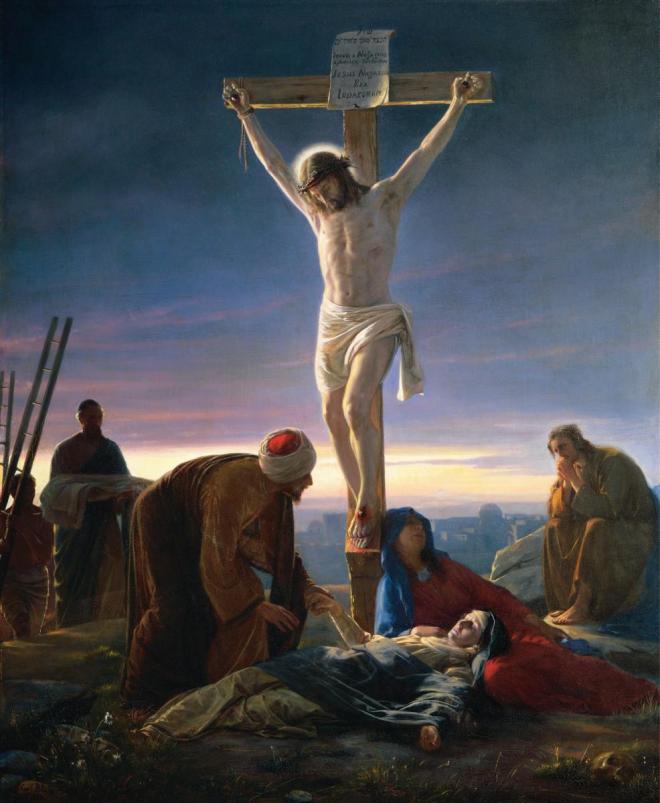
It is Good Friday because the Good News was set in motion. He would rise on the 3rd day and enter the Kingdom of Heaven where He sits today at God’s right hand.
Even unto to death He died perfectly, and with grace.
Praise be to God: Father, Son, and Holy Spirit!
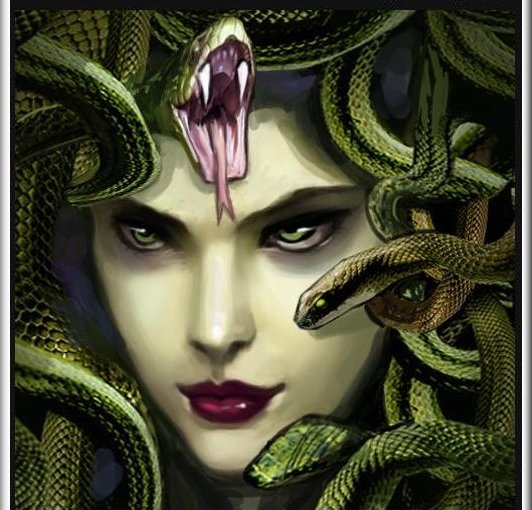
A fair and virginal maiden raped by Poseidon, Medusa becomes a monster with snakes for hair, and when she fixes her gaze upon anyone, they turn to marble stone. Perseus cuts off her head retaining the power of life over death and womanhood bound up in it while her body dies a mortal death.
Snakes signify strength, cunning, and cruelty and provide venom (poison) and antidote (cure) in their own heads. By combining the attributes of female goddess with serpent in Medusa, and overcoming it, perseus (man) effectively feels the power he has over life as he wields this power where he wills. (In real life we have transwomen–men who understand the power of woman and want it for their own)
The maiden and serpent united for a brief moment in God’s Paradise, the Garden of Eden. It led to the downfall and cursing by God of serpent, man, and woman; and it led ultimately to death. The serpent was consigned to a life of crawling in the dust, the man work, and the woman labor in love. Woman’s seed and snake would forever crush each other’s heel and head, respectively.
The Medusa Myth however is not the separation of woman and snake, but the embodiment of the everlasting union between serpent and woman. It is the tale of woman that has become so terrifying (through a violent sexual act upon her) as to be able to turn another, at her whim, to stone, rendering him incapacitated and paralyzed.
Calling someone Medusa is the ultimate feminine cut-down in many ways. It is a reference to curly hair being akin to having snake hair. It is a reference not to divine life but mortal life. And it eliminates a tie to God while testifying to a union with the serpent, who is the most powerful and knowledgeable (cunning) creature made; marrying woman with serpent in worldly wisdom and animistic bestiality instead of divine creation with God.
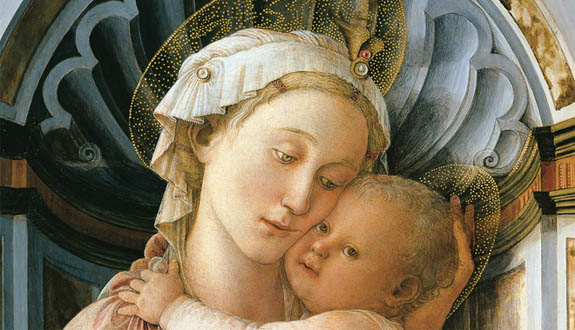
Mary is the antithesis of Medusa. She is loving and forgiving. She is married to God, not the serpent lord. She is divine, not earthly. She is everlasting, not mortal. She is good, not evil. She is mother to the Sons of God, not winged horses.
 ~Song of Mary~