
Warning~ Controversial opinion !
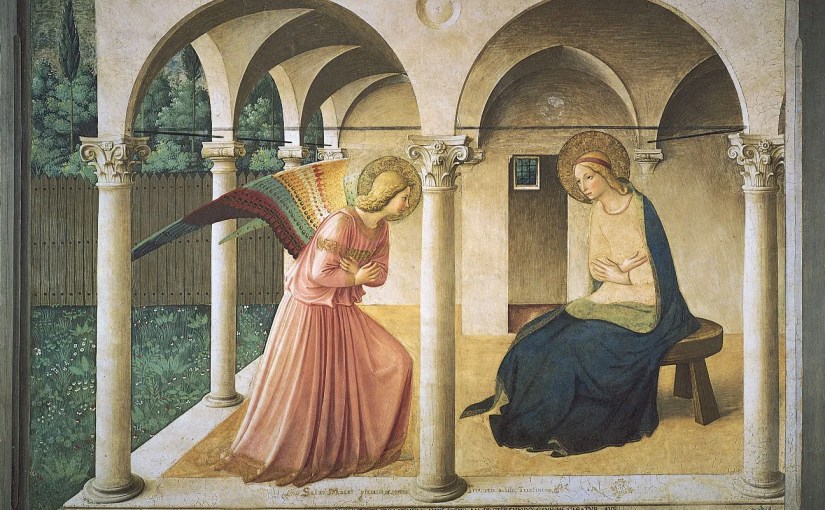
And in the sixth month, the angel Gabriel was sent by God to a city of Galilee named Nazareth, to a virgin (parthenos) who had been betrothed to a man whose name was Joseph, of the house of David; and the virgin’s (parthenos) name was Mary.
In the above passage from the bible, ‘Parthenos’ in Strong’s Concordance is entry number 3933, quoted also in Jay Green’s Interlinear Bible Volume IV in this section, defined as ‘a maiden’, an unmarried daughter.
In the old testament the term ‘virgin’ in the Hebrew means the same thing: a maiden or unmarried daughter. We think of the term virgin regarding females as having an intact hymen, but that was not necessarily always the true meaning, though it did include this specific meaning as well. Consider the prophecy of the Messiah being born to a ‘virgin’ here:
“Therefore the Lord Himself will give you a sign: Behold, a virgin will be with child and bear a son, and she will call His name Immanuel,” (Isaiah 7:14).
Isaiah 7:14 says that a virgin will bear a son. The problem is dealing with the Hebrew word for virgin, which is almah. According to the Strong’s Concordance it means, “virgin, young woman 1a) of marriageable age 1b) maid or newly married.” Therefore, the word, almah, does not always mean virgin. The word “occurs elsewhere in the Old Testament only in Genesis 24:43(maiden), Exodus 2:8 (girl), Psalm 68:25 (maidens), Proverbs 30:19(maiden), Song of Songs 1:3 (maidens), 6:8 (virgins).”Additionally, there is a Hebrew word for virgin: bethulah. If Isaiah 7:14 was meant to mean virgin instead of young maiden, then why wasn’t the word used here? taken from: ~www.carm.org/isaiah-7-14-virgin
It did not become imperative in the Christian realm to emphasize (incorrectly, in my opinion) that Mary’s pregnancy was hymenal (as I will designate to differentiate it from virginal, which we see has different meanings) until the 2nd to 3rd centuries. This was likely in retaliation by the early (Catholic?) church to the pagan heretical philosopher Celsus, who simply reported what the Jews knew to be true at the time, which was that Mary had an ‘affair’ with a Roman soldier named Pantera (Panther, a commonly acquired Roman name) who was likely stationed in her home town (see below). I wonder if anyone has considered that Mary might have been taken by Pantera against her will, even. It is an unpleasant thought, to say the least, but rape was common in ancient times and must be considered a possibility.
Tiberius Iulius Abdes Pantera (c. 22 BC – AD 40) was a Roman soldier whose tombstone was found in Bingerbrück, Germany, in 1859.
A historical connection from this soldier to Jesus of Nazareth has been hypothesized by James Tabor, based on the claim of the ancient Greek philosopher Celsus, who said that some Jews claimed Jesus was the result of an affair between his mother Mary and a soldier. He said she was “convicted of adultery and had a child by a certain soldier named Panthera”. Tiberius Pantera could have been serving in the region at the time of Jesus’s conception.
The name Abdes means “servant of God” and suggests that Pantera had a Semitic or even Jewish background.
The story that Jesus was the son of a man named Pantera is referred to in the Talmud, in which Jesus is widely understood to be the figure referred to as “Ben Stada” Another figure mentioned in the Talmud is Yeshu “Ben-Stada”, possibly the same person as Ben Pandera. Yeshu ben Stada was the illegitimate son of a woman originally named Miriam bat Bilgah who committed adultery with a Roman soldier. The name “Stada” in Aramaic comes from “Sta Da” – “she deviated.” Many believe that Stada was the Historical Mary, the mother of Jesus/Yeshu. ~Wikipedia
The Talmud is a compilation of teachings and discussions that form the foundation of Jewish religious law (halakha) and theology. The whole concept of virginal birth did not really get generated until the 2nd to 3rd century AD, and Paul only refers to Jesus’ humanity, not his birth, in his epistles and teachings.
The virgin birth was universally accepted in the Christian church by the 2nd century and, except for some minor sects, was not seriously challenged until the 18th century. It is enshrined in the creeds that most Christians consider normative, such as the Nicene Creed (“incarnate of the Virgin Mary”) and the Apostles’ Creed (“born of the Virgin Mary”), and is a basic article of belief in theCatholic, Orthodox, and most Protestant churches. Muslims also accept the virgin birth of Jesus ~Wikipedia
Why was it so important to detract us with subtle word play in the Greek translation into thinking something so physically unlikely happened, as that an innocent girl with an intact hymen was impregnated by God? I think it was because the early organized Christian church wanted at all costs to prevent the naysayers, the philosophers and the Jews, from squelching the newly emerging Good News. It undoubtedly worked because Christianity has flourished worldwide 2000 years after Jesus came.
But it did come at a cost to those believers who are adherents of the truth, and find the truth to be much more beautiful and full of grace than all the impossible, fabricated mythical tales purported by the fledgling church to stay viable. It may have worked in an era when people knew little of science and how bodies and fertility really worked, but as modern knowledge and times have erupted into the truth about conception, the twisted tale of a Messianic hymenal birth cannot stand up to the scrutiny of the minds God Himself gave us to use, to seek His truth.
I propose we read the account in Luke with a new mind, and eyes opened to the truth of what REALLY happened to Mary through God. And I suggest that the true tale is one of grace unmatched by none except what happened upon the cross…
~~~
[Jay Green Interlinear Bible translation]
And in the sixth month, the angel Gabriel was sent by God to a city of Galilee named Nazareth…
The text is referring to the sixth month of Mary’s cousin, Elizabeth’s, sixth month of pregnancy. I believe this is to give us context of the time involved in Mary’s own gestation. Of course, Elizabeth was barren and had conceived after Gabriel has also appeared to Elizabeth’s holy husband, Zacharias, telling him Elizabeth would finally bear a son. So the angel Gabriel was the bearer of birth news in Judah, then in Galilee, quite a distance apart.
What do we know about Gabriel? This:
According to Jewish mythology, in the Garden of Eden there is a tree of life or the “tree of souls” that blossoms and produces new souls, which fall into the Guf, the Treasury of Souls. Gabriel reaches into the treasury and takes out the first soul that comes into his hand. Then Lailah, the Angel of Conception, watches over the embryo until it is born. Gabriel is fifth of the five angels who keep watch: “Gabriel, one of the holy angels, who is over Paradise and the serpents and the Cherubim.” (1 Enoch 20:7) When Enoch asked who the four figures were that he had seen: “And he said to me: ‘This first is Michael, the merciful and long-suffering: and the second, who is set over all the diseases and all the wounds of the children of men, is Raphael: and the third, who is set over all the powers, is Gabriel: and the fourth, who is set over the repentance unto hope of those who inherit eternal life, is named Phanuel.’ And these are the four angels of the Lord of Spirits and the four voices I heard in those days.” (Enoch 40:9) ~Wikipedia
So Gabriel, according to the non-canonical Book of Enoch (which I believe can still be useful for research), was set over Paradise, where Jesus breathed life into being and was and is The Word (Book of John).
Note how the angel Phanuel is mentioned as one of the four most important angels. The name Phanuel occurs in the narrative currently under study in Luke 2:36 when Anna, daughter of another Phanuel, of the tribe of Asher, gives thanks to the Lord for the baby Jesus.
Also, at that time, Nazareth, being part of Galilee, was under Roman control due to events of history:
Herod the Great was the pro-Roman king of the small Jewish state in the last decades before the common era. He started his career as a general, but the Roman statesman Mark Antony recognized him as the Jewish national leader. During a war against the Parthians, Herod was removed from the scene, but the Roman Senate made him king and gave him soldiers to seize the the throne. As ‘friend and ally of the Romans’ he was not a truly independent king; however, Rome allowed him a domestic policy of his own. Although Herod tried to respect the pious feeling of his subjects, many of them were not content with his rule, which ended in terror. He was succeeded by his sons. ~http://www.livius.org/he-hg/herodians/herod_the_great01.html
Herod antipater (the father) and Herod the sons would rule before, during, and after Jesus’ reign. Roman soldiers would have abounded in the land, which sets our stage for Mary, herself from the Davidic line, and betrothed to a Jew named Joseph, finding herself in the arms of a Roman soldier who had likely been a slave, but may have had Jewish roots himself. It would have been inappropriate and scandalous of the utmost proportions for any legitimate liaison to occur between them because of their different backgrounds and genealogy. Plus, Mary was already betrothed to a good Jewish man named Joseph, which must be upheld.
…to a virgin who had been betrothed to a man whose name was Joseph, of the house of David; and the virgin’s name was Mary.
Her name was Mary.
The name Mary’s earliest appearance in writing may be in the biblical Book of Exodus, in which the elder sister of Moses is called Miriam. The origin of theHebrew: מִרְיָם, Modern Miryam, Tiberian Miryām is not clear. It may mean “wished-for child”, “bitter”, “rebellious” or “strong waters”. Alternatively, bearing in mind that many Levite names are Egyptian, it might be derived from an Egyptian word myr “beloved” or mr “love”. ~Wikipedia
I believe the name Mary is significant in that she represents the wife of God Himself. Mary stands simply for ‘woman’ which in her essence is anything but simple. Mary is the mother of the Begotten Son of God, the Messiah God in man form. MYM in Hebrew means waters, but is also the root word for Heaven, HSHMYM, which separates the upper and lower waters. So, Mary is from the waters surrounding Heaven, all-encompassing of life outside Heaven itself. She is not God, but she is notable as His quiet companion. And in our narrative of the Messiah’s birth, God, in grace, reaches out to her through the powerful Angel Gabriel in her womanly state of humiliation (see ahead) and under the curse of Eve to be ruled over by men and bring forth children through labor and suffering.
And entering, the angel said to her, Hail, one having received grace! The Lord is with you. You are blessed among women! And seeing this, she was disturbed at his word (logos), and considered what kind of greeting this might be. And the angel said to her, Do not fear, Mary, for you have found favor from God. And behold! You conceive in your womb and bear a Son; and you will call His name Jesus. This One will be great and will be called the Son of the Most High. And the Lord God will give Him the throne of His father David. And He will reign over the house of Jacob forever, and of His kingdom there will be no end.
Why would Mary need to receive grace if she was immaculately conceived (Catholic doctrine) and was a hymenal virgin of a good family betrothed to a good man? No, Mary had sinned in the eyes of her Judaism and knew it. She also had just realized she was indeed pregnant from a Roman soldier around the time the angel appeared, which is likely the catalyst for him appearing; God knew the anguish of her soul: what was she going to do when everyone found out?
This is also why she was ‘disturbed at his word’, because she was anticipating the worst fate imaginable for unchaste, impregnated women betrothed to another, the charge of adultery or something akin to it.
But let us pause on the WORD Logos for a moment. It is the word for Christ Himself, and means Divine Expression. The angel’s word was Jesus, as Jesus, “In the beginning was the Word, and the Word was with God, and the Word was God.” ~John 1:1
The angel’s Word was literally telling Mary she was with the child Jesus already; the Word was in her!
She considered, which in the Greek means ‘to think’, what kind of greeting this was. She was trying to work it all out, but the Angel Gabriel had not told her anything but that she was blessed among women, so why would she have need ‘to think’ about it at all? She had to think about it because she was confused why an angel messenger was telling a harlot she was blessed among women!
There is actually no word or phrase for ‘you will’ before ‘conceive’ in the original Greek. It is simply the word for conceive. In fact, ‘you will’ is entirely omitted in the original text. Which makes it mean that she is conceived, or has conceived already.
The word used for ‘womb’ here is telling also. It is the only time womb in the New Testament is referred to as ‘gaster’ instead of ‘koilia’. Gaster means maternal matrix just like koilia does, but instead of meaning ‘abdomen’ like koilia does, it refers to ‘stomach’ and means ‘gourmand’. We know gastro in Greek refers to the digestive tract or gas, etcetera. I believe it is used here because Mary was newly pregnant and barely showing, almost as if she was just gaining a little bit of weight, or had eaten a large meal, or was bloated. I believe Mary was therefor around three month pregnant, with her first child.
But Mary said to the angel, How will this be since a man I also know (or have knowledge of)?
There is no word for ‘not’ here, as all translations say she said that she had ‘not known a man’. That simply is not the prose written down. The Greek word is clearly ‘ou’ not ‘oux’ or ‘ouch’, which is the negative ‘no’ in Greek. Ou means clearly ‘also’ in Greek. This is the subtle play on words the translators down the centuries changed to make the meaning into what they wanted it to mean, not what it really meant.
Mary was saying, “How can I possibly be blessed and have the Messiah child when I have known a man (out of wedlock}?”
And answering, the angel said to her, The Holy Spirit will come upon you, and the power of the Most High will overshadow you–and for this reason that holy One being born of you will be called Son of God.
Overshadow in the Greek here is ‘episkiazo’, [to envelop in a haze of brilliancy, to invest with preternatural influence]. Preternatural refers to extraordinary but still natural phenomena. In religious and occult usage, used similarly to supernatural, meaning “outside of nature”, but usually to a lower level than supernatural – it can be used synonymously (identical to supernatural), as a hyponym (a kind of supernatural), or a coordinate term (similar to supernatural, but a distinct category). For example, in Catholic theology, preternatural refers to properties of creatures like angels, while supernatural refers to properties of God alone. ~https://en.wiktionary.org/wiki/preternatural
This is a preternatural, not a supernatural event, because God took her natural conception by a Roman soldier and made it an extraordinary event by making her child into a supernatural being, God Himself. Not unlike how (to a lesser degree of course), an angel is a natural/supernatural being in one. Only God is fully supernatural. Everything that touches the world is preternatural.
And behold, your kinswoman Elizabeth! She also conceived a son in her old age, and this is the sixth month to her who was called barren; for nothing shall be impossible with God.
I am struck here by the analogy with Elizabeth’s situation, foretold by the same angel, Gabriel. Gabriel is declaring to Mary that on the continuum of life God is Sovereign Lord and Master. He can take a barren woman and cause her to conceive, just as He can take a young, fully fertile (too fertile?) woman who has an ‘accidental’ pregnancy and cause her child to be fully holy nonetheless. These are the two ends of the spectrum for fertility. Women who get pregnant too easily and it causes them problems, and women who cannot conceive at all. If this miracle were only dealing with placing a baby inside, it would not be showing the full spectrum of God’s involvement in life to the same extent.
Can anything good come out of Nazareth? That implies that Nazareth was not known for its virtuous people, yet as in numerous other accounts in the Old Testament, God chose the very LEAST of his people in the eyes of the LAW-an adulterous young Hebrew woman betrothed to another man (you can’t get much worse than this as a female)-and made her his Messiah-bearer, and the carrier of eternal salvation for the world that was, is, and is to come!
This is undoubtedly another reason why the Jews of the times rejected Jesus, as it is written in their historical record regarding Mary and Pantera, and in the Talmud. They could not conceive at all of the Messiah being conceived out of wedlock to a sexually immoral girl. Which is my proposal as the very reason the Greek text was slightly altered in translation, not original form, to support a virginal (hymenally speaking) birth.
And Mary said, Behold, the slave of the Lord! May it be according to your word. And the angel departed from her.
And rising up in these days, Mary went into the hill country with haste to a city of Judah.
Slave here is ‘doule’, a female slave or handmaid. I believe she left hurriedly in order to make herself unavailable to Pantera, and because she was led out by the Holy Spirit which was already taking up residence in her body, possibly from being used or abused any more. Judah is a long distance southwest of Galilee, so it was a long journey whereby she knew she could not be followed.
(After Mary arrives in Judah and was greeted by Elizabeth)
…And Mariam said, My soul magnifies the Lord, and my spirit exulted in God My Savior. For He looked upon the humiliation of His bondslave. For, behold, from now on all generations will count me blessed. For the Mighty One did great things to me, and holy is His name. And His mercy is to generations and generations to those fearing Him. He performed mightily with His arm; He scattered proud ones in the thought of their heart. He put down powerful ones from thrones, and exalted lowly ones. He filled the hungry with good things, and He sent the rich away empty. he helped His servant Israel in order to remember mercy, even as he spoke to our fathers, to Abraham, and to his seed forever.
And Mariam remained with her about three months, and returned to her house.
Humiliation is from the Greek word ‘tapeinosis’, in Srong’s number 5014, meaning “depression, humiliation, low estate, vile”. Again, why would Mary have naturally been in a humiliated state if she was not already pregnant? Our modern Bibles translate this word as ‘lowly state’, which is not quite so descriptive.
This is called The Song of Mary and it is a song of praise and thanks rejoicing in God’s mercy. I believe it is because Mary was forgiven much, therefore she loved God much and her joy overflowed within-and without-her! She may have been confronted (according to the historical record) by Pharisees and elders regarding her affair, and she was afraid of persecution and judgment by them. But God reached down and turned her illegitimate child into the Messiah Himself, saving her and all of us in the process. How like God to choose the lost as saviors for the rest of us (in the form of prophets and sons of God).
She stayed three months and left just before Elizabeth delivered. It might have been considered improper and uncleanly for the mother of the Messiah to be around the blood and body fluids of birth, since Elizabeth had John right after Mary left. Mary, by my calculations, would have been about six months pregnant by this time (since she was just showing when she left for Judah, and likely three months pregnant then). She knew her pregnancy would be obvious to all when she returned home, but God bolstered her confidence during the three months she spent with Elizabeth and Zacharias. Also, perhaps she had been in contact with Joseph and he reassured her he still wanted her.
In the meantime, Joseph became aware that Mary was pregnant and he began planning how to ‘put her away secretly’ because ‘he was just and was not willing to make of her a public spectacle’ (Matthew 1), when an angel of the Lord appeared to him in a dream and said “Do not be afraid to take Mary as your wife, for that in her is fathered by the Holy Spirit.”
And it happened in those days, a decree went out from Caesar Augustus for all the habitable world to be registered. This registration first occurred under the governing of Syria by Cyrenius. And all went to be registered, each to his own city. And Joseph also went from Galilee, out of the city of Nazareth to Judea, to the city of David which is called Bethlehem, because of his being of the house and family of David, to be registered with Mary, she having been betrothed to him as wife, she being pregnant.
When God gave the land to the twelve tribes of Israel, it was very important to Him that the lands remained within those tribes, even if the inhabitants chose to leave, they had many laws in place to keep the land from falling into the hands of other tribes, in order to keep things equitable and balanced. And every 50 years, if the land had ended up in the possession of another, it had to be given back graciously in the Year of Jubilee!
Because Joseph was from the House of David, that meant his family hearkened from the tribe of Judah, in the area of Jerusalem, the heart of Israel. So when the census first began in his area of Galilee, he took Mary and traveled to Judea to be registered with his wife, whom he still had not ‘known’ physically.

This trek is about 100 miles, so it likely took a couple of weeks to get settled in Bethlehem if they traveled at an average to slow pace, her being by now around 9 months pregnant. It is conceivable that when she returned home from being with Elizabeth (who incidentally lived in this same general area, in Judea) Mary was 6.5 months pregnant. She and Joseph had to work out their relationship in this time period, and reconcile these miraculous events that the angels had told them about. Two months to do this seems a feasible amount of time to get their affairs in order (no pun intended). When the decree went out by God through Caesar so that the prophet Isaiah’s words would be fulfilled, and they packed for the journey and finally set off, Mary would have been nearing her due date. In those days women never knew an exact date when they would birth like we do now, so Joseph and Mary would have prepared for the birth to happen en route. Bethlehem is a word from Hebrew meaning House of Bread, which is fitting since Jesus is the bread of life, the manna from Heaven.
And it happened as they were there, the days were fulfilled for her to bear. And she bore her son, the Firstborn. And she wrapped Him, and laid Him in the manger-because there was no place for them in the inn.
Interestingly, God’s favored sons throughout history thus far were usually the second-born. When, as the eldest, Cain murdered Abel, his brother, there was a curse on the firstborn. But Jesus, being the firstborn Son, redeemed this fate of the firstborn forevermore, just as he redeemed all who would follow Him and believe in Him.
Mary wrapped her baby (who had yet to be named legally). This tells us they were indeed travelling alone, because if she had a maid in tow, the maid would have wrapped the newly born baby for her, and acted as her midwife. This shows how poor and ‘destitute’ they were, at least by worldly standards of the time.
The word for ‘place’ in Greek is ‘topos’, meaning spot or room. We do not know why there was no place for them in the inn. It may have been because there was no literal space or because they were not allowed within. After all, the innkeeper would have taken one look at her and decided he did not want a woman birthing in his inn! Especially a poor and destitute one, who had no helper in tow.
It is important to realize the social implications of what Mary and Joseph were likely enduring throughout this time. They were a young, pregnant couple who were probably poor, travelling on foot while about to birth. They left their hometown where rumors abounded about the illegitimacy of their pending baby, and Mary’s moral character, or lack thereof.
They would not have been surprised to have been shunned at the inn. Indeed, if the innkeeper had been a fellow devout Israelite, living true to God’s law, he would have had compassion on this woman about to birth (love your neighbor as yourself is clearly stated in the Old Testament) and found them a place to stay inside the inn! In the story of the Good Samaritan, Jesus tells of a Jew who was left beaten and abandoned and a Samaritan was the only one who had compassion on him, and paid for him to lodge in an inn to heal and have respite. Perhaps that is why Jesus told that story; to illuminate how a lowly, poor beggar whom no one but a Samaritan had compassion upon, yet was given lodging in the inn while the Only Begotten Son of Man’s mother who was about to deliver our Messiah was denied access.
The manger would have been the only place around that had a roof, while it is likely the sides were open, and Joseph and Mary themselves may have actually slept outside the manger. It just says she had him, wrapped him, and laid him in the manger. It was simply a primitive shelter where sheep and goats ate. Again, this is the lowliest place for a child to be born; to a mother who was escaping from rumors about her sexual morality. This family was unwanted by their own, and even shunned.
[wise men bearing gifts, angels praising God in the Heavens, everyone rejoicing that the Savior was born]
…And Mary kept all these words, meditating in her heart…And when eight days were fulfilled to circumcise the child, His name was called Jesus, the name called covertly (by) the angel before the struggle with Himself in the womb.
Just as we have to keep the Word in our lives daily, Mary kept telling herself (meditating on it) that her Son was Holy and from God, as the wise men declared, and all who knew of these matters confirmed. This was a celebratory week! The Greek wording of the next part is very important and mistranslated in published works:
“…kaleo [2564-called] hupo [5259-covertly] tou [the] aggelos [32-angel] pro [453-before] tou [the] sunagonizamai [4865-struggle with] autos [846-Himself] en [1722-in] te [the] koilia [2836-womb]” ~Luke 2:21
When God caused his shadow to cast a miracle upon Mary’s fetus, turning him into God’s Son, there was a struggle between man and God. This is an original and thought-provoking concept the truth of which has been hidden from us because of translators and man thinking they could write the Savior Story better in their own way, with their own preconceived notions of what is miraculous and what is not. It is the very same thinking that many of the Jews had in the day Christ was conceived and born, that sent the Messiah to save us in the first place: that Godliness can only occur in a realm of perfection, in a body living under a lawful life. That God wants no part of us if we are not perfect; that we are not worthy of His love if we are not perfect.
The Patriarch Jacob struggled with himself one night (with an angel), and the angel ended up blessing him and renaming him Israel-one who struggles with God. God won this struggle inside Mary’s womb, and the illegitimate child conceived from a union with a young Jewish girl and a Roman soldier was turned into our Messiah, the Only Begotten Son of God.
Praise God for opening our eyes to your beautiful and perfect truth! You take the ‘lowliest’ among us and perfect us with You, and exalt us.
Jesus spoke much about the true meaning of family. For Him, family was not about blood relations, but those who do the will of the Father. He was Himself an orphan in a sense. He knew rejection from his biological father. He must have known the truth of his genealogy and chose to live the life the God Father would live if He were a man; indeed He could have done nothing else, being the Logos Himself, no sin could live in Him. Yet He still had choice, as we see in his poignant final moments of ‘freedom’ in the Garden of Gethsemane.
But it is spine-tingling to think of Jesus’ teachings of doctrine about love and peace among all men, even enemies, in the context of his own biological father being a renowned warrior and Roman soldier. Especially one worthy of being made into a Roman citizen and immortalized in a statue of stone which we can see thousands of years later, even as it exists, crumbling and headless.
Jesus the Christ upheld His Heavenly Father’s doctrine of love above all else, and was God’s love personified.

He who lives by the sword shall die by the sword. ~Jesus
I realize this is a somewhat disjointed post involving a LOT of angles and shocking ideas for those reared in the church, but I do believe that the original bible language, the all the gospels, the historical record, and what we know of conception, point to Mary, the mother of Jesus, becoming pregnant in the world and God redeeming this pregnancy in the most stunningly miraculous way, by sending the Savior of the world through it.
We love because He first loved us. ~1 John 4:19
 ~Song of Mary~