
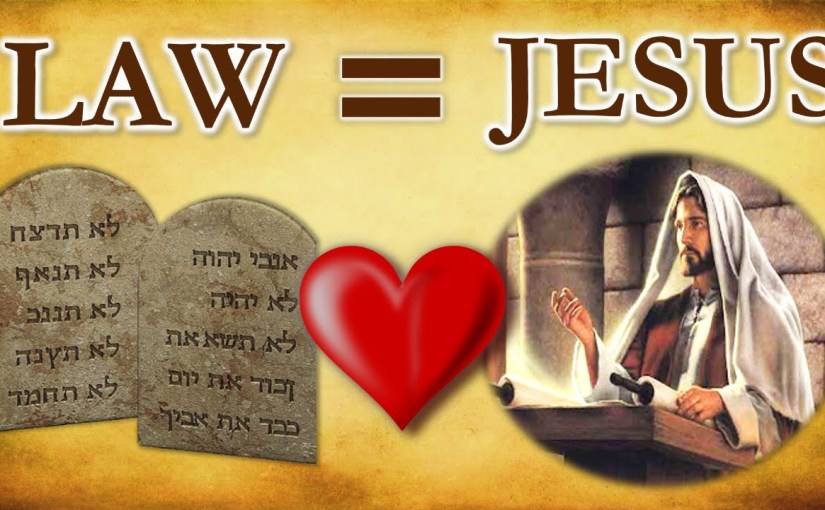
Yeshu’a was given to the people of the world to be the perfect lamb of God, by God himself, as a flesh and blood sacrifice, and an everlasting atonement for the sins of all those who accept this in his name.
“And he himself is the propitiation for our sins, and not for ours only but also for the whole world.” ~ 1 John 2:2
Propitiation (also called expiation) is the act of appeasing or making well disposed (from Latin propitiāre, to appease; from propitius, gracious), especially a deity, thus incurring divine favor to avoid divine retribution. Propitiation is translated from the Greek hilasterion, meaning “that which expiates or propitiates”. There is frequent similar use of hilasterion in the Septuagint in regard to the mercy seat on top of the ark of the Covenant. For example, the mercy seat was sprinkled with atoning blood on the Day of Atonement (Leviticus 16:14), representing that the righteous sentence of the Law had been executed, changing a judgment seat into a mercy seat.
The thought in the Old Testament sacrifices and in the New Testament fulfillment, is that Christ as Messiah completely satisfied the just demands of our Holy Father for judgment on sin, by his death on the Cross of Cavalry, for ever and ever.
He also came to preach a message of love and grace regarding Yahweh against a backdrop of legalism and burgeoning self-righteousness; to remind people that God was not just to be feared as judge and warrior, but revered as nurturer and lover of all.
However, Yeshu’a was not sent to replace the ancient words of God via Moses or the Old Testament authors: “Do not think that I have come to abolish the Law or the Prophets; I have not come to abolish them but to fulfill them.” ~ Yeshu’a via Matthew 5;17
God’s Covenants (the rainbow, the promise to Abraham, The Ten Commandments, that David and his descendants would be royal heirs) are inviolable and everlasting, and should be adhered to by any wise person who not only fears the LORD but who respects and loves Him as Almighty Sovereign King.
When Yeshu’a instituted the Lord’s Supper the night before he was crucified for our sins,
“He took the cup, and gave thanks, and gave it to them, saying, ‘Drink from it, all of you. For this is my blood of the new covenant, which is shed for many for the remission of sins.” ~Yeshu’a via Matthew 26:27-28
Yeshu’a was not just making a NEW covenant, he was also fulfilling an old law whereby one had to make daily blood sacrifices and frequent offerings to the LORD, to be almost in a perpetual state of the act of atonement. However, Yeshu’a’s entrance on the religious scene marks a point in history as sacred (or more so) than the Exodus story, the story of Creation, or the Abrahamaic migration from Ur; and in so doing–in so marking history profoundly–Yeshu’a in this way did make a new covenant, placing himself on the altar a the ultimate flesh (grain) and blood sacrifice for our sins, forever. We need only accept this fact on a daily basis to be redeemed. But we also are held accountable for the rest of God’s Law.
Circumcision was a sign of God’s chosen people that marked them outwardly for life. We needed the message Yeshu’a brought about God’s love and grace and mercy, and we should be thankful throughout every day for the sacrifice he made for us as the perfect lamb of God. But we also need to show God that we are proud to be His, that we are willing to be marked as His, and that we are eager to sacrifice our fleshly bodies for a deep spiritual relationship with Him, including circumcision.
Abrogating all God’s former Law and Word with new testament conceptualism where Christians misinterpret Yeahu’a’s Divine mission, annihilating everything that has been held as a holy sacrament before, is a grave mistake.
To sum it up, I love this concept:
I am the Alpha and the Omega, the Beginning and the End, the First and the Last. ~Revelation 22:13
 ~Song of Mary~